
Mold Remediation · Coral Springs, FL
Mold remediation for Coral Springs homes and townhomes
A stain that keeps growing on the upstairs ceiling, dark spotting around a vent, a musty laundry room wall. In Coral Springs houses from the 1970s to the 1990s, mold usually leads back to an attic air handler, an old supply line, or a roof at the end of its life.
- 24/7 emergency line
- IICRC Certified Firm
- Insurance claim documentation
On call 24/7
Free inspection
Schedule a no-cost on-site inspection. A restoration specialist will contact you within a few minutes to confirm the details.
Request received
Thank you. A restoration specialist will contact you at the number provided to confirm the details. If water is still coming in, call now and we'll walk you through shutting it off.
(954) 289-0566Recognized by




Mold Remediation in Coral Springs
Coral Springs is a city of family homes of roughly the same age, and their mold problems rhyme. The air handler sits in the attic or a hall closet, the supply lines are original, the roof went on after Hurricane Wilma, and one of the three has been letting a little water into a ceiling or wall for longer than anyone realized.
We start by finding which one. The mold inspection is free and covers the visible growth, the moisture readings around it, and a thermal scan of the ceilings and walls nearby, including the attic side where it can be reached. The written scope says what the source is, what has to be removed, and what can be cleaned and kept.
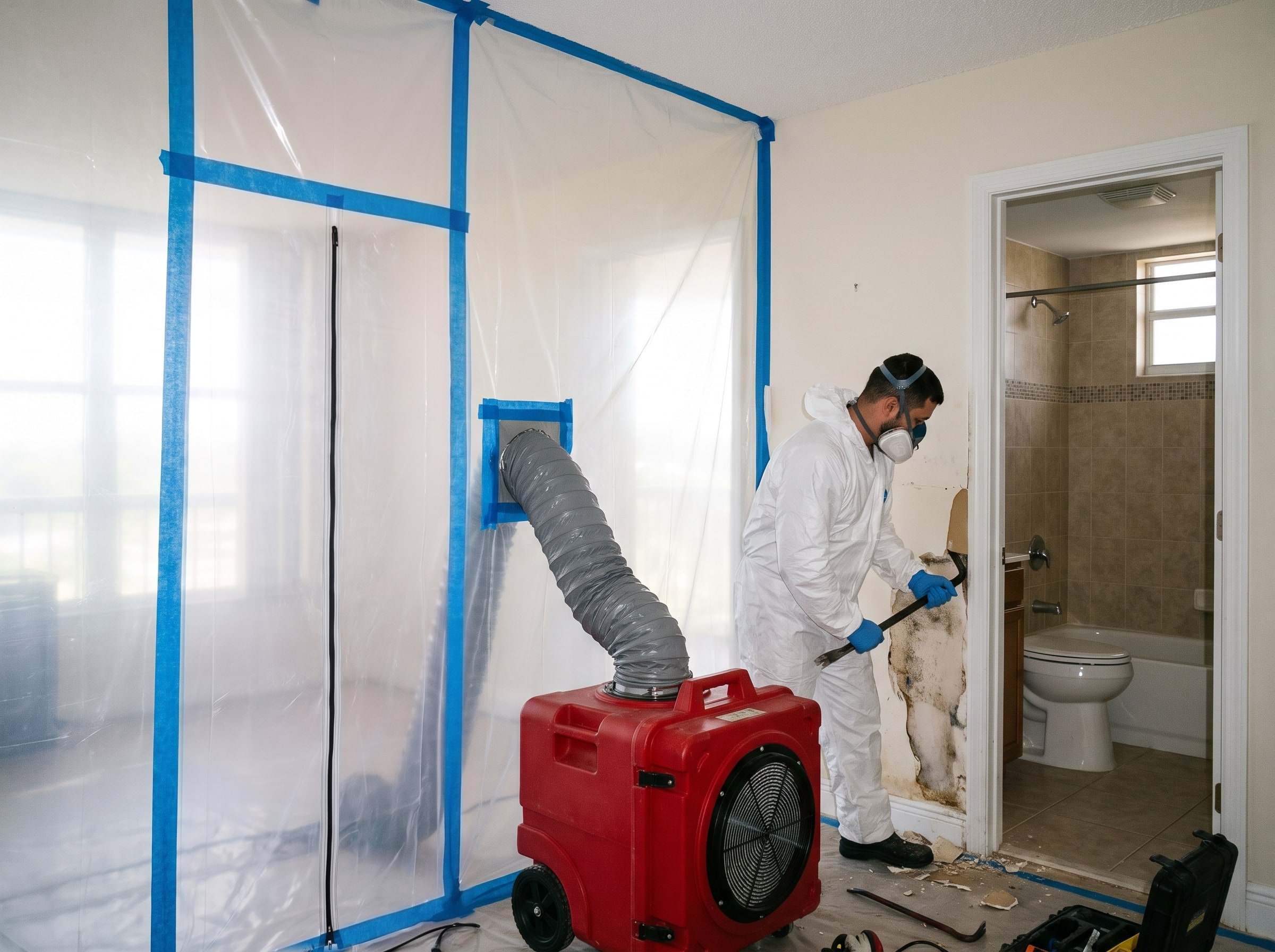
Then the work is done in order: the leak or condensation problem is corrected, the area is sealed off under negative air pressure, materials with growth are removed, and the remaining structure is cleaned and dried. Where a ceiling is still wet, water damage restoration in Coral Springs is part of the same job.
Our Florida Mold Remediator License is MRSR438. If you are buying or selling and need lab results or a clearance report, those come from a Florida-licensed mold assessor, and we arrange it.
Your family's health
Is mold in your home a health risk?
It can be. The CDC says damp, moldy conditions can cause a stuffy nose, sore throat, coughing or wheezing, burning eyes, or a skin rash in some people, and people with asthma or mold allergies may have severe reactions.
As mold grows, it releases spores into the air your family breathes. Take extra care when there are babies or young children in the home: the CDC points to a potential link between early mold exposure and asthma developing in some children.
Book the free mold inspection as soon as you suspect mold. The sooner the moisture is fixed and the growth is gone, the shorter everyone is exposed and the smaller the job. Until then, keep children and anyone sensitive out of the affected area.
We are restoration professionals, not doctors. If anyone in your home has symptoms, talk to your doctor or pediatrician. Sources: CDC: Mold and your health, EPA: A Brief Guide to Mold, Moisture and Your Home.
Local factors
What's different about mold remediation in Coral Springs
-
Attic air handlers in two-story homes
In Eagle Trace, Wyndham Lakes, and many other two-story homes, the upstairs system sits in the attic. A blocked condensate line fills the pan, and water drips onto the ceiling drywall for weeks. Growth is often heavier on the attic side than on the painted side.
-
Polybutylene and other aging supply lines
A fitting that weeps inside a bathroom or laundry wall keeps the cavity damp without ever flooding the floor. The first sign is often mold at the baseboard or bubbling paint, and the wall has to be opened to reach both the pipe and the growth.
-
Townhomes and villas
In shared-wall communities, mold on a common wall may start in the next unit. We measure both sides when we have access and give the HOA the same findings as the owners, because its documents decide who repairs what.
-
Roofs put on after Wilma
Many roofs here date from the rebuilding after October 2005. At twenty years, flashing and underlayment let in small amounts of rain that wet the attic insulation and the top of the ceiling without leaving an obvious drip.
Our process
How does mold remediation work?
- 01
Inspect and find the moisture
We inspect for visible growth and use moisture meters and thermal imaging to find wet materials and what is wetting them: a leak, condensation, or an old water loss that never dried.
- 02
Build containment
The work area is sealed with plastic sheeting and zippered doors. Larger jobs get an entry chamber so crews can come and go without carrying spores out.
- 03
Negative air and HEPA scrubbing
HEPA-filtered air machines draw air out of the containment, keeping it under negative pressure so air flows in, not out, while the work is underway.
- 04
Remove contaminated materials
Drywall, insulation, carpet, and other porous materials with growth are cut out, bagged inside the containment, and taken out of the building.
- 05
Clean what stays
Framing, block, and other solid surfaces are HEPA-vacuumed and wiped. Stained wood is sanded or wire-brushed, and a final HEPA vacuuming collects settled dust.
- 06
Dry and correct the cause
Remaining materials are dried to normal readings. The moisture source has to be repaired before walls are closed, and we coordinate with your plumber or AC contractor.
- 07
Verification and repairs
When the job calls for it, an independent licensed mold assessor performs post-remediation verification before containment comes down. Then repairs close the area up.
Black mold
Can black mold really be remediated?
Yes. Dark-colored mold is removed the same way as any other: the wet material it is growing on is taken out, the surfaces that stay are cleaned, and the moisture is corrected so it has nothing to live on. What remediation does not do is make a house sterile, and it does not need to.
-
Black is a color, not a diagnosis
Many common molds are dark, and the color alone does not tell you the species. Only a lab can, through sampling by a licensed assessor. The removal method is the same either way.
-
What "remediated" means
The EPA explains that after cleanup a background level of mold spores will remain, and that those spores will not grow if the moisture problem has been resolved. The goal is no active growth and normal moisture readings.
-
Why it sometimes comes back
When mold returns to the same spot, the water was never fixed. Spraying or painting over growth without correcting the drain line, the pipe, or the roof does not last.
-
What cannot be cleaned
Drywall, insulation, and carpet pad with growth are removed, because mold runs into porous material. Wood framing, block, and concrete are cleaned and kept.
-
How you know it worked
The moisture readings are back to normal and no growth is visible. If you want independent confirmation, a licensed mold assessor can perform post-remediation verification.
Ceilings and vents
Why is mold growing on the ceiling or around the vents?
Because something above the ceiling is wet or cold. In a Coral Springs house that is nearly always the air conditioning, the roof, or a bathroom on the floor above, and each leaves a different pattern.
-
A stain below the air handler
A round or oblong stain under the attic unit points to an overflowing pan or a clogged condensate line. It tends to grow in summer, when the system runs longest.
-
Spotting around supply vents
Cold air leaving the vent chills the grille and the drywall around it, and humid room air condenses there. Speckled growth in a ring around the vent is the result.
-
A stain near an outside wall or roof valley
Marks along the roof edge, at a valley, or near a vent pipe usually come from flashing or underlayment that has worn out. They get worse after wind-driven rain.
-
Under an upstairs bathroom
A failed shower pan, a toilet seal, or a tub overflow wets the floor system and shows on the ceiling of the room below, often the kitchen.
-
Bathroom ceilings
Mildew on the ceiling above a shower is usually condensation. The EPA's advice is to run the bathroom fan or open a window when showering.
Buying or selling
What should you do if mold turns up in a Coral Springs home inspection?
Find the source, fix it properly, and keep the paperwork. A documented repair answers a buyer's or lender's questions better than fresh paint and a verbal assurance.
-
Do not paint over it
Paint hides the growth for a short time and leaves the cause in place. The EPA says not to paint or caulk moldy surfaces.
-
Have the cause identified
An inspector's report says mold was seen. It rarely says why. Our free inspection adds the moisture readings and the likely source, in writing.
-
Bring in an assessor if the other side asks
Buyers and lenders often want an independent report. A licensed mold assessor writes a protocol before the work and verifies the result afterward; we schedule the assessor and follow the protocol.
-
Keep the documents together
The scope, photos before and after, moisture readings, and any assessor report make a file you can hand to the buyer's agent.
-
Ask about disclosure
What a seller has to disclose is a legal question. Your real estate agent or attorney is the right person to ask.
Cost
How much does it cost to have mold remediated in Coral Springs?
It depends on where the growth is and what has to be opened to reach it. A patch on a ceiling under the attic unit is a different job from a wall behind kitchen cabinets. The inspection is free and the scope is itemized.
-
Ceilings and attic access
Ceiling work means containment built from the floor up and, often, wet insulation removed from above. A high or vaulted ceiling adds setup time.
-
Walls behind cabinets and tile
Reaching a wet wall can mean removing a vanity, a run of kitchen cabinets, or shower tile. Putting those back can cost more than the mold work itself.
-
How many rooms
Each separate area needs its own containment. Growth in an upstairs bathroom and the kitchen below it counts as two areas even though one leak caused both.
-
The repair that stops it
The AC service call, the re-pipe of a failed line, or the roof repair is done by that trade and priced separately.
-
Insurance
A sudden leak is more likely to be covered than a slow one, and most policies cap mold. For covered claims, we bill your insurance company directly; see insurance claims.
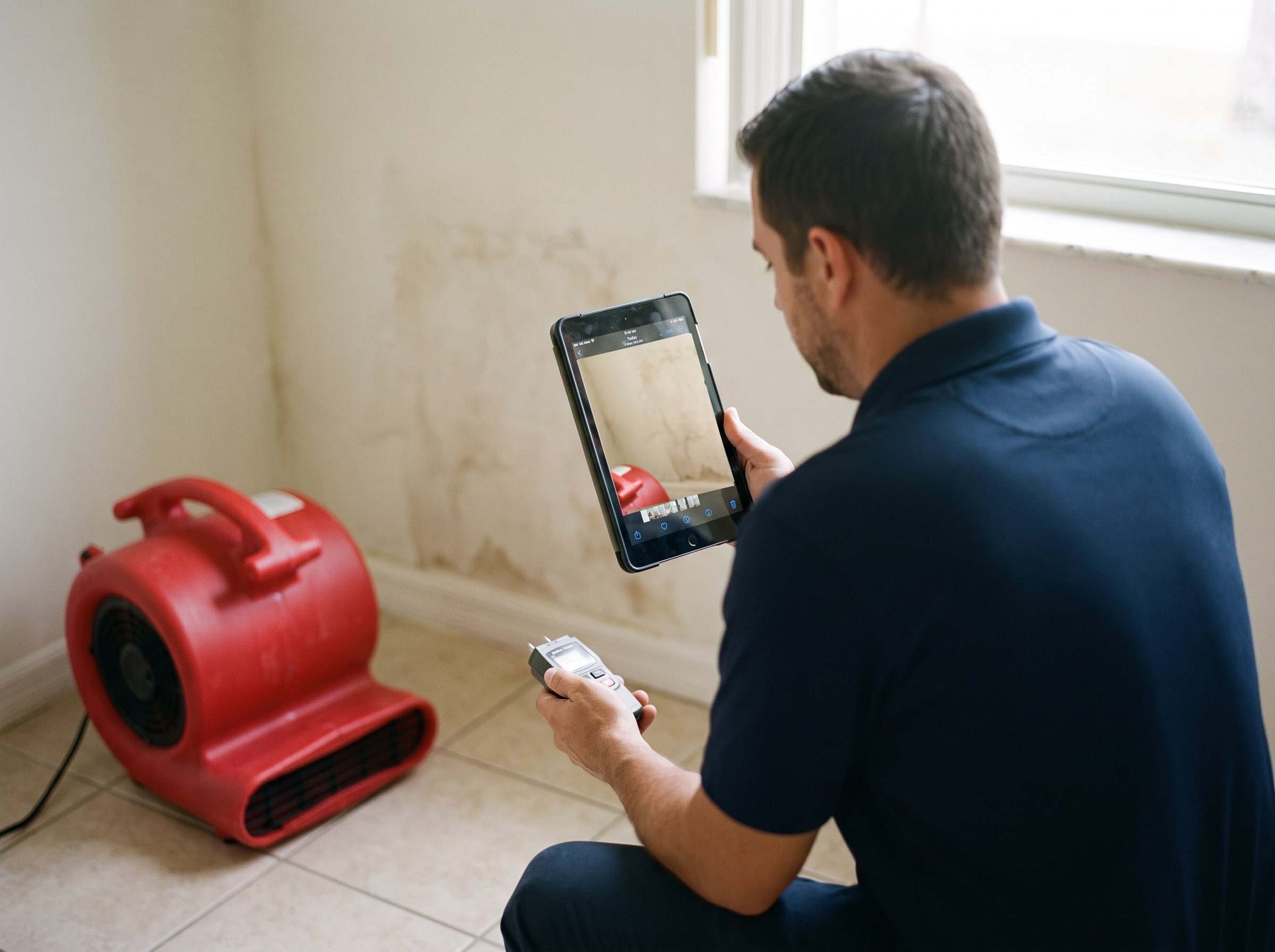
★ Every job is documented: photos, readings, and an itemized scope.
Insurance
Does homeowners insurance cover mold remediation?
Coverage for mold usually follows the cause. If growth came from a sudden, covered water loss, such as a burst pipe, remediation may be covered as part of that claim. Mold from long-term leaks, ongoing humidity, or deferred maintenance is commonly excluded, so check your policy's mold and water exclusions.
Many Florida policies also cap mold coverage at a set dollar amount, separate from the rest of a water claim, so look for a mold limit in your policy. We document the growth, the moisture source, the containment, and every removed material with photos and readings, so your adjuster can see what was found and why the work was needed. For covered claims, we bill your insurance company directly.
Usually covered
- Sudden pipe bursts and supply-line failures
- Water heater ruptures
- Toilet, sink, and tub overflows
- Appliance and AC overflows
- Burst or accidentally discharged fire sprinklers
- Water that enters through storm damage to the roof or windows
- Mold caused by a covered water loss, often up to a set limit
What we document
- Source of the loss and affected areas
- Daily moisture readings and equipment logs
- Thermal images of hidden moisture
- Every material removed, and why
- Each condo unit and common area, documented separately
- Dated photos and an itemized scope of work
Carriers we've worked with: Citizens Property Insurance, Universal Property & Casualty, Tower Hill Insurance, State Farm, Allstate, USAA, and many more. We are not affiliated with or endorsed by any insurance company.
Coverage decisions belong to your insurer and depend on your policy. Florida does not allow assignment of benefits on property policies issued on or after January 1, 2023, so you stay in control of your claim.
How water damage claims work in FloridaFAQ
Mold Remediation in Coral Springs: questions
There is mold on my ceiling under the attic AC. Does the whole ceiling come down?
Rarely. The section with growth and the wet drywall around it are removed, along with any insulation above that got wet. The rest of the ceiling stays if the readings are normal. The drain line and pan are corrected first, or the new drywall will get wet again.
Should I have the air ducts cleaned?
Only if there is evidence of growth in them. If the air handler or the ducts near it are part of the moisture problem, they are inspected and added to the scope. Duct cleaning on its own does not fix a mold problem whose source is a leak or condensation.
Someone in our family has allergies. Should we stay somewhere else during the work?
That is a question for your doctor, and it depends on how much growth there is. The EPA notes that allergic reactions to mold are common. Containment keeps the work area sealed from the rest of the house, and for a small job most families stay; for a large one, a few nights away can be simpler.
Is the mold inspection free in Coral Springs?
Yes. There is no charge for the visit, the moisture readings, or the written scope. Lab testing is separate and is performed by a Florida-licensed mold assessor when you want it or a buyer or lender requires it.
Nearby
More mold remediation coverage
Mold Remediation city guides
- Mold Remediation in Boca Raton Palm Beach County
- Mold Remediation in Fort Lauderdale Broward County
- Mold Remediation in Miami Miami-Dade County
- Mold Remediation in Pompano Beach Broward County
- Mold Remediation in West Palm Beach Palm Beach County
- Mold Remediation in Boynton Beach Palm Beach County
- Mold Remediation in Sunrise Broward County
Service areas near Coral Springs
- Water damage restoration in Parkland Broward County
- Water damage restoration in Coconut Creek Broward County
- Water damage restoration in Pompano Beach Broward County
- Water damage restoration in Sunrise Broward County

Don't wait. Go with the pros.
Need mold remediation help in Coral Springs?
Call the 24/7 line. We will help you stop the source, tell you what to move, and get a crew scheduled. Not urgent? Send a request and we will call you back.
Call 24/7 (954) 289-0566- 1 We answer 24/7, day or night
- 2 We help you stop the water and protect belongings
- 3 We schedule a crew and tell you when to expect them
On call 24/7
Free inspection
Schedule a no-cost on-site inspection. A restoration specialist will contact you within a few minutes to confirm the details.
Request received
Thank you. A restoration specialist will contact you at the number provided to confirm the details. If water is still coming in, call now and we'll walk you through shutting it off.
(954) 289-0566Recognized by