Mold Remediation · Miami, FL
Mold remediation in Miami condos and homes
Most mold in Miami grows where you cannot see the water: an AC closet that sweats, a leak from the unit above, a wall that stayed wet after a storm. The inspection is free. We find the source first, contain the area, and remove the growth.
- 24/7 emergency line
- IICRC Certified Firm
- Insurance claim documentation
On call 24/7
Free inspection
Schedule a no-cost on-site inspection. A restoration specialist will contact you within a few minutes to confirm the details.
Request received
Thank you. A restoration specialist will contact you at the number provided to confirm the details. If water is still coming in, call now and we'll walk you through shutting it off.
(305) 330-1488Recognized by



Mold Remediation in Miami
Mold remediation in Miami starts with the water, not the mold. In a condo tower the source is usually the air handler closet, a supply line inside a shared wall, or a leak from the unit above; in an older house it is more often a slow roof or plumbing leak. We find and stop that moisture first, then contain the area and remove the growth.
The most common mistake we see is trying to dry or clean the area before the moisture source is fixed. A fan pointed at a moldy wall feels like the right move, but it blows spores into rooms that were clean, and the CDC lists using fans to dry items or ventilate areas among the actions that spread mold. Proper remediation runs in a fixed order: stop the moisture, contain the area, then remove and dry what is contaminated.
It starts with a free mold inspection. We look for growth and musty odors and use moisture meters and thermal imaging to find what is wet behind walls, under flooring, and around the AC. If you also need lab testing, for a buyer, a landlord, or your association, we handle it from scheduling to the written report. Florida bars one company from assessing and remediating the same property within 12 months, so the samples are taken by a licensed mold assessor.
Your family's health
Is mold in your home a health risk?
It can be. The CDC says damp, moldy conditions can cause a stuffy nose, sore throat, coughing or wheezing, burning eyes, or a skin rash in some people, and people with asthma or mold allergies may have severe reactions.
As mold grows, it releases spores into the air your family breathes. Take extra care when there are babies or young children in the home: the CDC points to a potential link between early mold exposure and asthma developing in some children.
Book the free mold inspection as soon as you suspect mold. The sooner the moisture is fixed and the growth is gone, the shorter everyone is exposed and the smaller the job. Until then, keep children and anyone sensitive out of the affected area.
We are restoration professionals, not doctors. If anyone in your home has symptoms, talk to your doctor or pediatrician. Sources: CDC: Mold and your health, EPA: A Brief Guide to Mold, Moisture and Your Home.
Local factors
What's different about mold remediation in Miami
-
Why does mold keep showing up in Miami condo AC closets?
Because the air handler closet is the coldest, dampest spot in most units. A clogged condensate line or a rusted drain pan keeps the closet floor and the drywall behind the unit wet, and spotting forms on supply grilles and the ceiling around them, where cold air meets humid air. We check the pan, the line, the wall cavity behind the closet, and the vents before deciding what has to come out.
-
Who pays when the mold came from the unit above?
It depends on what got wet and why, and your declaration has the final word. Florida law makes the association's master policy exclude finishes inside each unit, such as floor, wall, and ceiling coverings, built-in cabinets, countertops, and appliances, so those generally fall to the unit owner's HO-6 policy. We document each affected unit and any common element separately, so the association and every insurer are working from the same record.
-
Is mold remediation in Miami Beach any different?
The method is the same, but the buildings and the rules around the work are not. Many Miami Beach condo buildings are older and sit right on the water, and associations there usually set work hours, elevator reservations, and containment requirements before a crew can start, so we plan the job around them from the first call.
-
What does mold remediation cost in Miami?
The price follows how much material has to come out and how large the containment must be. One wall behind an air handler is a small job; growth that spread through several rooms or into the ductwork is a large one. After the free inspection you get a written scope, and when the mold came from a covered water loss, part of the cost may go through your claim, up to any mold limit in your policy.
-
How long does mold remediation take in a Miami condo?
Small jobs, like one wall behind an air handler, usually take a day or two of work once the area is contained. In a tower, add time for association approval, elevator bookings, and drying any wet material that stays before the walls are closed up.
-
How do you keep mold from coming back?
Fix the moisture and keep the air dry. The EPA advises keeping indoor humidity below 60 percent, ideally between 30 and 50 percent, which in Miami means running the AC through the summer even when the unit is empty, keeping the condensate line clear, and drying any new leak within 24 to 48 hours.
Our process
How does mold remediation work?
- 01
Inspect and find the moisture
We inspect for visible growth and use moisture meters and thermal imaging to find wet materials and what is wetting them: a leak, condensation, or an old water loss that never dried.
- 02
Build containment
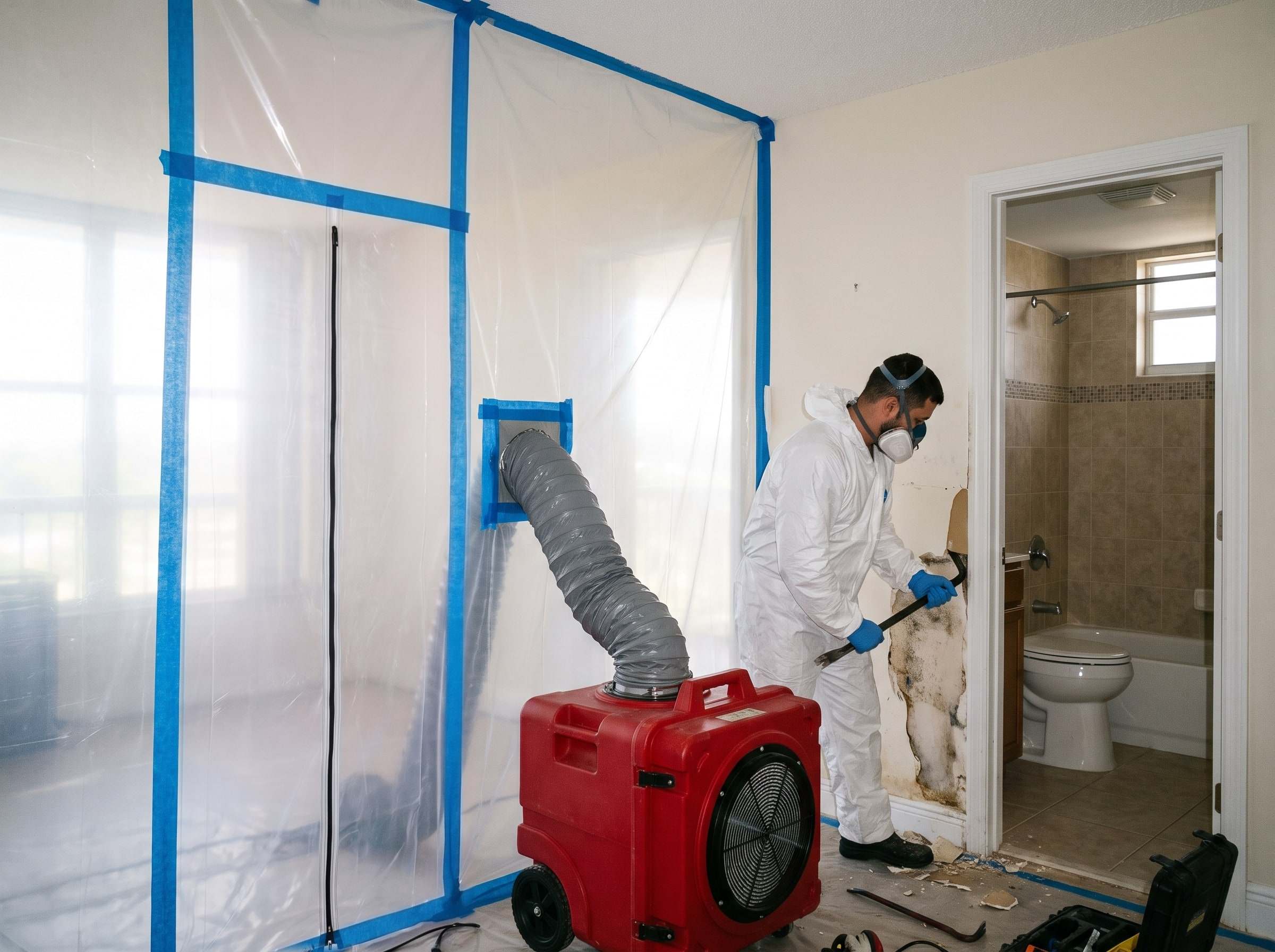
The work area is sealed with plastic sheeting and zippered doors. Larger jobs get an entry chamber so crews can come and go without carrying spores out.
- 03
Negative air and HEPA scrubbing
HEPA-filtered air machines draw air out of the containment, keeping it under negative pressure so air flows in, not out, while the work is underway.
- 04
Remove contaminated materials
Drywall, insulation, carpet, and other porous materials with growth are cut out, bagged inside the containment, and taken out of the building.
- 05
Clean what stays
Framing, block, and other solid surfaces are HEPA-vacuumed and wiped. Stained wood is sanded or wire-brushed, and a final HEPA vacuuming collects settled dust.
- 06
Dry and correct the cause
Remaining materials are dried to normal readings. The moisture source has to be repaired before walls are closed, and we coordinate with your plumber or AC contractor.
- 07
Verification and repairs
When the job calls for it, an independent licensed mold assessor performs post-remediation verification before containment comes down. Then repairs close the area up.
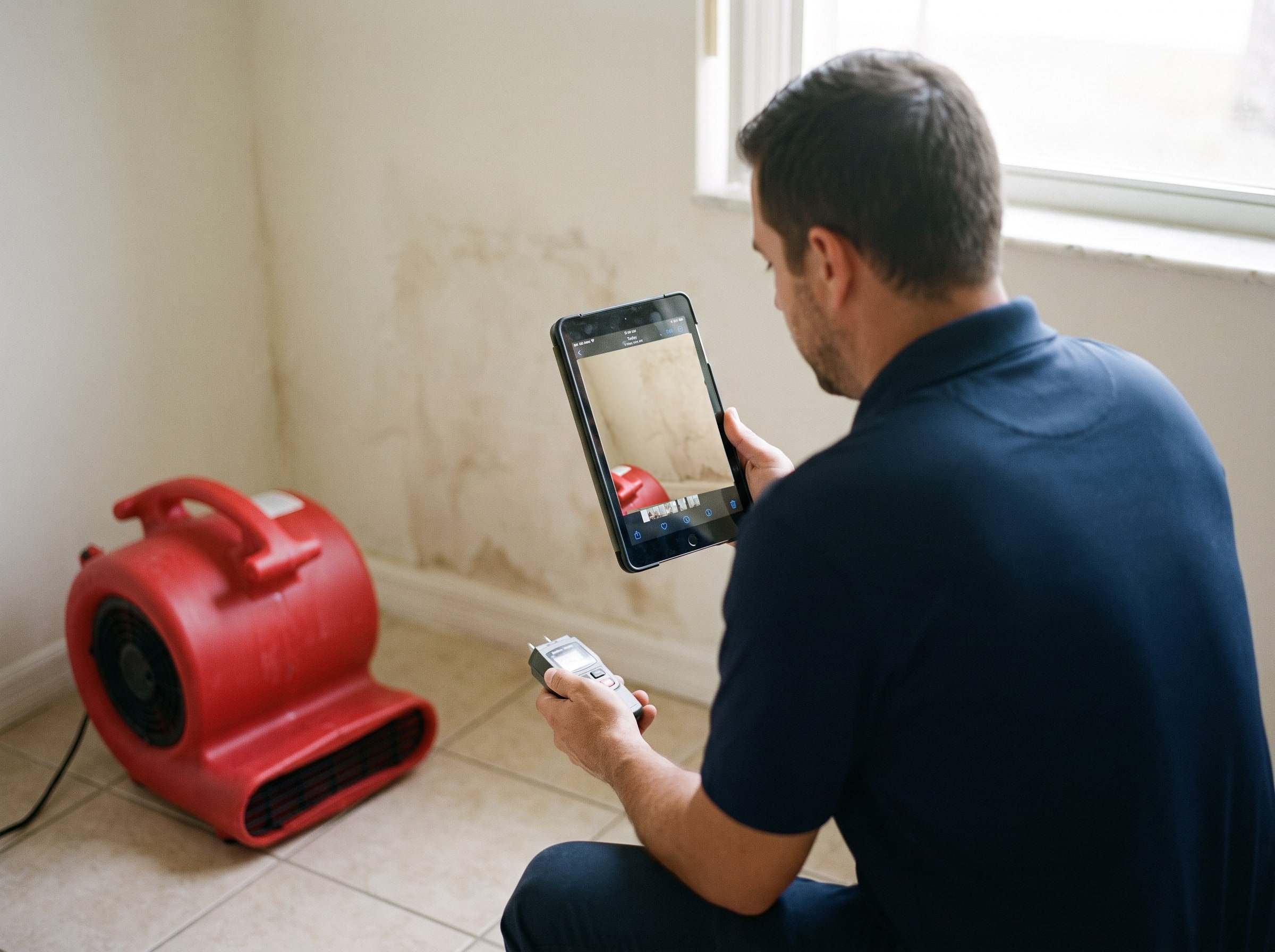
★ Every job is documented: photos, readings, and an itemized scope.
Insurance
Does homeowners insurance cover mold remediation?
Coverage for mold usually follows the cause. If growth came from a sudden, covered water loss, such as a burst pipe, remediation may be covered as part of that claim. Mold from long-term leaks, ongoing humidity, or deferred maintenance is commonly excluded, so check your policy's mold and water exclusions.
Many Florida policies also cap mold coverage at a set dollar amount, separate from the rest of a water claim, so look for a mold limit in your policy. We document the growth, the moisture source, the containment, and every removed material with photos and readings, so your adjuster can see what was found and why the work was needed. For covered claims, we bill your insurance company directly.
Usually covered
- Sudden pipe bursts and supply-line failures
- Water heater ruptures
- Toilet, sink, and tub overflows
- Appliance and AC overflows
- Burst or accidentally discharged fire sprinklers
- Water that enters through storm damage to the roof or windows
- Mold caused by a covered water loss, often up to a set limit
What we document
- Source of the loss and affected areas
- Daily moisture readings and equipment logs
- Thermal images of hidden moisture
- Every material removed, and why
- Each condo unit and common area, documented separately
- Dated photos and an itemized scope of work
Carriers we've worked with: Citizens Property Insurance, Universal Property & Casualty, Tower Hill Insurance, State Farm, Allstate, USAA, and many more. We are not affiliated with or endorsed by any insurance company.
Coverage decisions belong to your insurer and depend on your policy. Florida does not allow assignment of benefits on property policies issued on or after January 1, 2023, so you stay in control of your claim.
How water damage claims work in FloridaFAQ
Mold Remediation in Miami: questions
Is the mold inspection really free?
Yes. We come to your Miami home or condo at no charge, check for growth and odor, take moisture readings, and tell you what we found and what we recommend. Lab testing, if you want it, is a separate service with its own price.
Should I run a fan or a dehumidifier on the mold until you get here?
Not on visible growth. Moving air carries spores to rooms that were clean. Stop the water if you can, close the door to the affected room, keep children and pets out, and call us. Air movers and dehumidifiers come in after the area is contained.
Do I need to tell my condo association about mold in my unit?
Check your declaration and rules, but most associations want to hear about any leak or growth near a shared wall, a plumbing riser, or the unit below. Reporting early helps when more than one unit is involved, and we document each unit and common element separately.
Nearby
More mold remediation coverage
Mold Remediation city guides
- Mold Remediation in Boca Raton Palm Beach County
- Mold Remediation in Fort Lauderdale Broward County
- Mold Remediation in West Palm Beach Palm Beach County
Service areas near Miami
- Water damage restoration in Aventura Miami-Dade County
- Water damage restoration in Hallandale Beach Broward County
- Water damage restoration in Hollywood Broward County
- Water damage restoration in Miramar Broward County
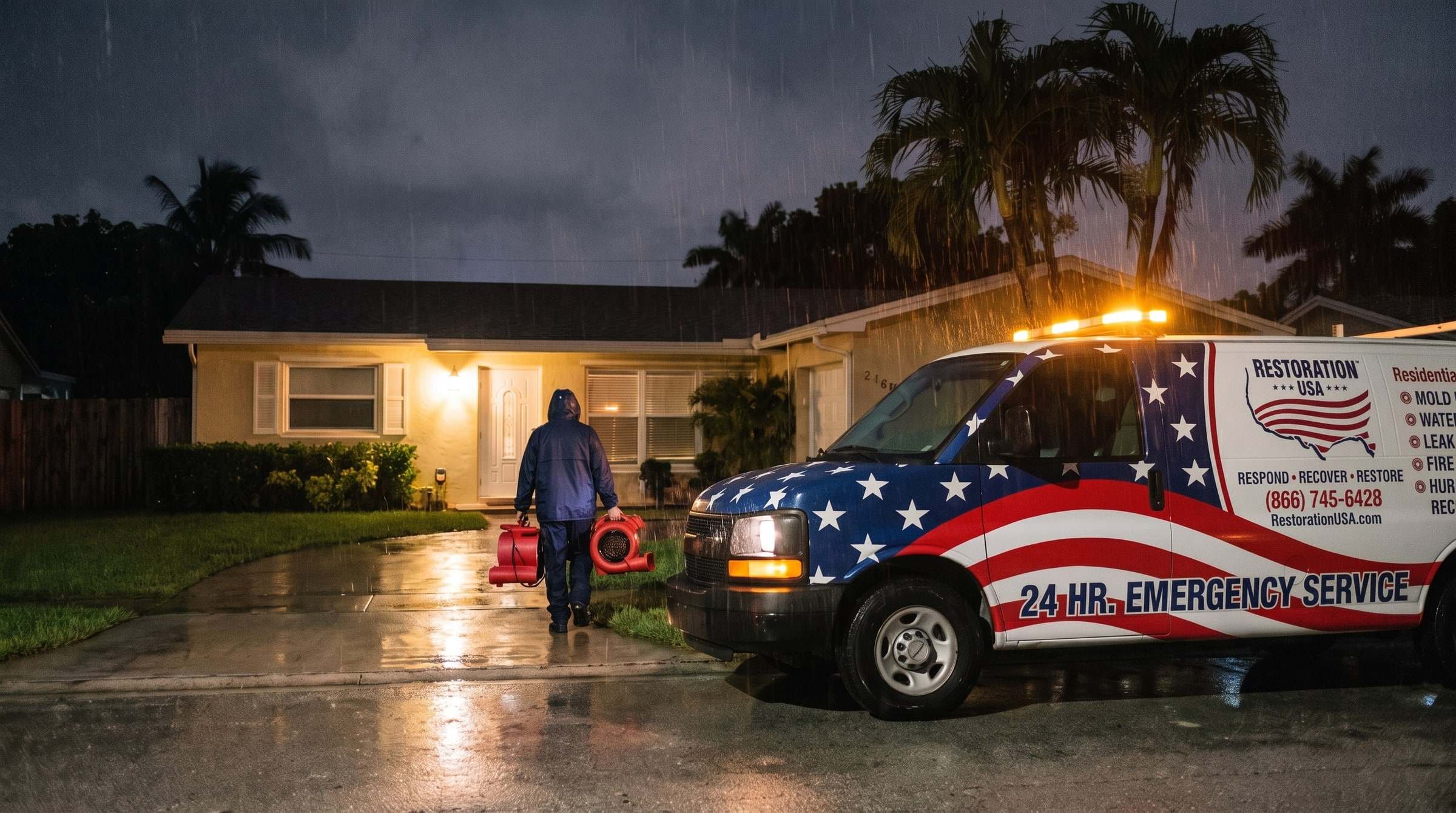
Don't wait. Go with the pros.
Need mold remediation help in Miami?
Call the 24/7 line. We will help you stop the source, tell you what to move, and get a crew scheduled. Not urgent? Send a request and we will call you back.
Call 24/7 (305) 330-1488- 1 We answer 24/7, day or night
- 2 We help you stop the water and protect belongings
- 3 We schedule a crew and tell you when to expect them
On call 24/7
Free inspection
Schedule a no-cost on-site inspection. A restoration specialist will contact you within a few minutes to confirm the details.
Request received
Thank you. A restoration specialist will contact you at the number provided to confirm the details. If water is still coming in, call now and we'll walk you through shutting it off.
(305) 330-1488Recognized by