
Leak Detection · Miami, FL
Leak detection for Miami condos and older homes
In a tower, the stain on your ceiling may start floors above. In an older house, it may start behind plaster. We trace the water back with pressure tests, moisture readings, thermal imaging, and acoustic equipment before anything is opened.
- 24/7 emergency line
- IICRC Certified Firm
- Insurance claim documentation
On call 24/7
Free inspection
Schedule a no-cost on-site inspection. A restoration specialist will contact you within a few minutes to confirm the details.
Request received
Thank you. A restoration specialist will contact you at the number provided to confirm the details. If water is still coming in, call now and we'll walk you through shutting it off.
(305) 330-1488Recognized by





Leak Detection in Miami
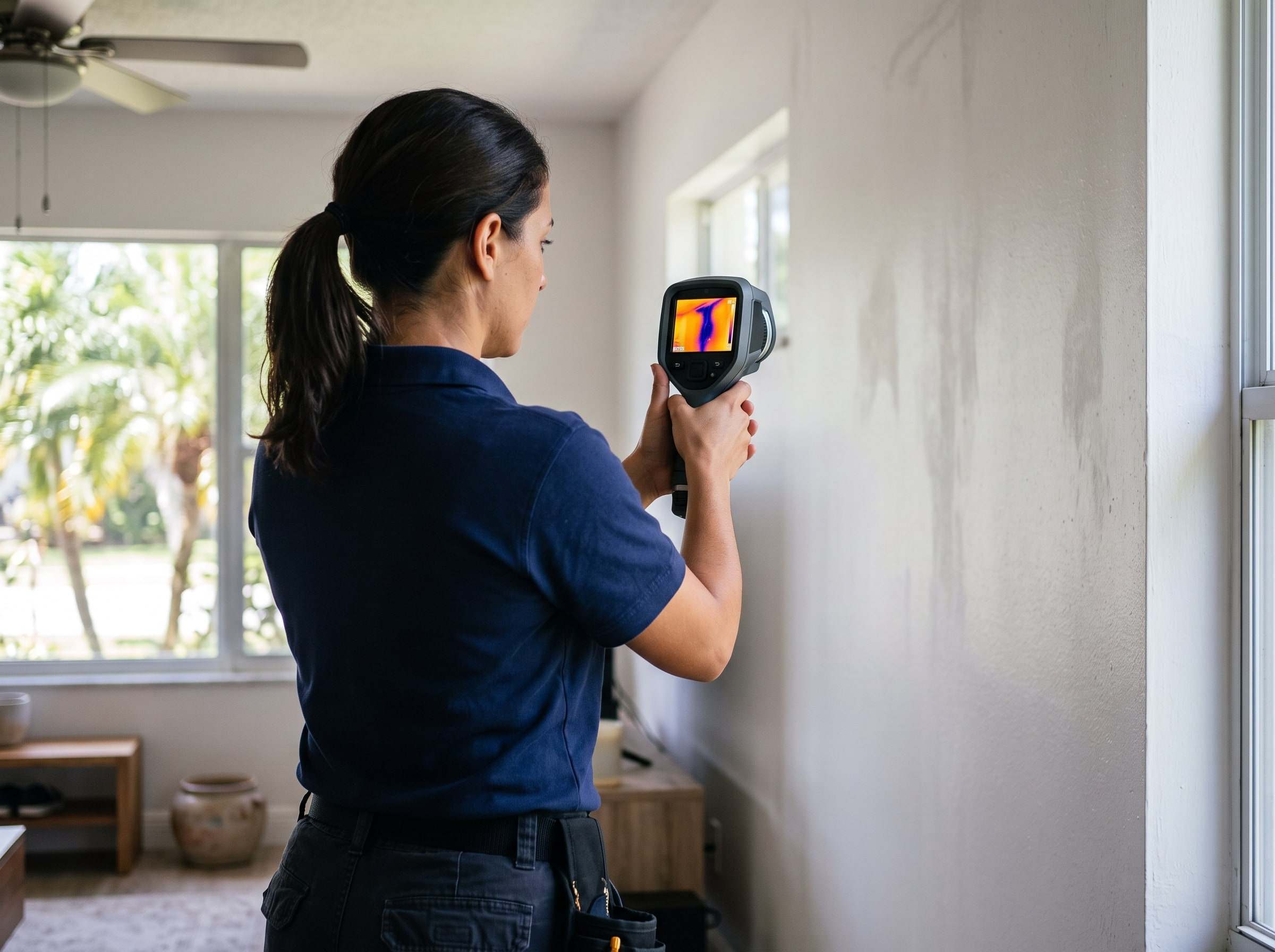
Leak detection in Miami is mostly a tracing job: finding where water entered the building, which is often a long way from where it shows. We test the plumbing, read moisture across walls and ceilings, and follow the water back to its source with thermal imaging and acoustic equipment, then mark it.
What you see first is rarely where the leak is. Water moves along slabs, through wall cavities, and down plumbing chases before it stains a ceiling or lifts a floor, and opening the first wet spot usually means opening several. Pinpointing the source before any demolition costs you nothing, because leak detection is part of our free inspection.
In Brickell, Downtown, and Edgewater towers, that tracing often needs the building engineer, access to the unit above, and sometimes the riser. In Morningside, Shenandoah, The Roads, and Coconut Grove, older houses add plaster walls and original pipes. You receive photos, thermal images, and a written report, and the repair is coordinated with the plumber or the building.
Local factors
What's different about leak detection in Miami
-
Why does a leak in a Miami tower show up floors away from the source?
Because water follows the building: down plumbing chases, along the slab between floors, and into the ceiling of the unit below, sometimes two floors below. A supply valve or drain line in one unit can stain a ceiling that belongs to someone else, so we start where the readings are wettest and work up and sideways from there.
-
Who do I call first when water comes through my condo ceiling?
The front desk or building engineer, so someone can check the unit above and isolate the line if needed. Then call us. We trace the source with the building's permission, document every affected unit and common area, and start drying.
-
Why are leaks in older Miami houses hard to spot?
In plaster-walled houses, a leak often shows as bubbling paint or a soft patch well after the wall behind it got wet. Many of these houses also kept original galvanized supply lines, which were common before the 1960s and collect corrosion deposits inside, so we check the lines as well as the walls.
-
Why locate the leak before anything is opened?
Because the alternative is guessing with a saw. A located leak is repaired through one small opening; an unlocated one can mean opening several walls or floors, each of which has to be rebuilt, and in a condo that can include someone else's ceiling.
-
How much does leak detection cost in Miami?
Nothing. Leak detection is part of our free inspection, so tracing the leak and marking the source cost you nothing. The repair itself is separate plumbing work, done and priced by your plumber or the building.
Our process
How do you find a hidden leak?
- 01
Review the symptoms
We start with your water bills, where the symptoms appear, the age of the plumbing, and whether the lines are copper, CPVC, PEX, or cast iron.
- 02
Meter and pressure tests
With fixtures off, we read the meter, then isolate and pressure-test lines to learn whether the leak is on the hot side, the cold side, the service line, or the irrigation.
- 03
Acoustic listening
Ground microphones and listening equipment pick up water escaping a pressurized line through tile, concrete, and soil. The sound is strongest closest to the leak.
- 04
Thermal imaging
Infrared cameras show the heat signature of a hot water leak and the cooler pattern of moisture in walls, ceilings, and floors.
- 05
Moisture mapping
Meters confirm what the camera shows and trace how far the water has traveled, which tells us how much drying the area needs.
- 06
Video pipe inspection
For drain and sewer lines, a camera is run through the pipe to look for cracks, separated joints, roots, and corrosion.
- 07
Mark, report, and coordinate
We mark the leak, give you a written summary with photos and thermal images, and coordinate the repair with your plumber. If water has reached the structure, drying starts right away.
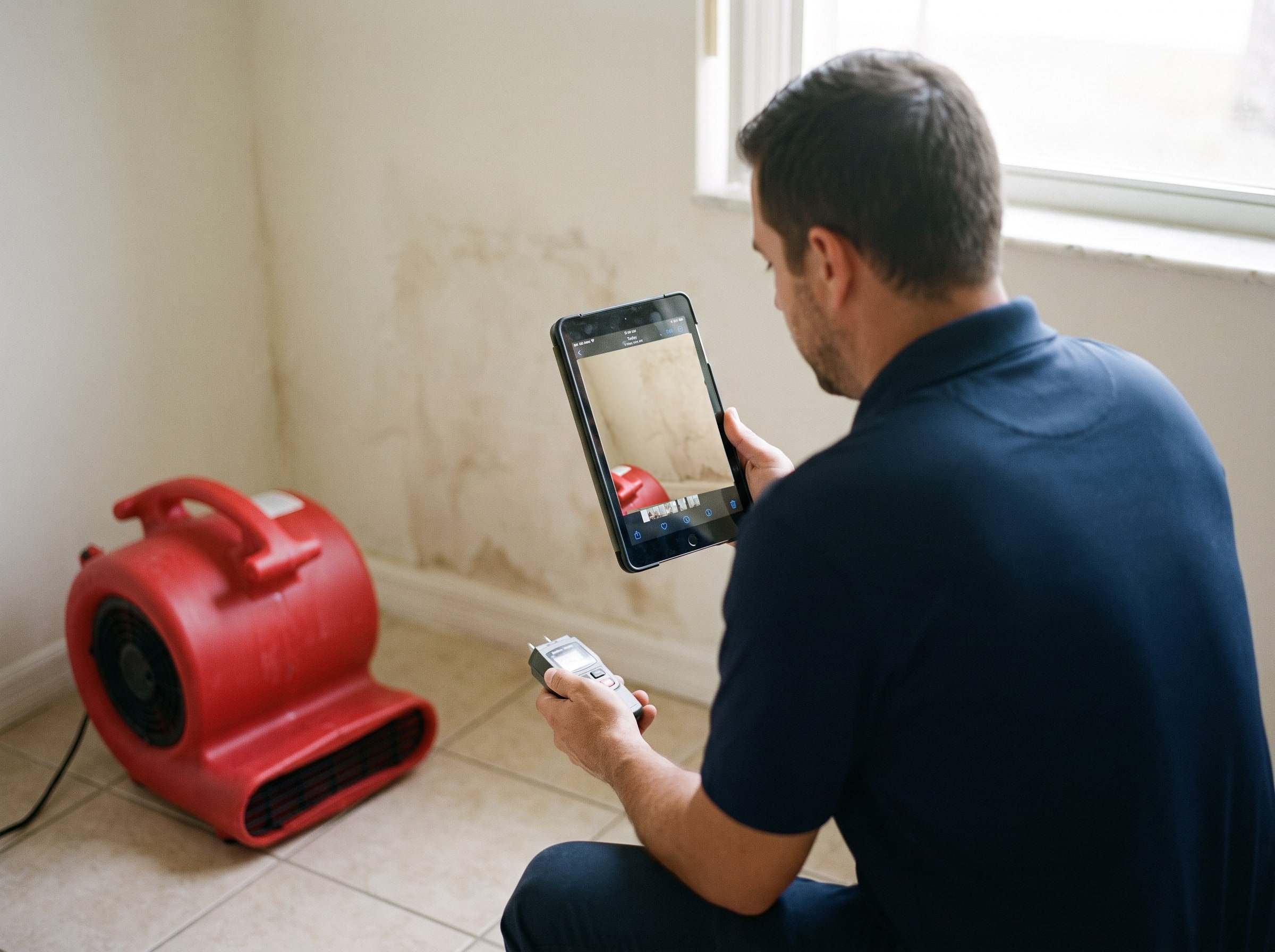
★ Every job is documented: photos, readings, and an itemized scope.
Insurance
Does homeowners insurance cover leak detection?
Leak detection is part of our free inspection, so there is no bill for finding the leak. Your policy decides the rest: sudden water damage from a plumbing leak is generally covered, while the pipe repair itself is often handled differently, and damage from a leak that ran for a long time is usually excluded.
Some policies also pay to open and close the wall or floor needed to reach the pipe, so check your policy's water damage section. We document the location, the source, and the extent of the water damage with photos, thermal images, and moisture readings so your adjuster has what is needed to decide.
Report a leak to your carrier promptly, since Florida policies set deadlines for reporting claims. For covered claims, we bill your insurance company directly.
Usually covered
- Sudden pipe bursts and supply-line failures
- Water heater ruptures
- Toilet, sink, and tub overflows
- Appliance and AC overflows
- Burst or accidentally discharged fire sprinklers
- Water that enters through storm damage to the roof or windows
- Mold caused by a covered water loss, often up to a set limit
What we document
- Source of the loss and affected areas
- Daily moisture readings and equipment logs
- Thermal images of hidden moisture
- Every material removed, and why
- Each condo unit and common area, documented separately
- Dated photos and an itemized scope of work
Carriers we've worked with: Citizens Property Insurance, Universal Property & Casualty, Tower Hill Insurance, State Farm, Allstate, USAA, and many more. We are not affiliated with or endorsed by any insurance company.
Coverage decisions belong to your insurer and depend on your policy. Florida does not allow assignment of benefits on property policies issued on or after January 1, 2023, so you stay in control of your claim.
How water damage claims work in FloridaFAQ
Leak Detection in Miami: questions
Does homeowners insurance cover water leaks under the house?
It depends on the policy and on what happened. Damage from a sudden leak is often handled differently from the pipe repair itself or from a gradual leak. Ask your insurer before anything is torn out; the report we give you documents the source and the damage.
Do you work with condo associations and property managers?
Yes. We coordinate access through management, document each unit and common element we test, and give the association the same written report you receive.
Can you find a leak without opening walls?
Locating is non-invasive: pressure tests, moisture meters, thermal imaging, and listening equipment all work from the surface. The opening comes later, made by your plumber at the marked location.
Nearby
More leak detection coverage
Leak Detection city guides
- Leak Detection in Pembroke Pines Broward County
- Leak Detection in Pompano Beach Broward County
- Leak Detection in West Palm Beach Palm Beach County
Service areas near Miami
- Water damage restoration in Aventura Miami-Dade County
- Water damage restoration in Hallandale Beach Broward County
- Water damage restoration in Hollywood Broward County
- Water damage restoration in Miramar Broward County
Don't wait. Go with the pros.
Need leak detection help in Miami?
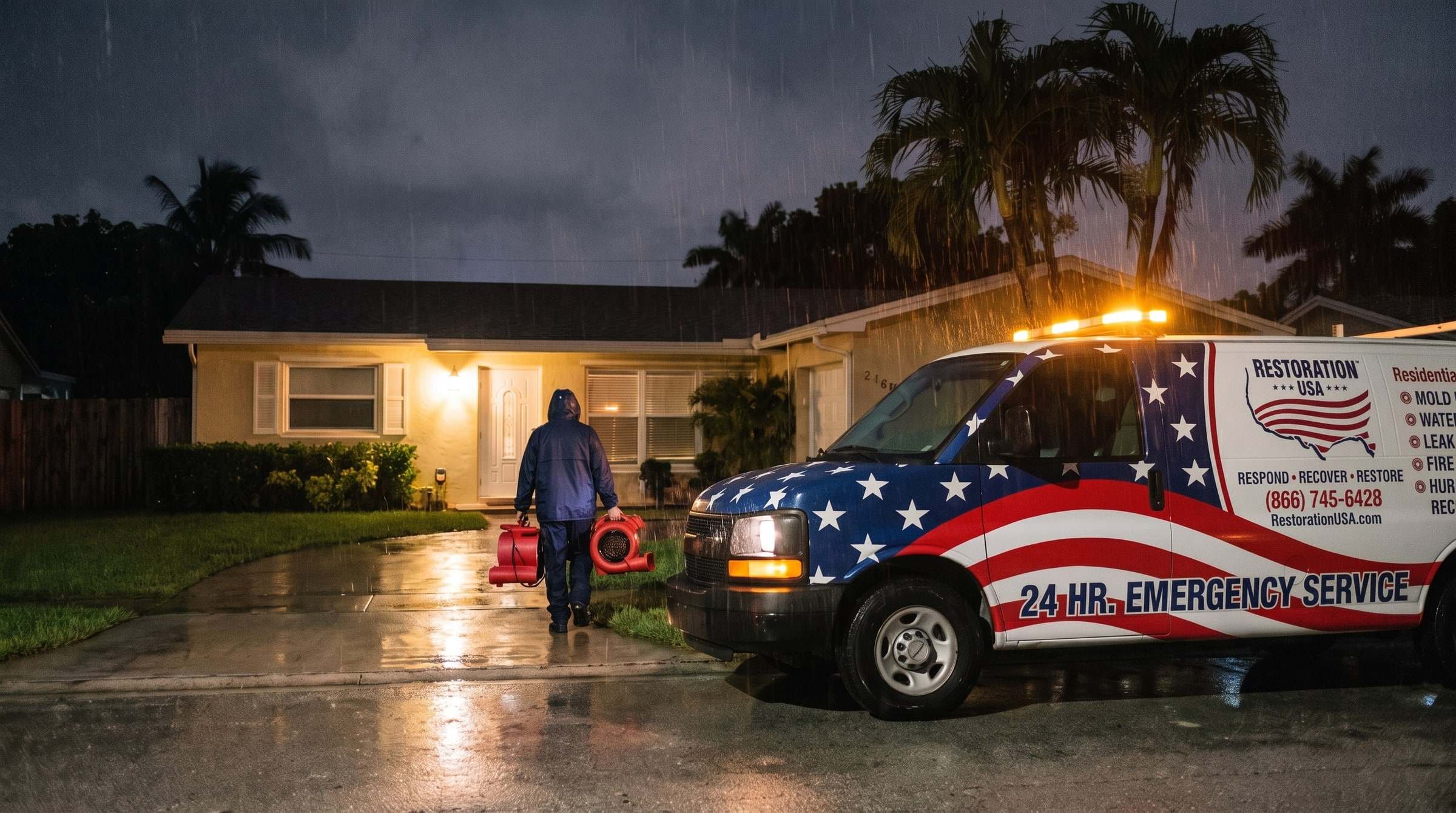
Call the 24/7 line. We will help you stop the source, tell you what to move, and get a crew scheduled. Not urgent? Send a request and we will call you back.
Call 24/7 (305) 330-1488- 1 We answer 24/7, day or night
- 2 We help you stop the water and protect belongings
- 3 We schedule a crew and tell you when to expect them
On call 24/7
Free inspection
Schedule a no-cost on-site inspection. A restoration specialist will contact you within a few minutes to confirm the details.
Request received
Thank you. A restoration specialist will contact you at the number provided to confirm the details. If water is still coming in, call now and we'll walk you through shutting it off.
(305) 330-1488Recognized by