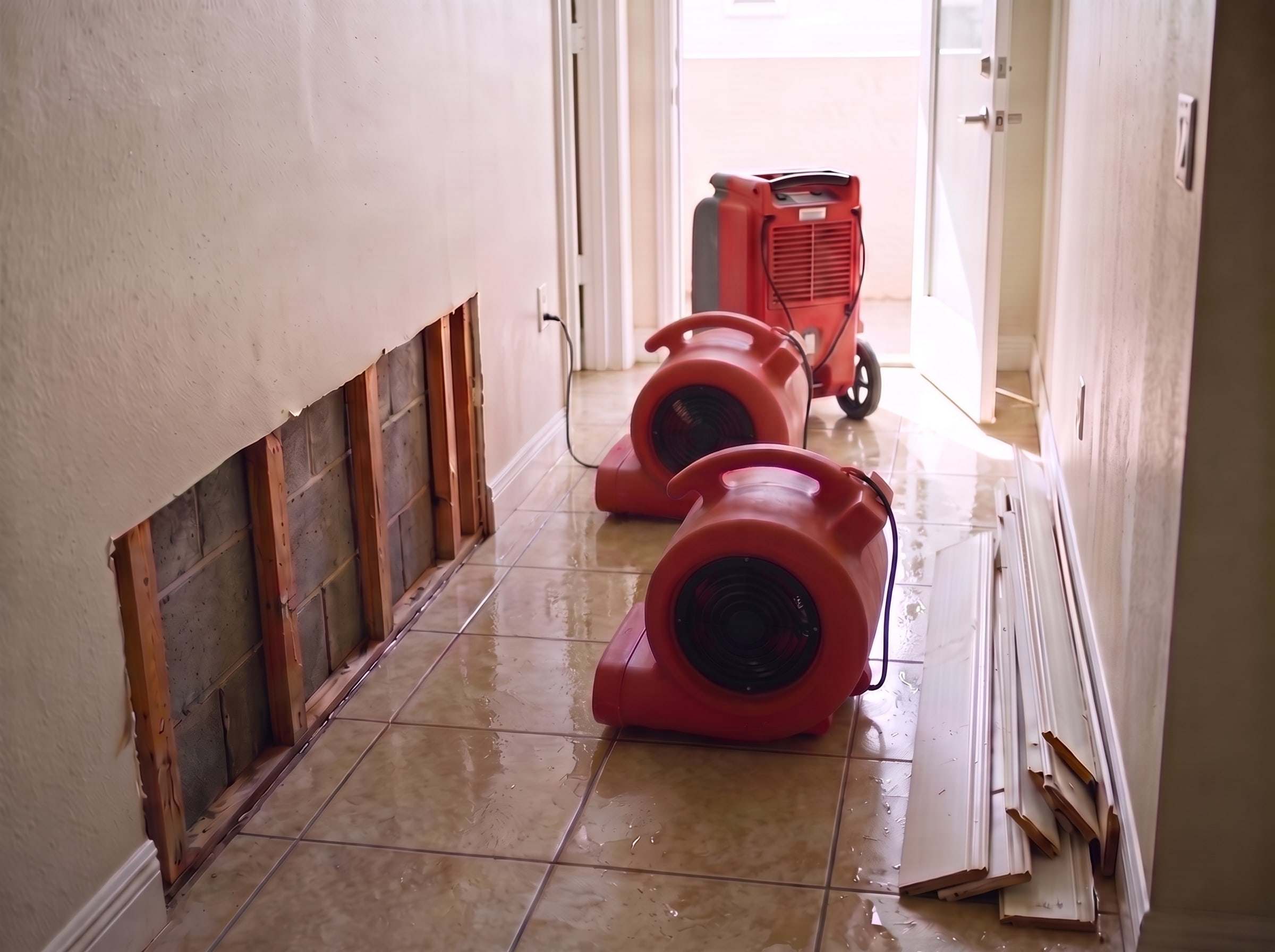
Structural Drying & Dehumidification
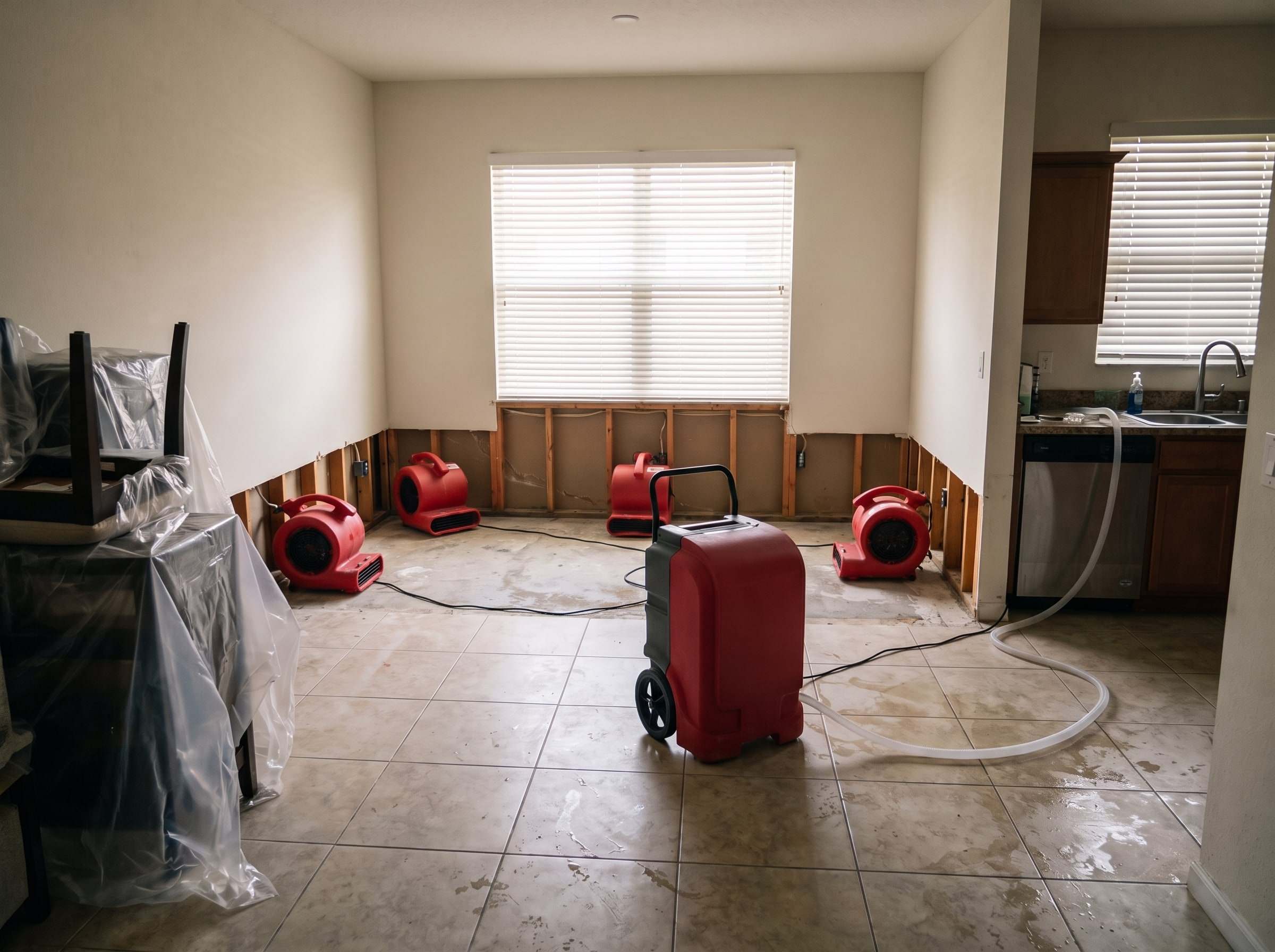
Dehumidification, air movement, and targeted drying for wall cavities, block, slabs, and hardwood, tracked with daily moisture readings.
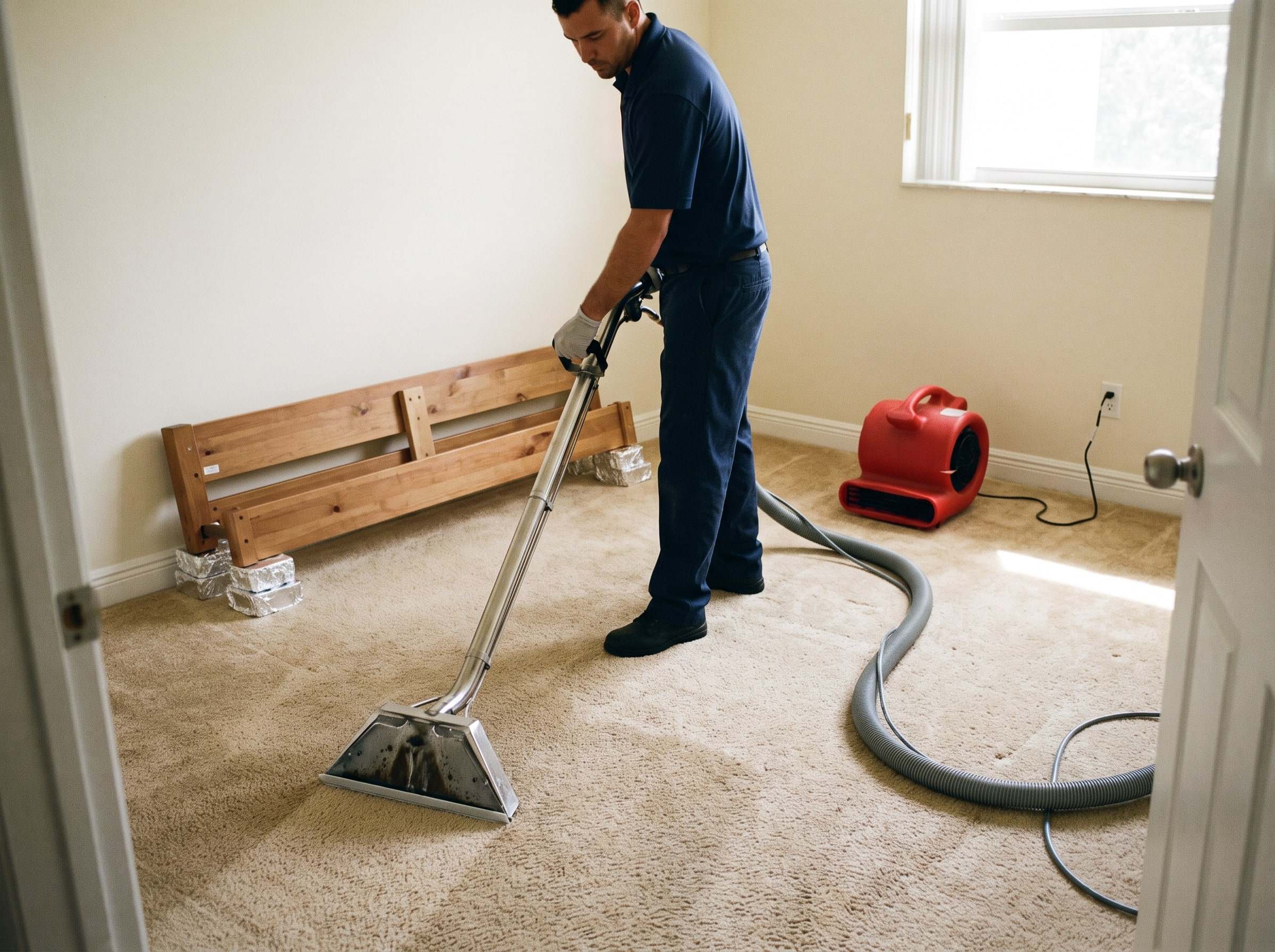
Emergency water removal
We pump out standing water and pull it from carpet, pad, and grout so drying can start as soon as the floor is clear. Call the 24/7 line and we'll tell you when a crew can be there.
On call 24/7
Schedule a no-cost on-site inspection. A restoration specialist will contact you within a few minutes to confirm the details.
Request received
Thank you. A restoration specialist will contact you at the number provided to confirm the details. If water is still coming in, call now and we'll walk you through shutting it off.
(954) 289-0566Recognized by




Water removal means pumping or vacuuming standing water off the floor; extraction goes further and pulls water out of carpet, pad, rugs, and the joints and gaps it has seeped into. Both come first in any water loss, and the more water that comes out as liquid, the fewer days of drying and the less material torn out.
Thorough extraction shortens everything that follows. Water pulled out as liquid is gone in minutes, while the same water left behind has to evaporate and be captured by dehumidifiers over several days.
South Florida floors make this stage more important. Water on tile over a concrete slab does not drain away; it sits in grout lines, runs under baseboards, and follows the slab into the next room. In a condo tower it finds the gaps around pipes and reaches the unit below.
What to look for
Press hard on the carpet: if the pad feels cold or damp, it is holding water, even when the fibers feel almost dry. Grout lines that stay dark, swelling cabinet bases, damp floors in the next room, or a new stain on the ceiling below all mean the water has moved into materials, not just across the surface.
Carpet fibers can feel almost dry while the pad underneath is soaked. Press down hard with your palm; cold or damp means the pad is holding water.
Water collects at the perimeter where carpet meets the tack strip, and from there it wicks into the bottom of the drywall and baseboard.
Grout that stays dark after the tile surface dries means water is still in the joints and may be trapped under loose tiles.
Water travels under interior walls and along the slab. Damp carpet or baseboards one room over mean the affected area is bigger than it looks.
Particleboard toe-kicks and cabinet bottoms take on water within hours and start to puff up at the edges.
In a two-story home or a condo, a new stain under the wet area means water has already gone through the floor.
Our process
We shut off the source and power to wet rooms, identify the water category, pump deep water with submersible pumps, then extract the rest with truck-mounted or portable units and weighted tools that pull water out of the carpet pad. Once the floor is clear, we decide what can be dried in place, take moisture readings, and set up dehumidifiers and air movers. The equipment depends on how deep the water is, what flooring it is on, and how close our truck can get to the door.
We confirm the source is shut off and check for electrical hazards. Power to wet rooms is turned off at the panel before anyone walks through standing water.
We determine whether the water is clean (Category 1), carrying some contamination (Category 2), or grossly contaminated like sewage or floodwater (Category 3). That decides the protective gear and what can be saved.
Where water is deep, as in a flooded garage or ground-floor unit, submersible pumps move the bulk of it out before the extractors take over.
Truck-mounted extractors give the strongest suction and send waste water to a tank on the truck. In high-rise condos, gated communities, or anywhere the hoses cannot reach, portable extractors are carried in and emptied as we go.
Weighted or stand-on extraction tools compress the carpet so water is pulled out of the pad, not just the surface fibers. We make slow, overlapping passes until little water comes up.
Carpet wet with clean water can often be lifted off the tack strip (called floating) and dried in place. Pad soaked by gray water, and carpet and pad touched by sewage or floodwater, are removed.
With the standing water gone, we take moisture readings across floors and walls, photograph the conditions, and set up dehumidifiers and air movers.
Types and causes
Most emergency water removal starts with a failed water heater, a broken supply line or fitting, a washer or dishwasher overflow, a toilet or drain overflow, storm water under a door, or water from the unit above. A pressurized line keeps flowing until someone shuts it off, which is why these losses are often largest when no one is home.
A tank that rusts through releases everything it holds, and the supply line keeps refilling it until someone closes the valve.
A pressurized line keeps flowing until it is shut off, which is why these losses are often largest when no one is home.
Wind-driven rain and rising water push in under exterior doors and sliding glass doors. Rising water from outside is handled as Category 3; wind-driven rain is categorized after we inspect it.
Fill and drain failures leave water that is usually Category 2, because it carries detergent, food, or soil.
A toilet overflow without waste may be Category 2. Anything that came up from a sewer line is Category 3 and handled under sewage protocols.
In condo buildings, water travels down through slab penetrations and lands on your floor. We extract your unit and check the ones around it.
Timing
Water on the floor keeps moving into materials that are harder and slower to dry. Extraction is the step that stops that spread.
Water runs under baseboards and cabinets and into the carpet pad. On a slab it follows the lowest path into the next room.
Drywall starts pulling water upward from the floor, and laminate and particleboard cabinet bases begin to swell.
The longer clean water sits, the more contaminants it picks up from floors and materials, and its category can change.
Mold becomes likely on materials that are still wet, and a job that needed extraction and drying starts to need demolition.
Why Restoration USA
We answer 24/7, day or night. We walk you through shutting off the water and protecting your belongings while a crew is scheduled.
Extraction follows the IICRC S500 standard for water damage, including how each category of water is handled and what has to be removed.
Standing water, the source, and the starting moisture readings are photographed and recorded before anything is pulled up.
Single-family homes, condo towers, offices, and retail spaces, each with the extraction setup that fits the building.
Reviews
Karla and her crew came in and made sure that the damage was mitigated and ensured less damage was made to my home. They were thorough and genuine throughout the process
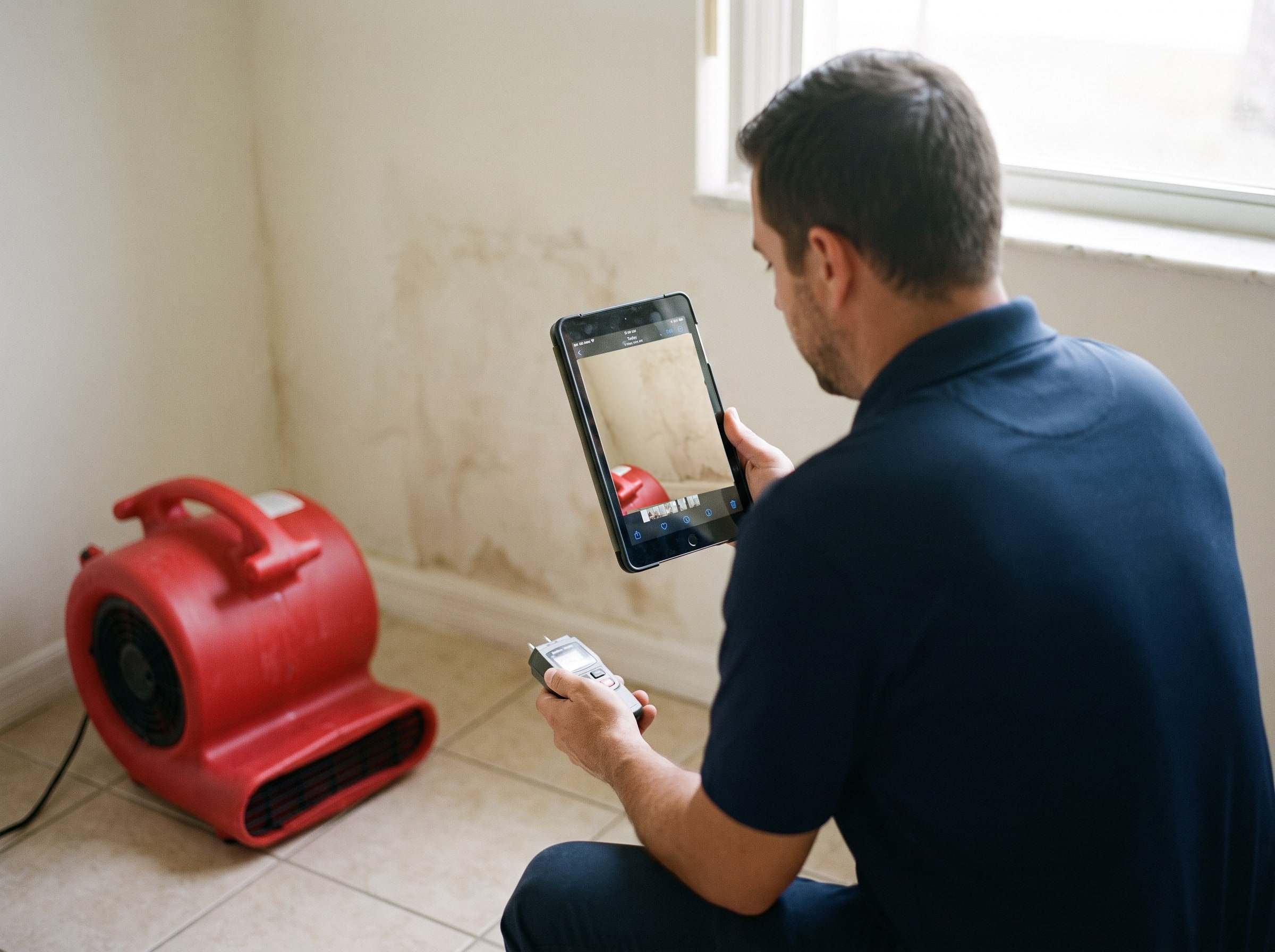
★ Every job is documented: photos, readings, and an itemized scope.
Insurance
When the loss is covered, the cost of emergency water removal is normally handled within the claim; your policy and adjuster decide. Florida's Homeowner Claims Bill of Rights advises you to make and document emergency repairs needed to prevent further damage, and extraction is exactly that.
Before anything is removed, we photograph the water, record its source and category, and take moisture readings. Take your own photos too, and keep any failed part, such as a burst hose or cracked fitting, because your adjuster may ask to see it. For covered claims, we bill your insurance company directly; you pay the deductible and anything the policy does not cover.
Carriers we've worked with: Citizens Property Insurance, Universal Property & Casualty, Tower Hill Insurance, State Farm, Allstate, USAA, and many more. We are not affiliated with or endorsed by any insurance company.
Coverage decisions belong to your insurer and depend on your policy. Florida does not allow assignment of benefits on property policies issued on or after January 1, 2023, so you stay in control of your claim.
How water damage claims work in FloridaFAQ
Shut off the water at the fixture or the main valve, and turn off breakers to wet rooms if you can reach the panel without standing in water. Move electronics and small furniture off wet floors, slide foil or plastic under the legs of heavy pieces, and pick up rugs and anything sitting on wet carpet. Take photos before you move things, and do not use a household vacuum on water.
For a small clean-water spill on tile, a wet/dry vac and towels may be enough. A shop vac cannot pull water out of carpet pad or from under baseboards and cabinets, and it is slow against more than a few gallons. If the water reached carpet, walls, or a second room, it needs professional extraction and drying.
It depends on how much water there is, how far it spread, what flooring it reached, and the category of water. We give you a scope after the free inspection, and for covered claims, we bill your insurance company directly; you pay the deductible and anything the policy does not cover.
Often, if the water was clean and extraction starts quickly. Carpet can usually be extracted, floated off the tack strip, and dried in place, although the pad is often replaced because it holds water and is inexpensive to swap. Carpet and pad soaked by sewage or floodwater are removed, in line with CDC flood cleanup guidance.
Extraction is the first part of it. Removal and extraction get the liquid water out, structural drying then dries the materials that absorbed it, and restoration covers cleaning and repairs. We handle all three, but extraction is the stage that cannot wait.
Truck-mounted hoses usually cannot reach upper floors, so we bring portable extractors and pumps up to the unit. We protect hallways and elevators, coordinate access with building management, and check the units below for water coming through the ceiling.
Related services
Dehumidification, air movement, and targeted drying for wall cavities, block, slabs, and hardwood, tracked with daily moisture readings.
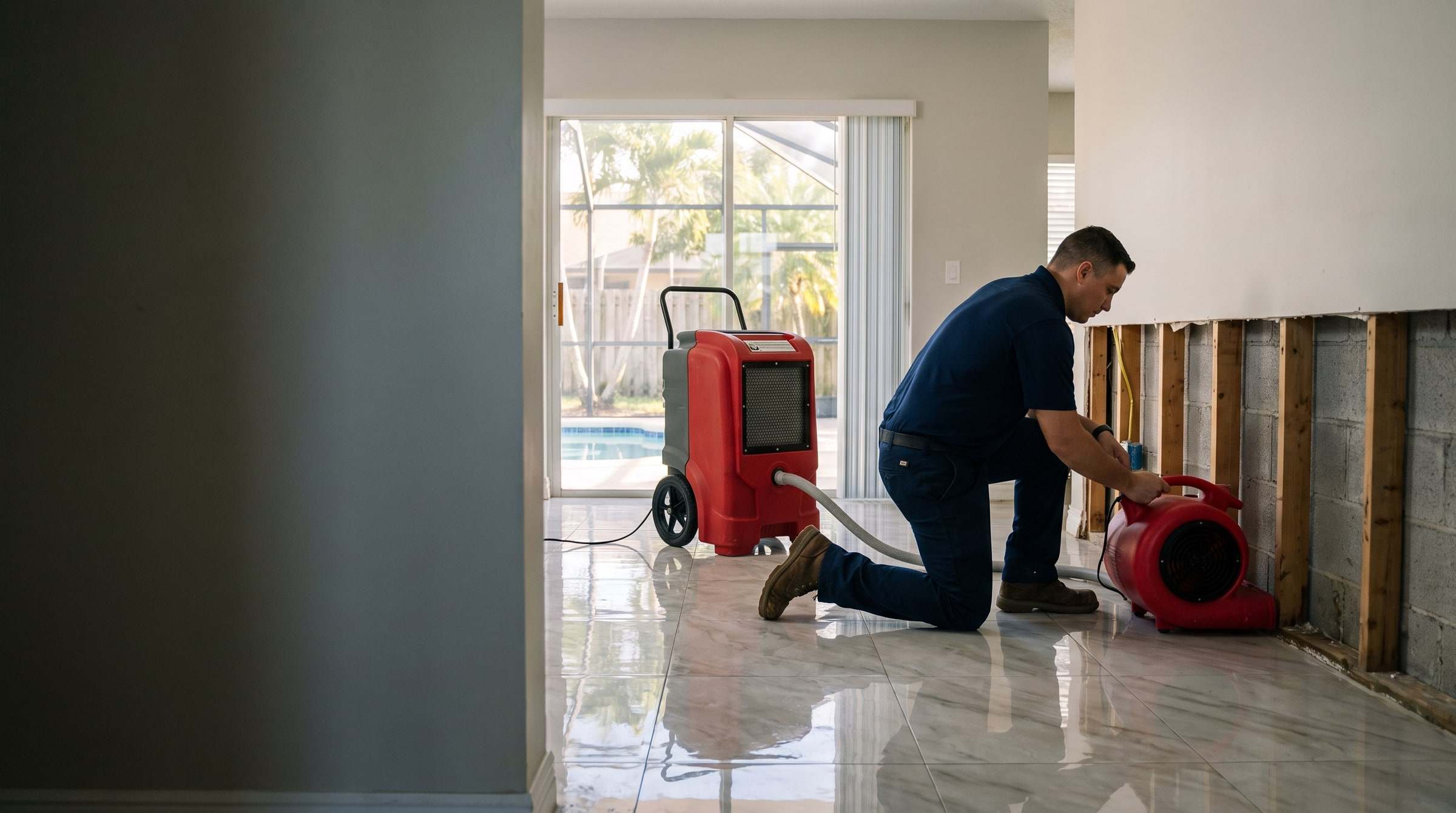
Extraction, moisture mapping, and structural drying for leaks, overflows, and floods, with documentation your adjuster can use.
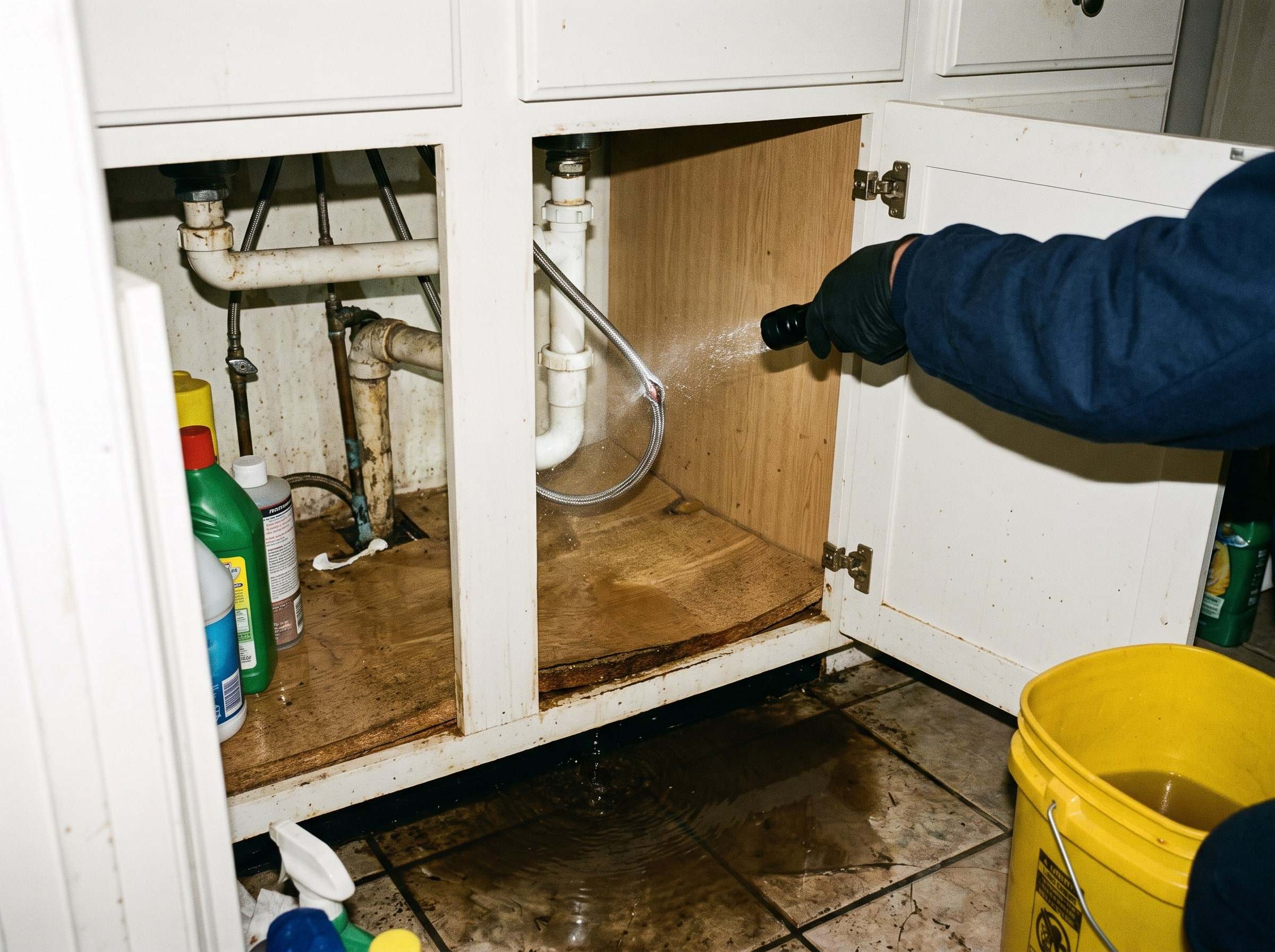
Extraction, drying, and repairs after supply line breaks, pinhole leaks, slab leaks, and failed valves, coordinated with your plumber.
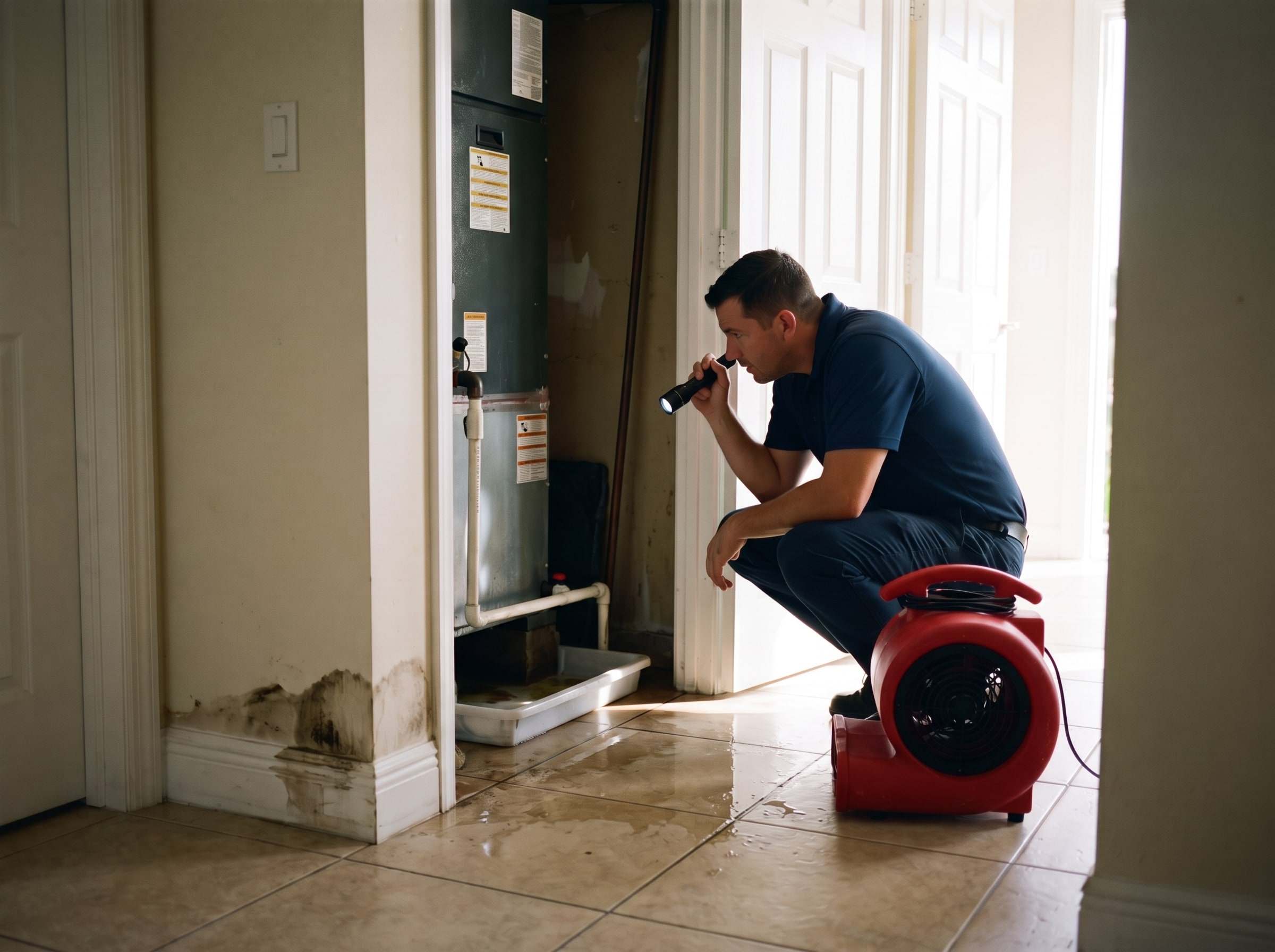
Cleanup and drying after AC condensate overflows, water heater failures, and washer, dishwasher, and ice-maker leaks, including damage under cabinets.
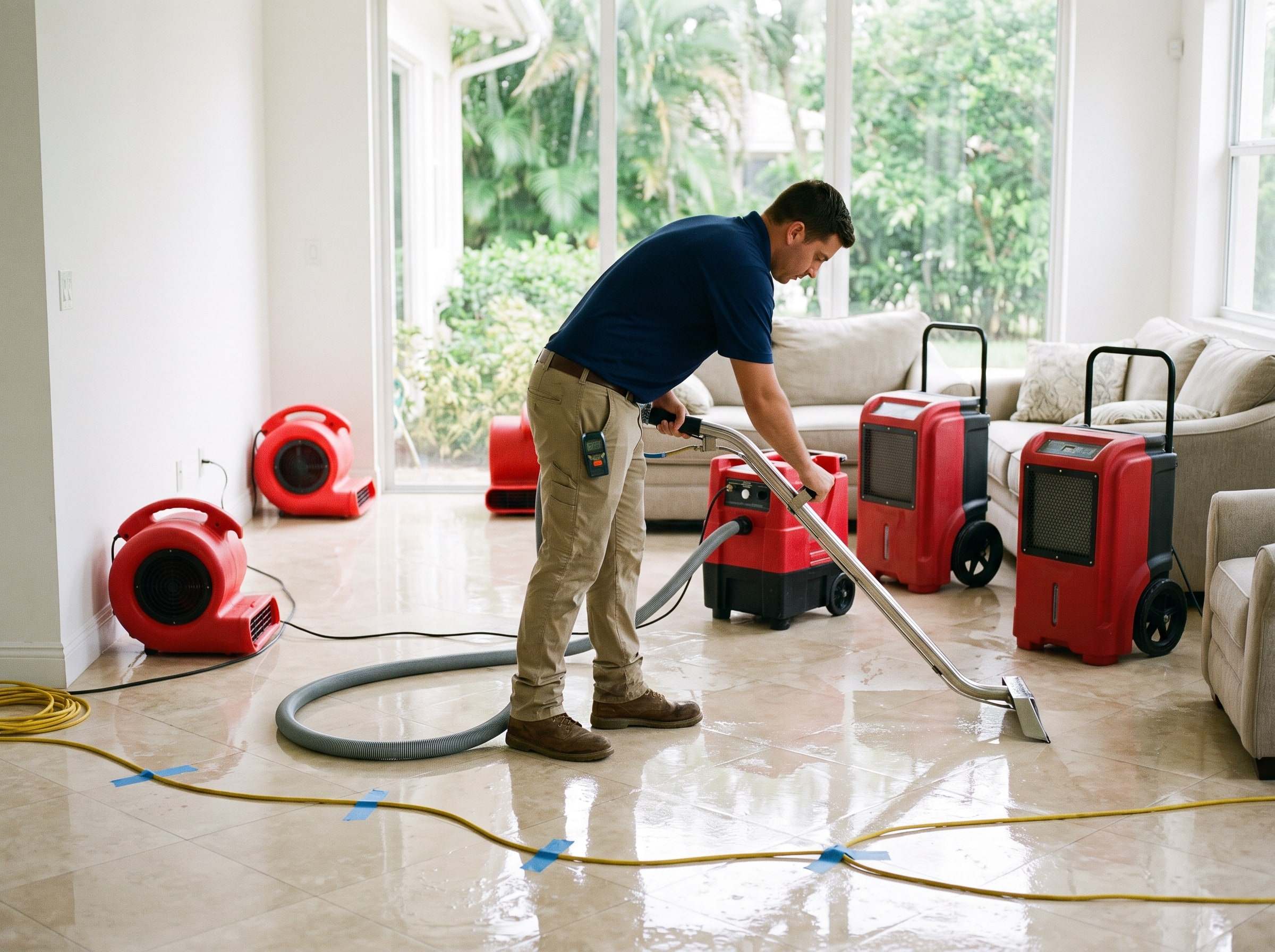
Category 3 cleanup for storm surge, street flooding, and tidal water: extraction, flood cuts, sanitizing, and drying, documented for a flood claim.
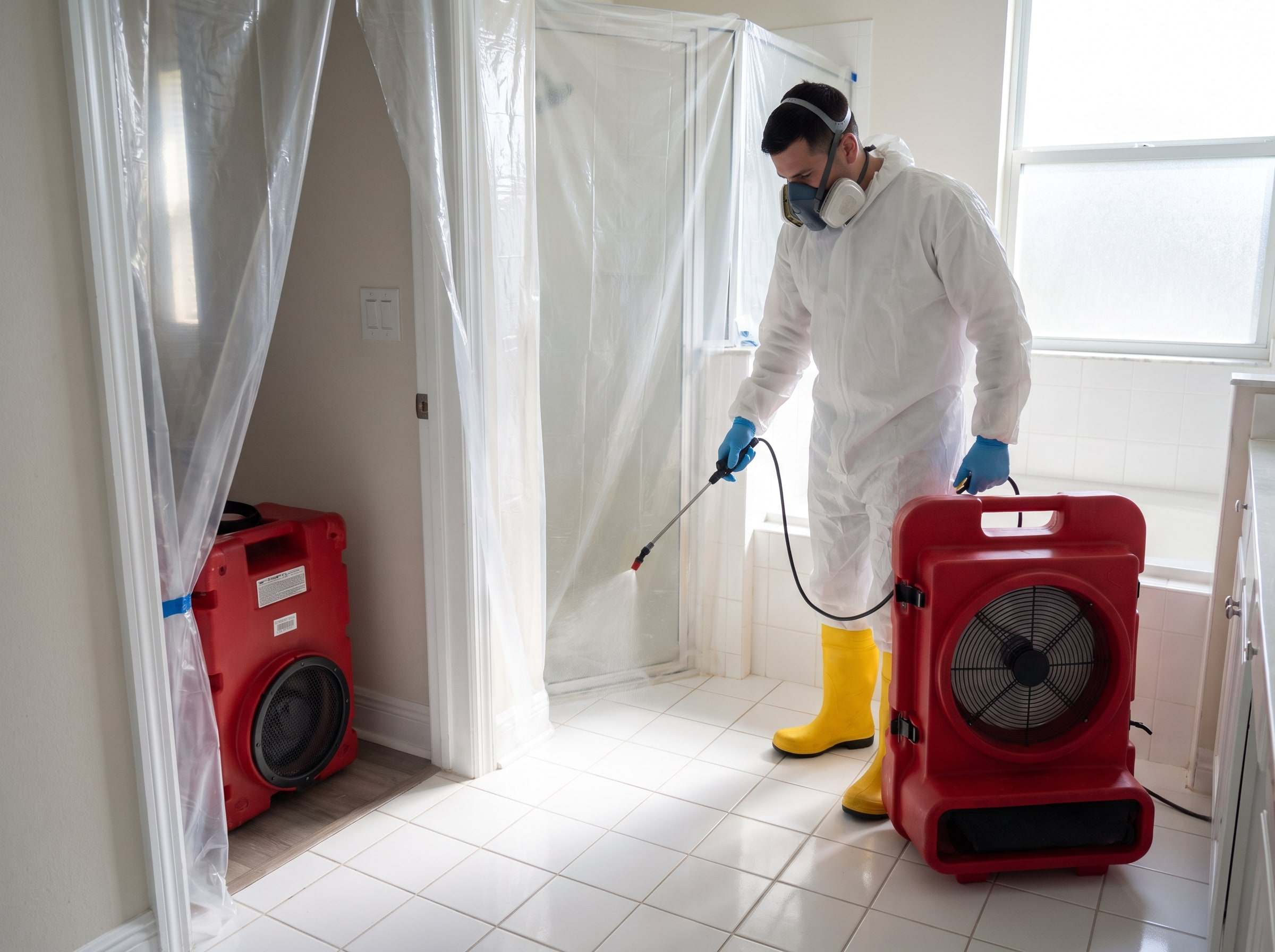
Containment, removal, sanitizing, and drying after toilet overflows, main line backups, septic failures, and cast-iron drain leaks.
Service areas
We cover Miami-Dade, Broward, and Palm Beach counties. These are some of the cities where we handle water removal most often.
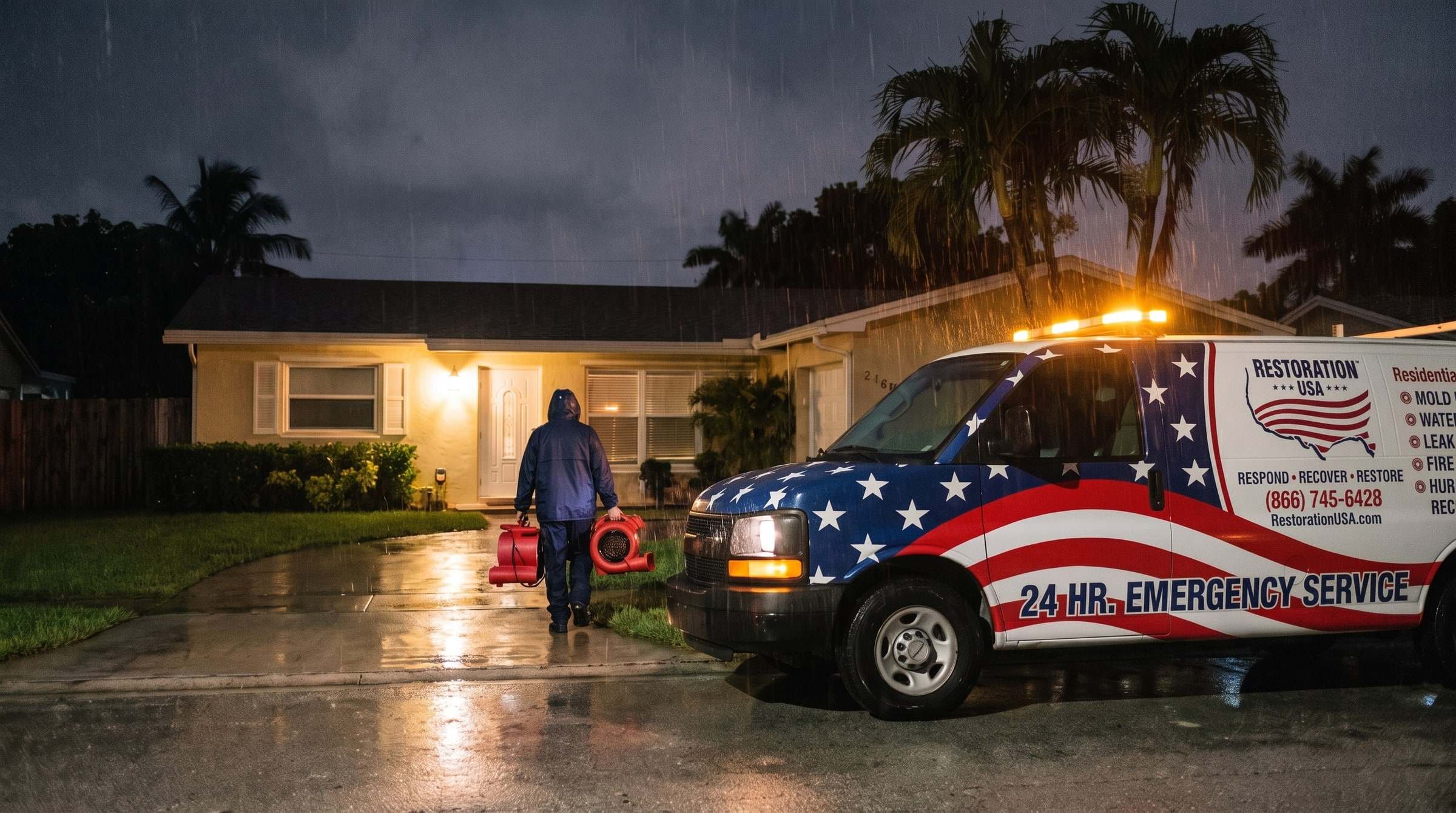
Don't wait. Go with the pros.
Call the 24/7 line. We will help you stop the source, tell you what to move, and get a crew scheduled. Not urgent? Send a request and we will call you back.
Call 24/7 (954) 289-0566On call 24/7
Schedule a no-cost on-site inspection. A restoration specialist will contact you within a few minutes to confirm the details.
Request received
Thank you. A restoration specialist will contact you at the number provided to confirm the details. If water is still coming in, call now and we'll walk you through shutting it off.
(954) 289-0566Recognized by