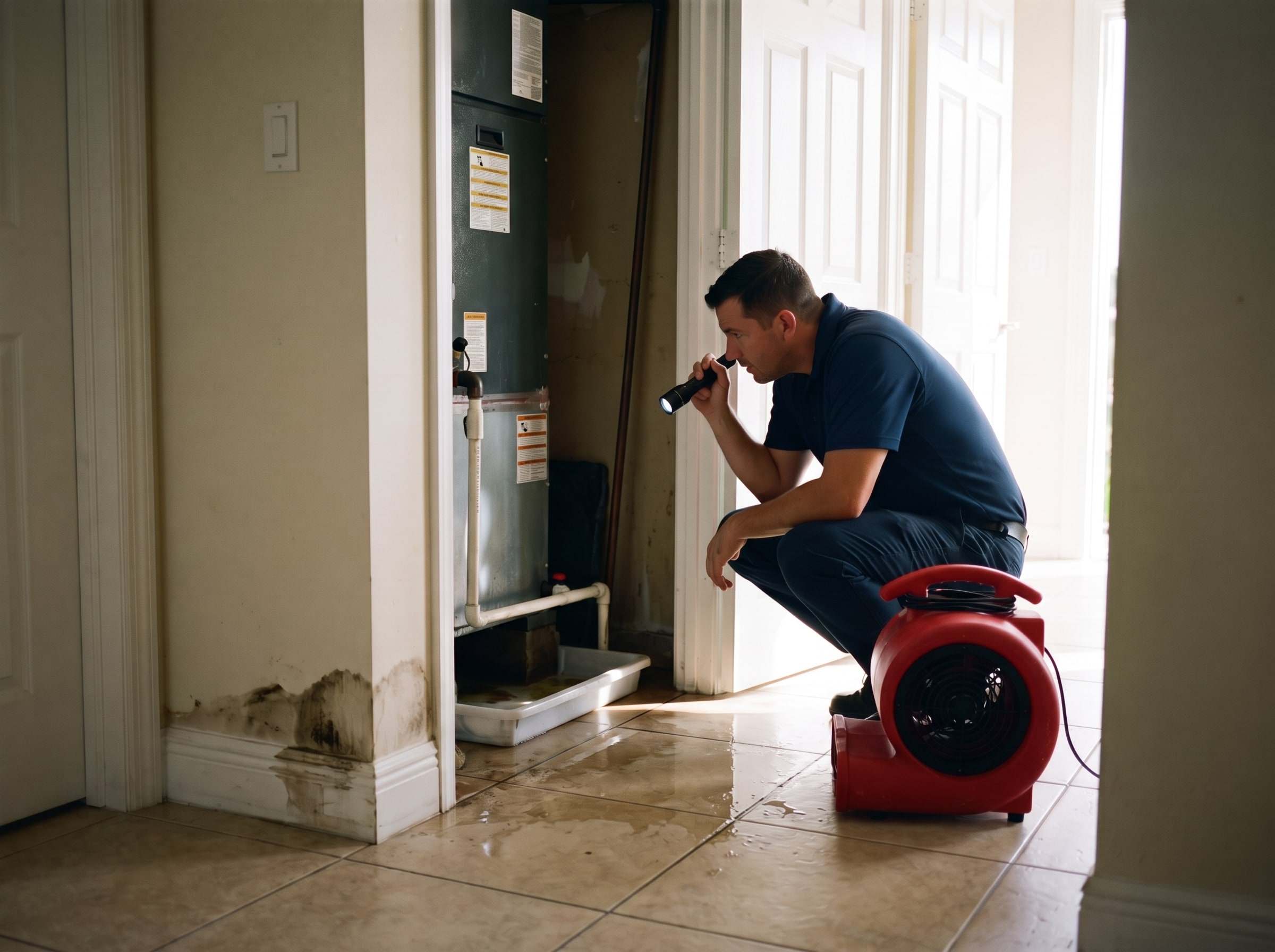
AC & Appliance Leak Cleanup
Cleanup and drying after AC condensate overflows, water heater failures, and washer, dishwasher, and ice-maker leaks, including damage under cabinets.
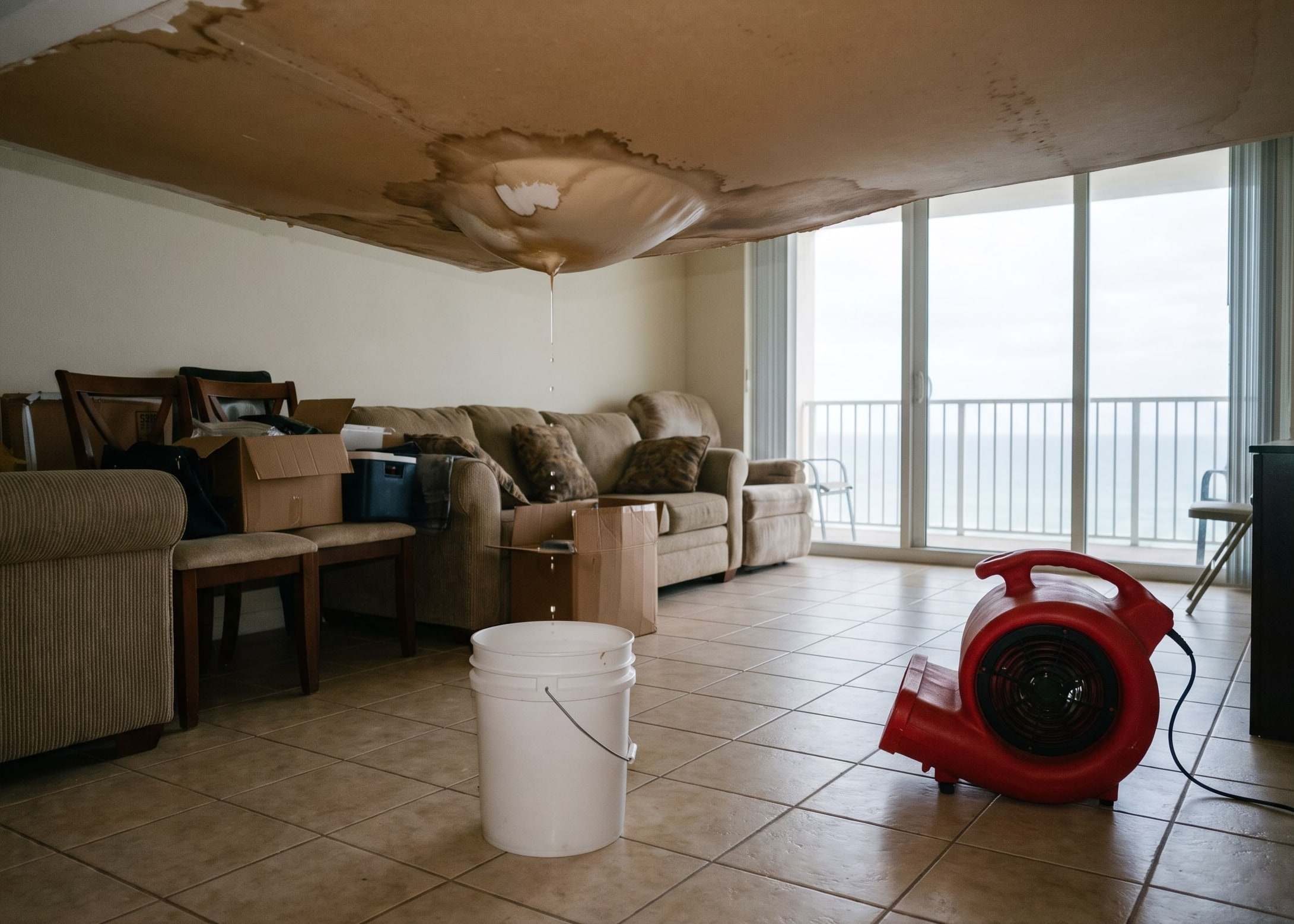
Ceiling water damage
Water from the unit upstairs, an attic air handler, or the roof ends up in the same place. We trace it to the source, make the ceiling safe, and dry or replace what got wet.
On call 24/7
Schedule a no-cost on-site inspection. A restoration specialist will contact you within a few minutes to confirm the details.
Request received
Thank you. A restoration specialist will contact you at the number provided to confirm the details. If water is still coming in, call now and we'll walk you through shutting it off.
(954) 289-0566Recognized by





A ceiling stain is the end of the trail, not the start. Water travels along joists, ductwork, and the top of the drywall before it shows, so the stain is often several feet from the actual source.
In single-family homes, the usual sources are an air handler in the attic, a roof leak, or a pipe running through the attic or the floor above. In concrete condo buildings, water usually comes from the unit overhead and shows up at light fixtures, AC vents, and the seams of drywall soffits.
Ceilings are also where water damage can turn into a safety problem. Wet drywall loses its strength, and a section holding water can come down with little warning, bringing wet insulation from the attic with it.
What to look for
Brown rings that spread outward mark repeated wetting and drying, often from an intermittent source like AC condensate or wind-driven rain.
Drywall that dips between the framing is holding water or has lost its strength. Keep people and pets out from under it.
Fasteners pushing through the paint and cracks along taped seams appear as wet drywall swells and shifts.
Popcorn and knockdown textures soften, discolor, and fall off in patches when they get wet.
Water follows wiring and ductwork, so it often appears first at a light, a ceiling fan, or an AC register.
Wet attic insulation and the paper face of ceiling drywall can grow mold before any stain shows below.
Our process
Ceilings are handled in a set order: make the area safe, find the source, then dry or replace.
Power to light fixtures and ceiling fans in the wet area is shut off at the breaker. Furniture is moved or covered, and no one stands under a sagging section.
If water is pooled on top of the drywall, we drain it in a controlled way with containment and a catch basin below, instead of waiting for the section to fail on its own.
We check the attic, the unit above, the roof deck, and nearby plumbing runs with moisture meters and thermal imaging, and trace the water back to where it started. If the cause is a roof or plumbing problem, you will know which trade to call.
Popcorn and other textured ceilings applied before the mid-1980s may contain asbestos. If yours is that age, the texture should be sampled and tested before anyone cuts or scrapes it.
Drywall wet from clean water that has kept its shape can often be dried in place. Drywall that sagged, crumbled, or was wet by a contaminated source comes down, along with soaked attic insulation.
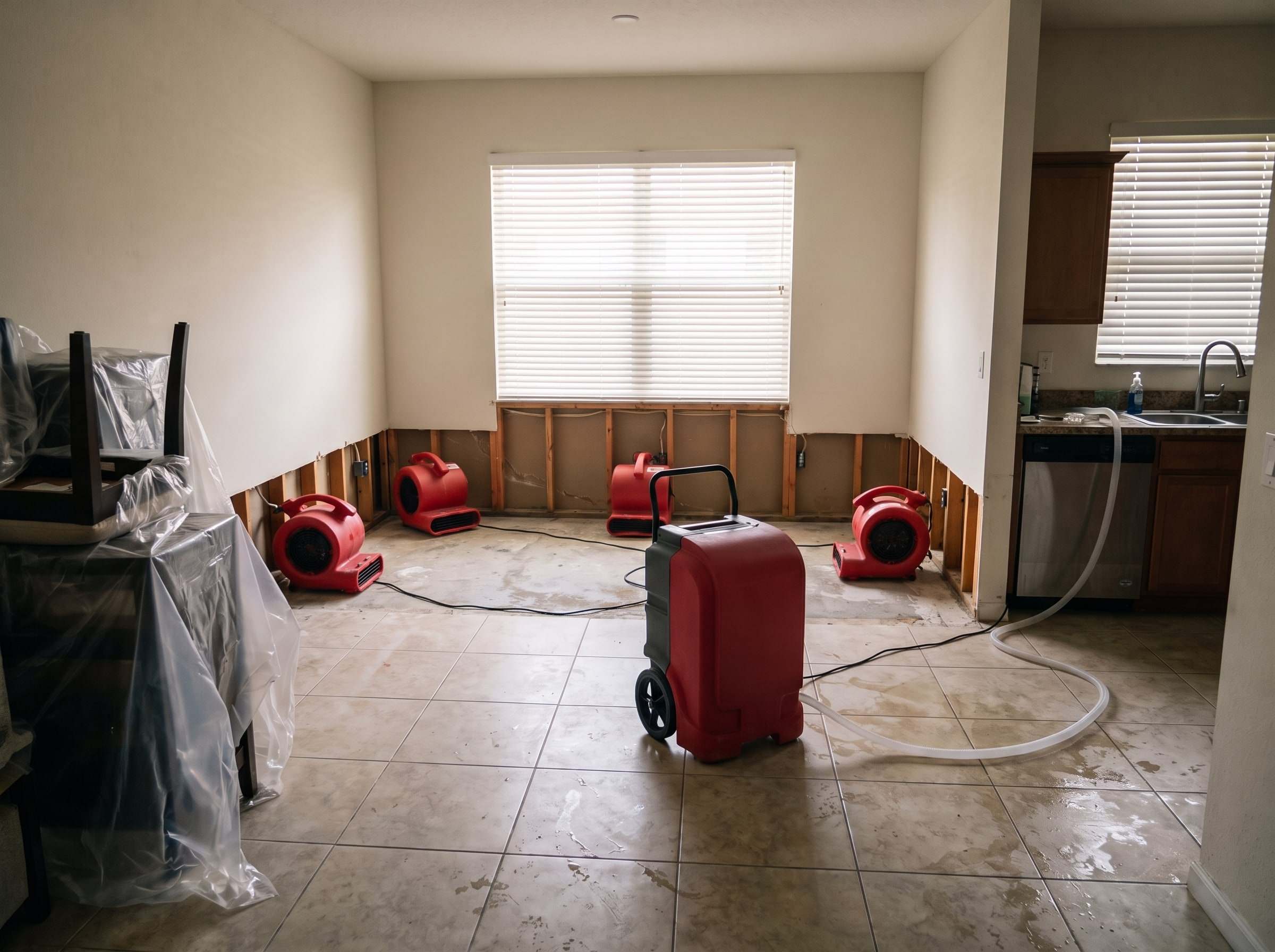
Air movers, dehumidifiers, and directed airflow dry the space above the ceiling and any joists or trusses that got wet. Readings continue until they match the dry standard.
Photos, readings, and a scope go to you and, in a condo, to each party involved. Drywall, texture, and paint are repaired once the area reads dry.
Types and causes
Supply lines, toilets, showers, washers, and water heaters in the unit overhead are a common source of ceiling damage in condo buildings.
Many South Florida homes have the AC air handler in the attic. When the condensate line clogs and the pan overflows, water goes straight into the ceiling below.
Cracked or slipped tiles, worn flat-roof membranes, and failed flashing around vents and skylights let rain in, especially during wind-driven summer storms.
Water lines run through some attics, and second-floor bathrooms sit above first-floor ceilings. A small leak there shows up as a stain below.
Failed grout, caulk, or a shower pan above the ceiling leaks a little every time the shower runs, and the stain grows over weeks.
In humid weather, poorly insulated ductwork and supply registers collect condensation that drips onto the drywall.
Timing
Ceiling damage gets worse in a predictable order, and the last step is the one to avoid.
Shut off the water source if you know it, turn off power to fixtures in that area, and move people and belongings out from under the wet section.
Water pools on top of the drywall and soaks the attic insulation. The drywall softens and begins to sag between the framing.
Mold can start on the paper facing of the drywall and in wet insulation, and stains set into the paint and texture.
Saturated drywall can collapse, bringing wet insulation and debris down with it, and a ceiling that could have been dried has to be replaced.
Why Restoration USA
A sagging ceiling cannot wait for office hours. Call any time and we will talk you through making the room safe.
In a condo, we keep separate photos and readings for your unit, the unit above, and any common elements, so each adjuster and the association see the same facts.
The call to dry ceiling drywall in place or take it down follows the IICRC standard and the moisture readings.
Single-family homes, condo towers, offices, and retail spaces with drywall or drop ceilings.
Reviews
We just can't say enough about Restoration USA. We had significant roof damage from Solar Panels installation which caused water and mold damage to the ceilings of two of our bedrooms. John from Restoration USA , came to our home and made us feel at ease. He explained what had to be done step by step. The next day his professional workers, Karla and Robert, immediately worked to address the damages. They made us feel that we were their top priority. They arrived in time every day. They prepared the affected areas and removed all debris and cleaned after their work. Everyday was a pleasant feeling having them working on our damage ceilings. They answered all our questions and showed us what they had done at the end of each work day. Karla and Robert were very personable hard working people. We were extremely satisfied with their work and happy that they were chosen to work on our home. They were very professional and knowledgeable with their work. We are very happy we chose Restoration USA to help us with our damage and mold ceilings. We highly recommend this company and we would not hesitate to use them again.
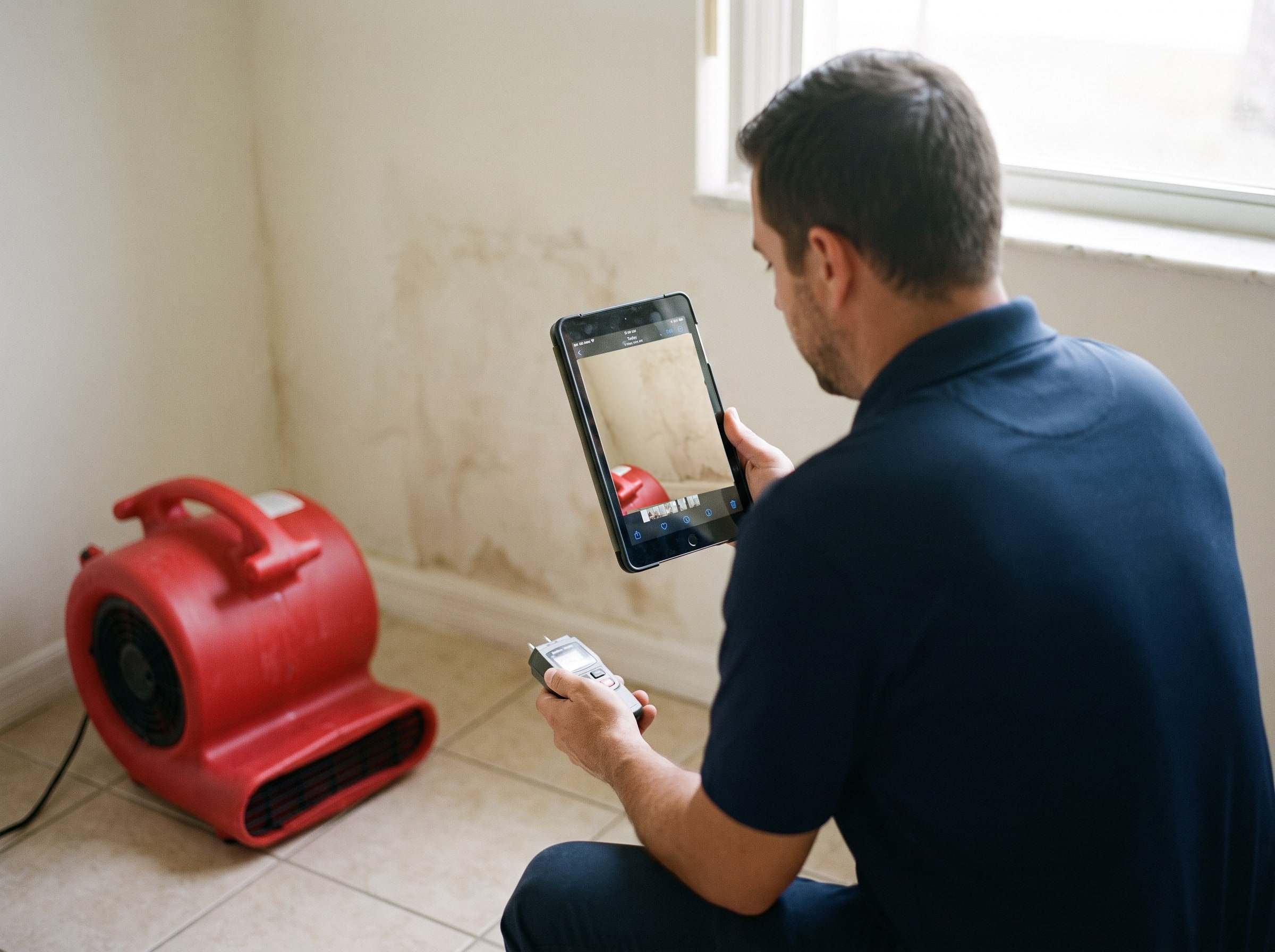
★ Every job is documented: photos, readings, and an itemized scope.
Insurance
How a ceiling claim is handled depends on the source. A sudden leak from a pipe, appliance, or AC overflow is commonly covered. Rain damage through the roof is often covered when a storm created the opening, but usually not when the roof simply wore out, and a slow leak that stained the ceiling over months is usually treated as gradual damage.
In a condo, the association's master policy generally covers the building, and Florida's condo statute generally makes unit owners responsible for ceiling coverings and other interior finishes, which an HO-6 policy typically covers. Who ultimately pays can also turn on where the leak started and what your declaration says, so we document the source and each affected unit separately.
Carriers we've worked with: Citizens Property Insurance, Universal Property & Casualty, Tower Hill Insurance, State Farm, Allstate, USAA, and many more. We are not affiliated with or endorsed by any insurance company.
Coverage decisions belong to your insurer and depend on your policy. Florida does not allow assignment of benefits on property policies issued on or after January 1, 2023, so you stay in control of your claim.
How water damage claims work in FloridaFAQ
It can be. Wet drywall loses strength, and a section holding water can fall with little warning. Turn off power to lights and fans in that area, keep everyone out from under it, and put down plastic and a bucket. Do not puncture it from directly underneath; a heavily bulging section can drop all at once, so leave the controlled release to a crew with containment.
Drywall wet from clean water that has kept its shape can often be dried in place. If it sagged, crumbled, or was soaked by contaminated water, or if the attic insulation above it is saturated, it is replaced. We decide from moisture readings and a physical check, not from the size of the stain.
Tell the owner or tenant above and building management right away so the source can be shut off. Photograph your ceiling and anything damaged, then call your HO-6 carrier. We document the moisture in your unit and, with access, trace the source in the unit above, so every party works from the same record.
It may be. Popcorn texture applied before the mid-1980s can contain asbestos, which is not a hazard while it is left alone but should not be scraped, cut, or sanded until it has been tested. If the wet area has to be opened, have the texture sampled first; the result determines how removal has to be handled.
Either the area is still wet or the leak is still active. Water stains bleed through ordinary paint, so even a dry spot needs a stain-blocking primer first. If the stain grows or returns after rain or heavy AC use, the source has to be found and fixed before any repainting.
Related services
Cleanup and drying after AC condensate overflows, water heater failures, and washer, dishwasher, and ice-maker leaks, including damage under cabinets.

Emergency tarping and board-up, water removal, and drying after hurricanes, tropical storms, and severe thunderstorms, with damage documented for your claim.
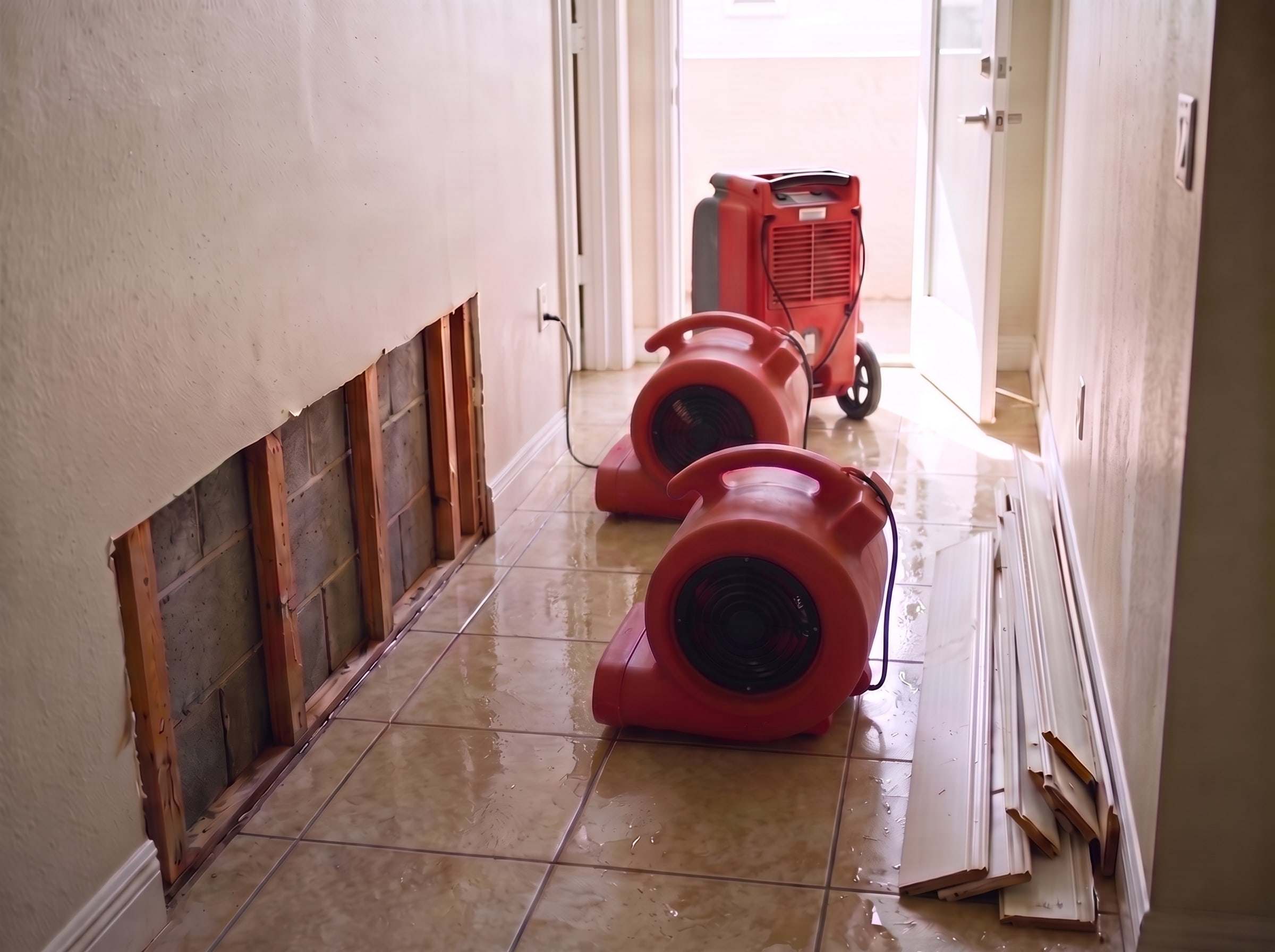
Dehumidification, air movement, and targeted drying for wall cavities, block, slabs, and hardwood, tracked with daily moisture readings.
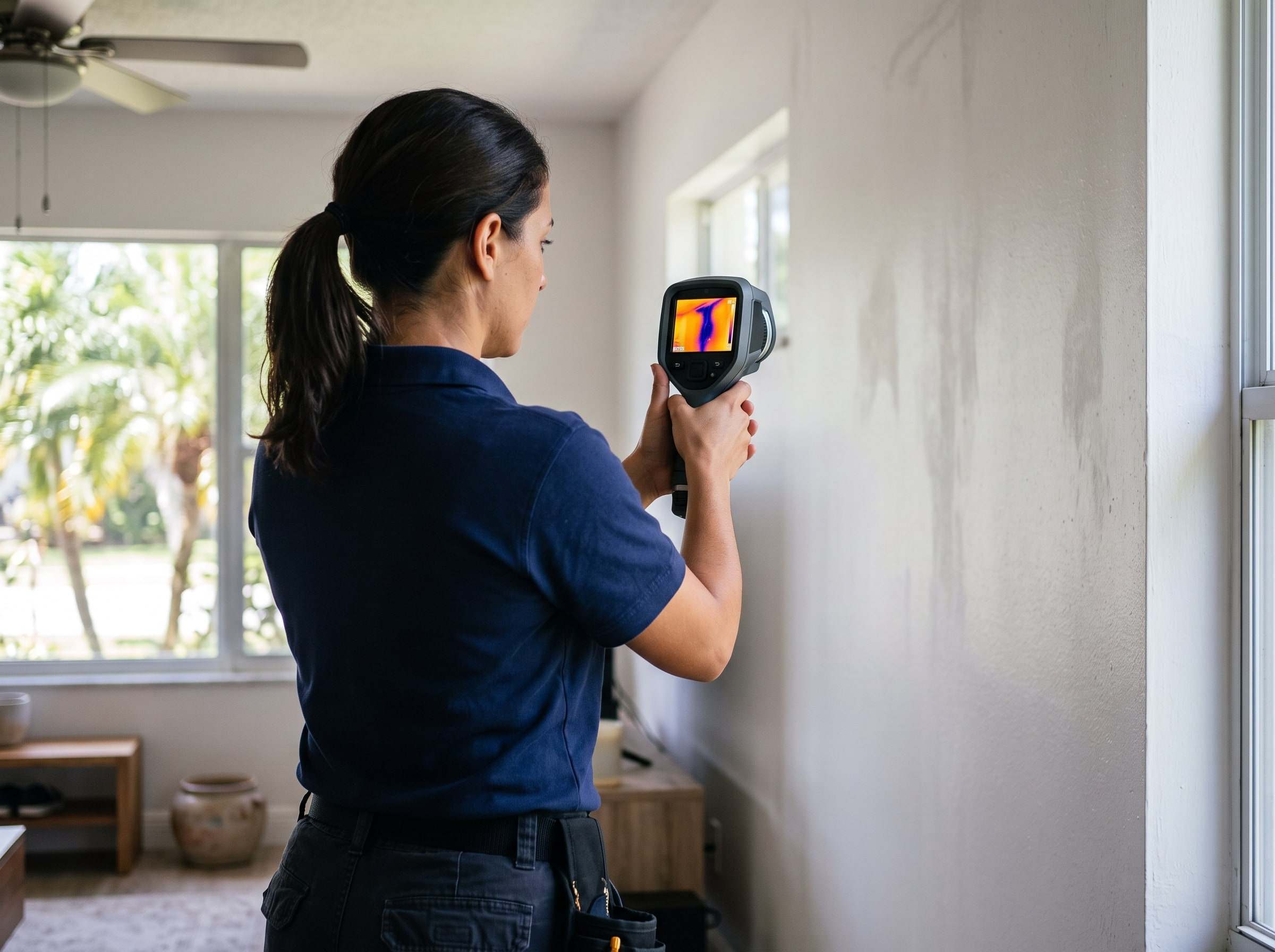
Non-invasive detection for slab, wall, irrigation, and roof leaks using pressure tests, acoustic equipment, thermal imaging, and video pipe inspection.
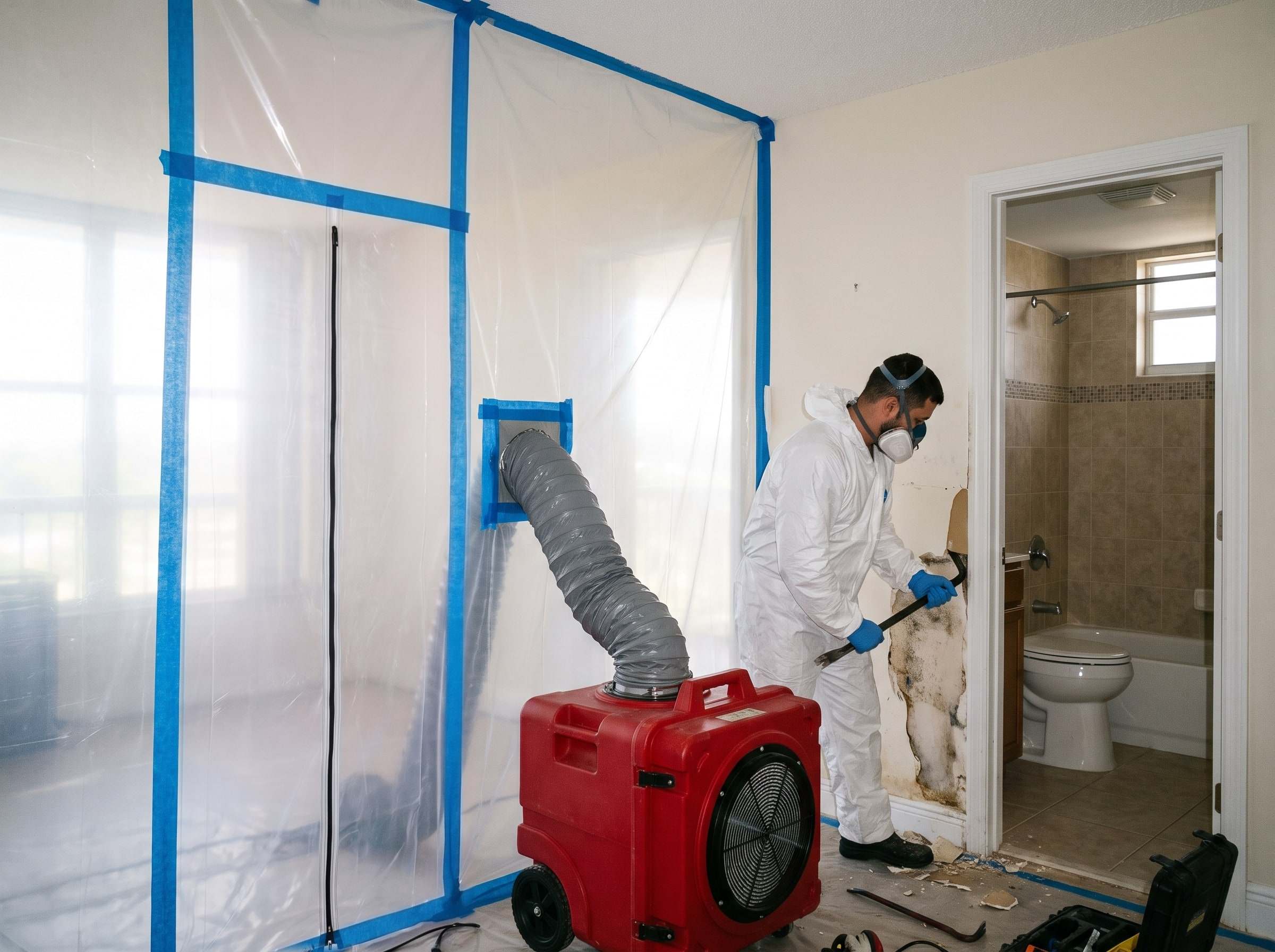
Containment, HEPA filtration, removal of moldy materials, and detailed cleaning to IICRC S520, with the moisture source found and fixed first.
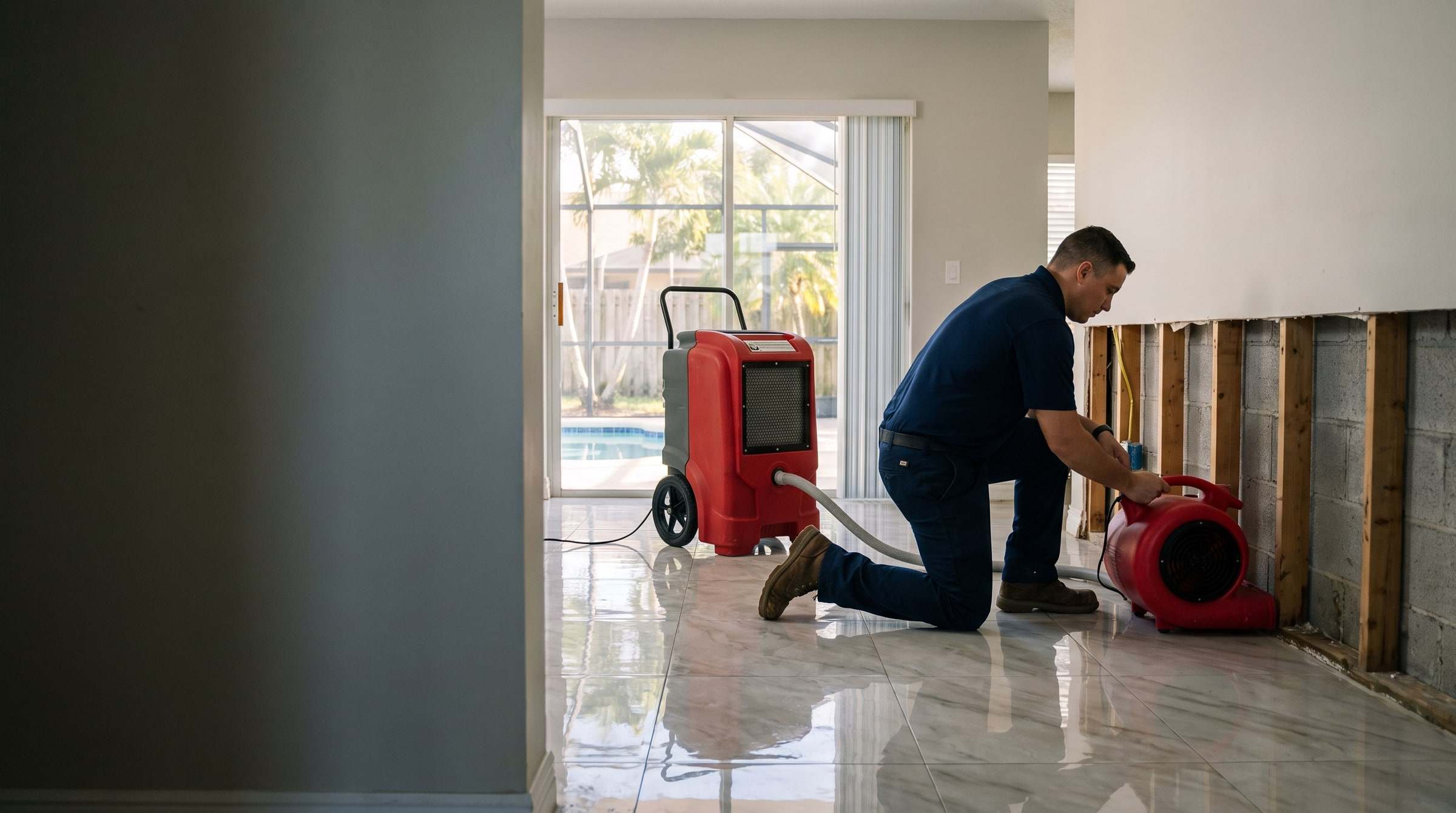
Extraction, moisture mapping, and structural drying for leaks, overflows, and floods, with documentation your adjuster can use.
Service areas
We cover Miami-Dade, Broward, and Palm Beach counties. These are some of the cities where we handle ceiling leaks most often.
Don't wait. Go with the pros.
Call the 24/7 line. We will help you stop the source, tell you what to move, and get a crew scheduled. Not urgent? Send a request and we will call you back.
Call 24/7 (954) 289-0566On call 24/7
Schedule a no-cost on-site inspection. A restoration specialist will contact you within a few minutes to confirm the details.
Request received
Thank you. A restoration specialist will contact you at the number provided to confirm the details. If water is still coming in, call now and we'll walk you through shutting it off.
(954) 289-0566Recognized by