Mold Inspection & Testing
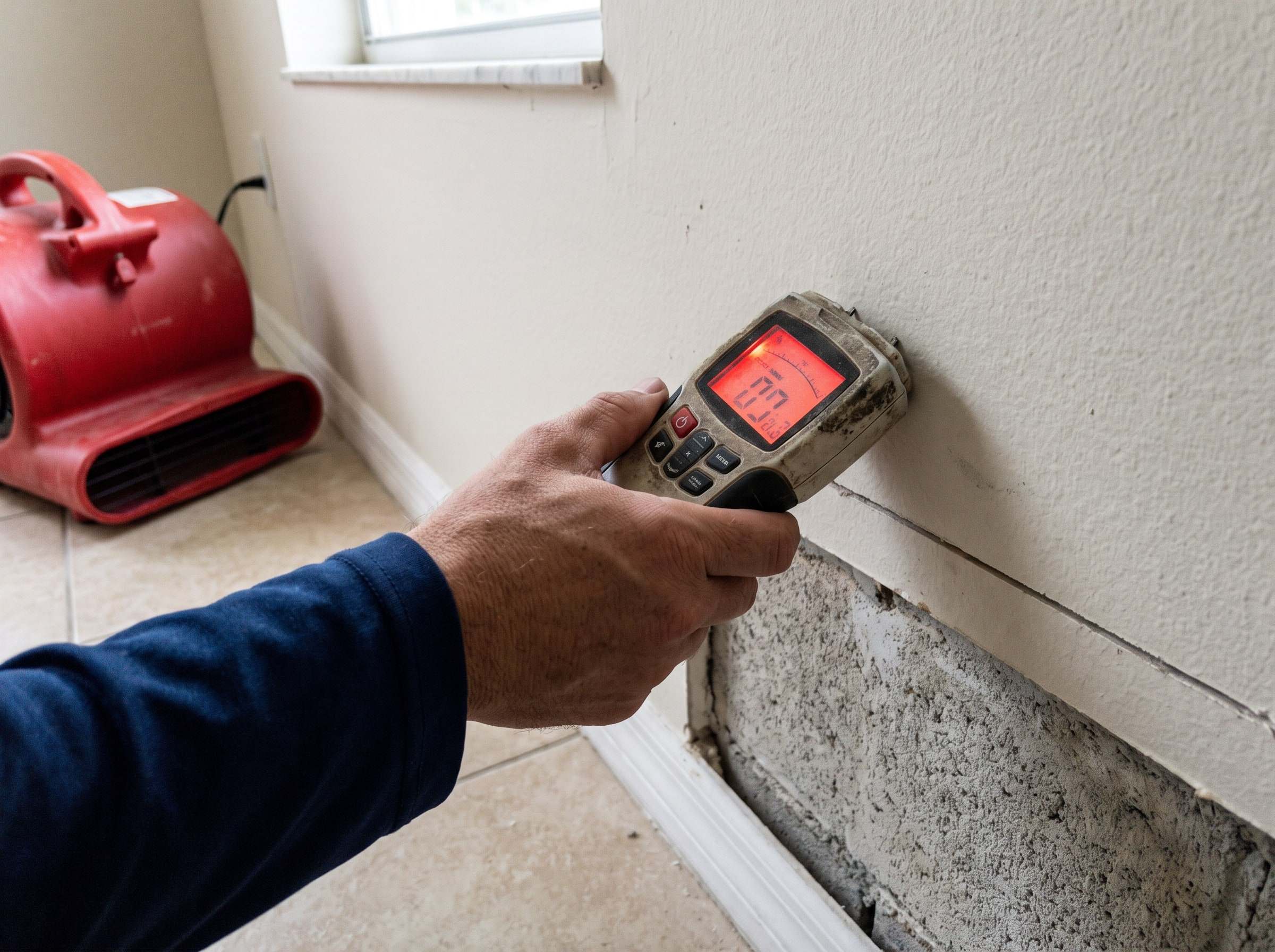
A free on-site inspection to check for mold and find the moisture source. Lab testing, when you need it, is a separate service we handle from start to finish.
Mold remediation
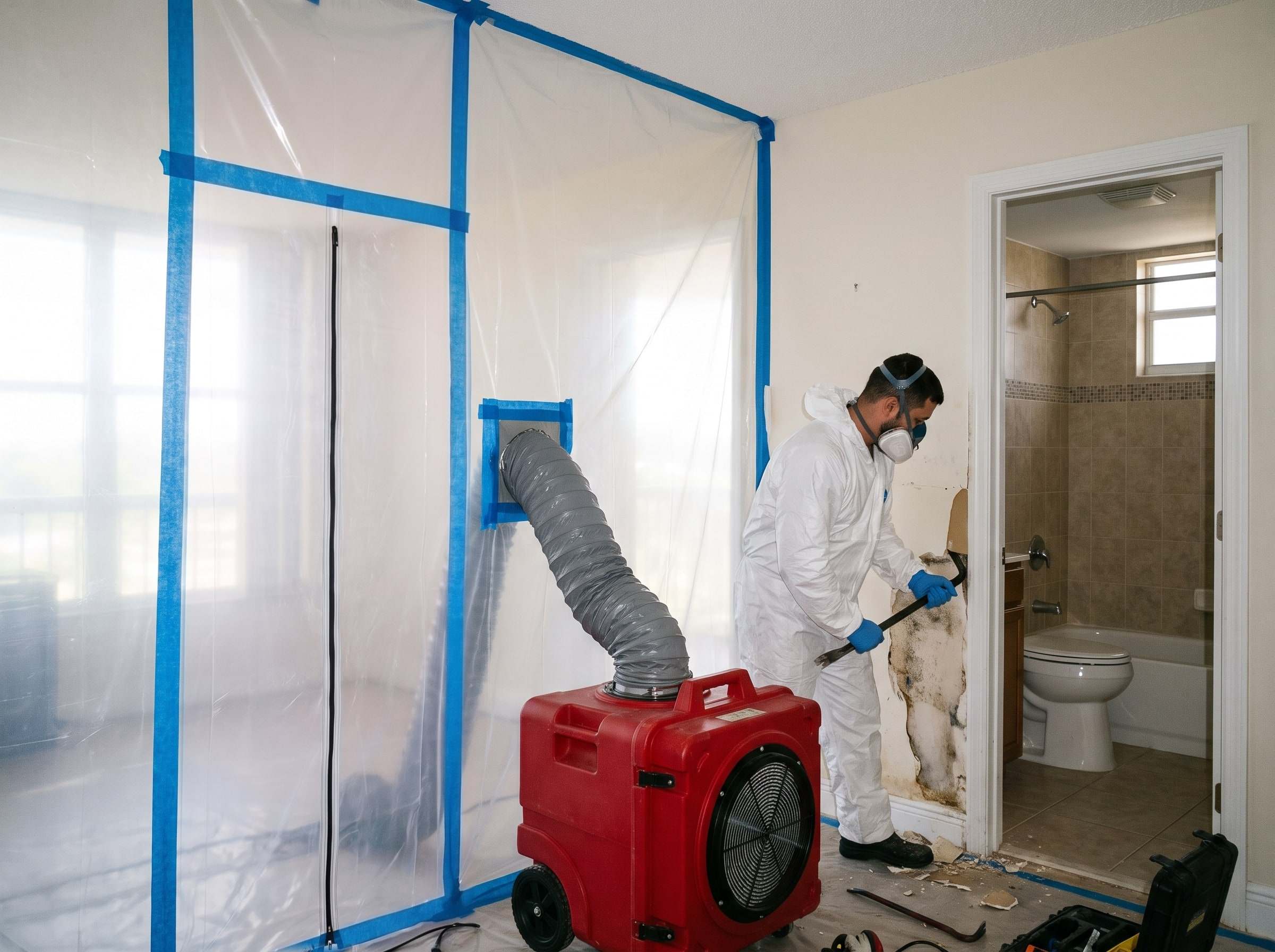
We find the water feeding the growth in South Florida homes, condos, and businesses, seal off the area, remove what is contaminated, and clean what stays, following the IICRC S520 standard for mold remediation.
On call 24/7
Schedule a no-cost on-site inspection. A restoration specialist will contact you within a few minutes to confirm the details.
Request received
Thank you. A restoration specialist will contact you at the number provided to confirm the details. If water is still coming in, call now and we'll walk you through shutting it off.
(954) 289-0566Recognized by



Your family's health
It can be. The CDC says damp, moldy conditions can cause a stuffy nose, sore throat, coughing or wheezing, burning eyes, or a skin rash in some people, and people with asthma or mold allergies may have severe reactions.
As mold grows, it releases spores into the air your family breathes. Take extra care when there are babies or young children in the home: the CDC points to a potential link between early mold exposure and asthma developing in some children.
Book the free mold inspection as soon as you suspect mold. The sooner the moisture is fixed and the growth is gone, the shorter everyone is exposed and the smaller the job. Until then, keep children and anyone sensitive out of the affected area.
We are restoration professionals, not doctors. If anyone in your home has symptoms, talk to your doctor or pediatrician. Sources: CDC: Mold and your health, EPA: A Brief Guide to Mold, Moisture and Your Home.
Mold remediation is removing mold growth and the spores it has released, in a way that keeps them from spreading through the rest of the building. Most people search for "mold removal," and removal is the heart of it. Spraying a product on a stain or painting over it is not remediation: growth has to be physically removed, and the moisture behind it has to stop.
In South Florida that moisture is usually close by. Outdoor humidity stays high for much of the year, air handlers sweat and overflow, and a small leak inside a block wall can stay damp for months. Mold needs only moisture and something to feed on, and drywall paper, wood, and household dust all qualify.
Florida licenses mold assessors and mold remediators separately under Part XVI of Chapter 468 of the Florida Statutes, and a company generally cannot assess and remediate the same property within 12 months. We perform the remediation. When a job calls for sampling or post-remediation verification, an independent licensed mold assessor does it, and we can schedule one for you. That way the person checking the work is not the person who did it.
What to look for
The most common signs are gray, green, or black spotting that grows back after cleaning, a musty smell that will not clear, and dark spots around AC vents. Peeling paint, soft or stained baseboards, and damp, clammy air point to the moisture that feeds it.
Gray, green, or black spotting on drywall, grout, or ceilings that grows back after cleaning.
Often the first clue, especially in closets on exterior walls, under sinks, and in rooms kept closed.
Spotting on supply grilles and the ceiling around them, often where cold air meets humid air and condensation forms.
Moisture trapped behind vinyl wallcovering or paint gives mold a protected place to grow.
Baseboards and the bottom of door casings stay damp after a leak, and growth usually starts on the hidden back side.
Condensation on windows, sticky floors, or furniture that feels damp means conditions are right for growth even before it is visible.
Our process
We find the moisture source, seal the area in plastic containment under negative air pressure, and cut out porous materials that have growth. Solid surfaces are HEPA-vacuumed and cleaned, the area is dried to normal readings once the source is repaired, and an independent licensed mold assessor verifies the work when the job calls for it. The work follows the IICRC S520 standard.
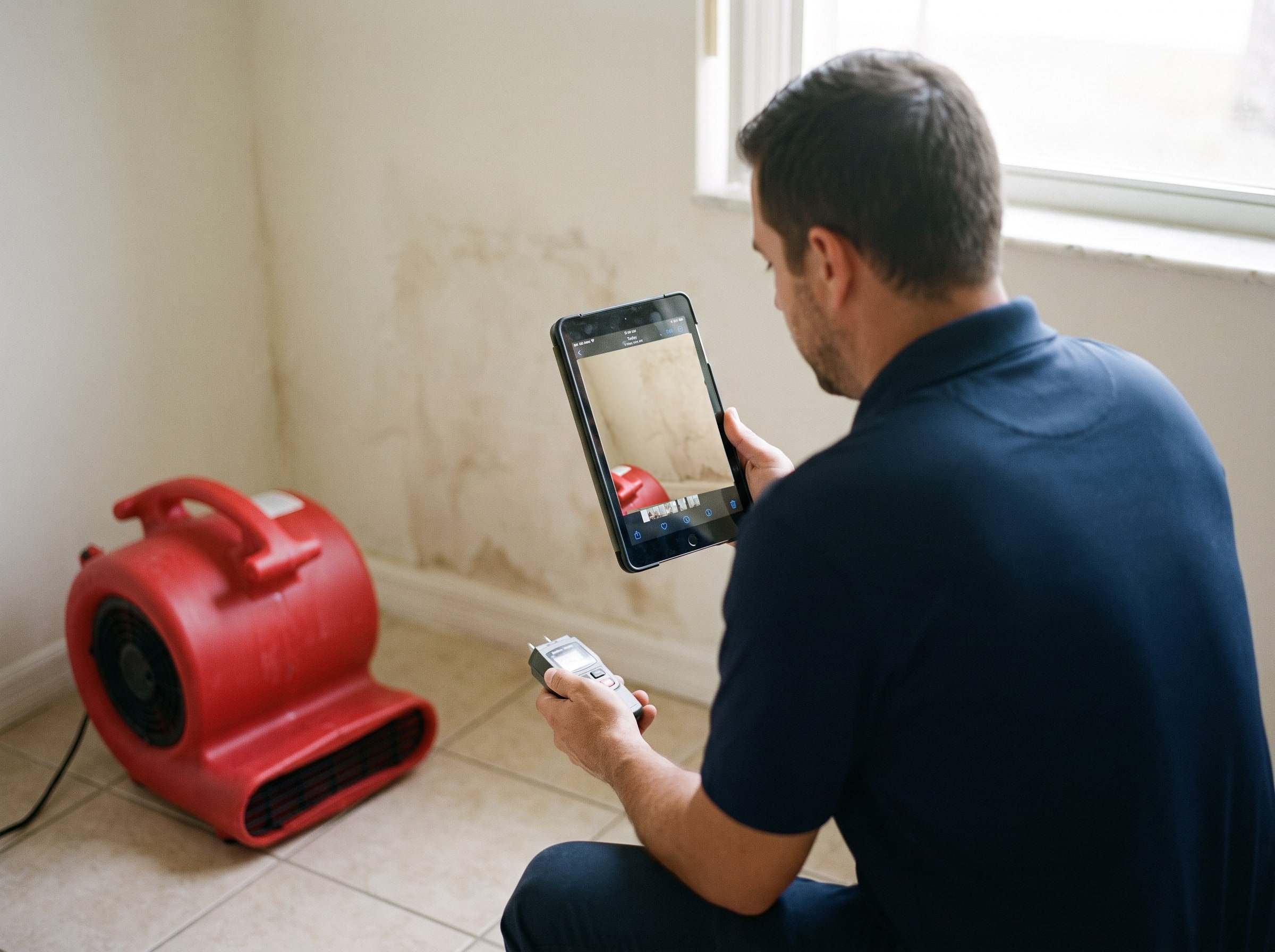
We inspect for visible growth and use moisture meters and thermal imaging to find wet materials and what is wetting them: a leak, condensation, or an old water loss that never dried.
The work area is sealed with plastic sheeting and zippered doors. Larger jobs get an entry chamber so crews can come and go without carrying spores out.
HEPA-filtered air machines draw air out of the containment, keeping it under negative pressure so air flows in, not out, while the work is underway.
Drywall, insulation, carpet, and other porous materials with growth are cut out, bagged inside the containment, and taken out of the building.
Framing, block, and other solid surfaces are HEPA-vacuumed and wiped. Stained wood is sanded or wire-brushed, and a final HEPA vacuuming collects settled dust.
Remaining materials are dried to normal readings. The moisture source has to be repaired before walls are closed, and we coordinate with your plumber or AC contractor.
When the job calls for it, an independent licensed mold assessor performs post-remediation verification before containment comes down. Then repairs close the area up.
Types and causes
Usually where water collects without anyone seeing it: AC closets, where clogged condensate lines and rusted drain pans keep the closet and the wall behind it damp, and wall cavities with slow plumbing leaks. Leaks that were mopped up but never dried, roof and window leaks, and homes closed up for the summer with the AC off are the other common sources.
Clogged condensate lines, rusted drain pans, and sweating ducts keep the closet, the wall behind it, and the floor damp.
Supply lines, drains, and shower pans that drip inside a wall or under a vanity for weeks before anyone notices.
A leak that was mopped up but never measured can leave wet drywall and baseboards behind it.
Rainwater that gets into attic insulation or runs down inside exterior walls during the wet season.
Homes and condos left for the summer with the AC off or set high, and bathrooms without a working exhaust fan.
Drywall and cabinets that stayed wet after a flood or hurricane, especially when the power was out for days.
Timing
Fast enough that the EPA advises drying water-damaged materials within 24 to 48 hours to prevent it, and the CDC notes that mold grows on building materials that stay wet for 48 to 72 hours. After that it keeps spreading as long as the moisture stays, and the bigger the affected area, the more has to come out.
Dry wet drywall, wood, and carpet backing in this window to prevent growth.
Growth becomes visible and spreads to the back of drywall, baseboards, and cabinet panels.
Colonies spread through wall cavities and insulation, and the odor travels to other rooms through the air conditioning.
More material has to be removed, constant moisture can start to rot wood, and a small cleanup becomes a whole-room job.
Why Restoration USA
We follow the IICRC S520 standard: sealed containment under negative air, HEPA filtration, and removal of porous materials with growth.
We find and explain the water source, because removing mold without fixing the moisture only restarts the cycle.
When verification is needed, it is done by an independent licensed mold assessor, not by us, consistent with Florida's licensing law.
Florida Mold Remediator License # MRSR438. Homes, condos, offices, and retail spaces, with containment planned around the people who live or work there.
Reviews
My uncle who lives in Boca Raton had experienced mold in his home, and unfortunately, he isn't very tech savvy. After doing a bit of research, I came across Restoration USA. Their team knew exactly how to handle this sort of customer. What a relief! They gave him step by step updates on what was going on, as well as letting me know the same details. They're a very detail oriented company! Keep up the good work Restoration USA!
If your home has experienced mold and you live in the Pompano Beach area, this is the company for you. They always take care of the client and do their most to make sure the client knows exactly what is going on in their home. Thanks Restoration USA!
As a person who owns property in different states, finding a trustworthy and reputable home restoration company is very important. Restoration USA is that company for me. After reading positive reviews online, I decided to give the company a call. The owner, James, was very nice and worked with me one on one to make sure that my property received the attention it deserved. Even from all the way in California, getting updates and pictures about how the process was going was a breeze. Restoration USA made quick work of the mold in the laundry room, as well as behind the walls. Restoration USA will be my go to disaster restoration company in Florida for years to come. Thanks, James, John, and the whole team!
★ Every job is documented: photos, readings, and an itemized scope.
Insurance
Coverage for mold usually follows the cause. If growth came from a sudden, covered water loss, such as a burst pipe, remediation may be covered as part of that claim. Mold from long-term leaks, ongoing humidity, or deferred maintenance is commonly excluded, so check your policy's mold and water exclusions.
Many Florida policies also cap mold coverage at a set dollar amount, separate from the rest of a water claim, so look for a mold limit in your policy. We document the growth, the moisture source, the containment, and every removed material with photos and readings, so your adjuster can see what was found and why the work was needed. For covered claims, we bill your insurance company directly.
Carriers we've worked with: Citizens Property Insurance, Universal Property & Casualty, Tower Hill Insurance, State Farm, Allstate, USAA, and many more. We are not affiliated with or endorsed by any insurance company.
Coverage decisions belong to your insurer and depend on your policy. Florida does not allow assignment of benefits on property policies issued on or after January 1, 2023, so you stay in control of your claim.
How water damage claims work in FloridaFAQ
We handle it for you. Our free mold inspection checks for visible growth and moisture. When you need lab sampling before the work or verification after it, the testing is performed by a Florida-licensed mold assessor, kept separate from the remediation as Florida law requires, and we schedule it and work from the report.
It depends on how much material has to come out and how large the containment must be: one wall behind an air handler is a small job, while growth through several rooms or into the ductwork is a large one. The mold inspection is free, and afterward you get a written scope. When the mold came from a covered water loss, part of the cost may go through your claim, up to your policy's mold limit, and for covered claims, we bill your insurance company directly.
A small patch on a hard surface, under about 10 square feet, can often be cleaned by a homeowner wearing gloves, eye protection, and an N95 respirator, once the moisture source is fixed. Do not dry-brush or sand it, which spreads spores. Larger areas, growth inside walls or the HVAC system, and anything after sewage or floodwater should be handled professionally; in Florida, companies remediating more than 10 square feet must be licensed.
It is worth taking seriously. The CDC notes that damp, moldy homes can cause coughing, wheezing, a stuffy nose, and eye or skin irritation, and points to a potential link between early mold exposure and asthma developing in some children. If there is a baby or young child in the home, keep them out of the affected area, have the growth and the moisture behind it dealt with as soon as possible, and talk to your pediatrician about any symptoms.
Stachybotrys chartarum, often called "black mold," is a greenish-black mold, but the CDC says all molds should be treated the same with respect to health risks and removal. So any indoor growth is removed the same way: contained, physically removed, and cleaned, with the moisture source corrected. People with asthma, allergies, or weakened immune systems should stay out of the affected area and talk to their doctor about symptoms.
A single closet or bathroom wall is often finished in a day or two. Several rooms, growth in the HVAC system, or wet materials that need drying first take longer, and verification by an assessor adds time when it is required. Repairs follow once the area is clean and dry.
It is far less likely once the moisture problem is solved, because growth needs a steady moisture source. Mold spores are always present in indoor and outdoor air, so the goal is removing growth and keeping materials dry, not a sterile house. Keep indoor humidity below 60 percent, fix leaks quickly, and have the AC condensate line cleaned on a regular schedule.
Related services
A free on-site inspection to check for mold and find the moisture source. Lab testing, when you need it, is a separate service we handle from start to finish.
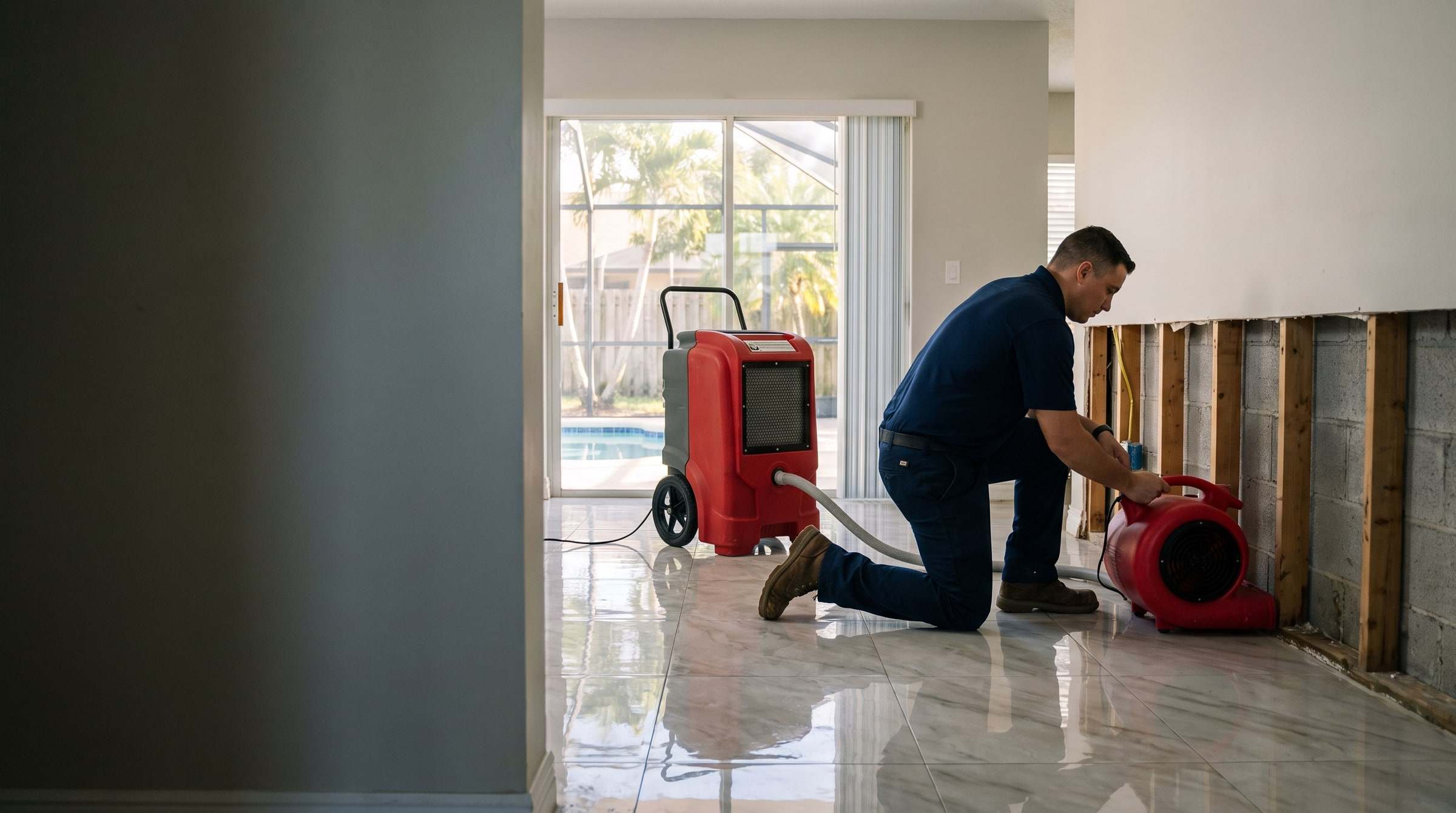
Extraction, moisture mapping, and structural drying for leaks, overflows, and floods, with documentation your adjuster can use.
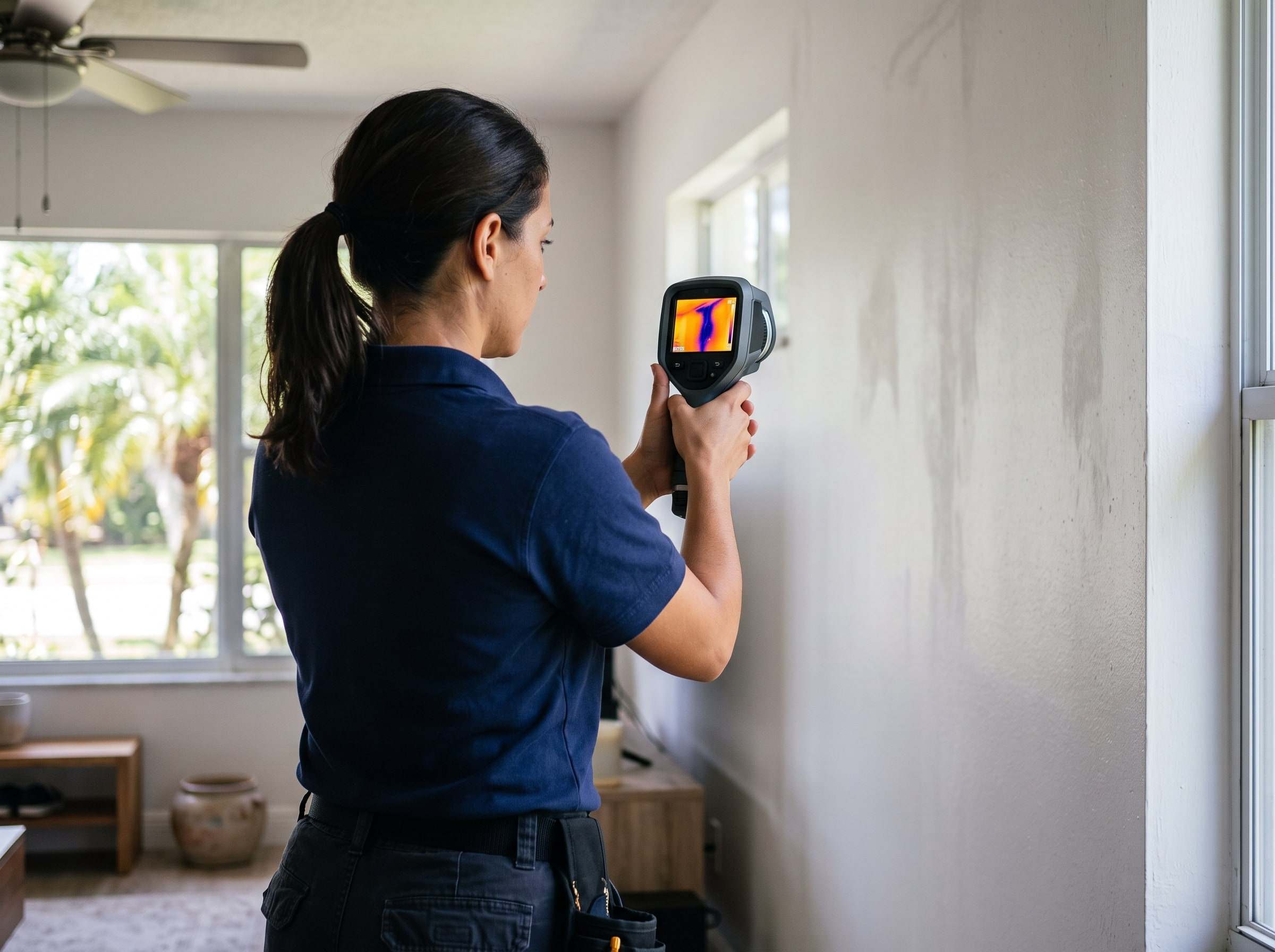
Non-invasive detection for slab, wall, irrigation, and roof leaks using pressure tests, acoustic equipment, thermal imaging, and video pipe inspection.
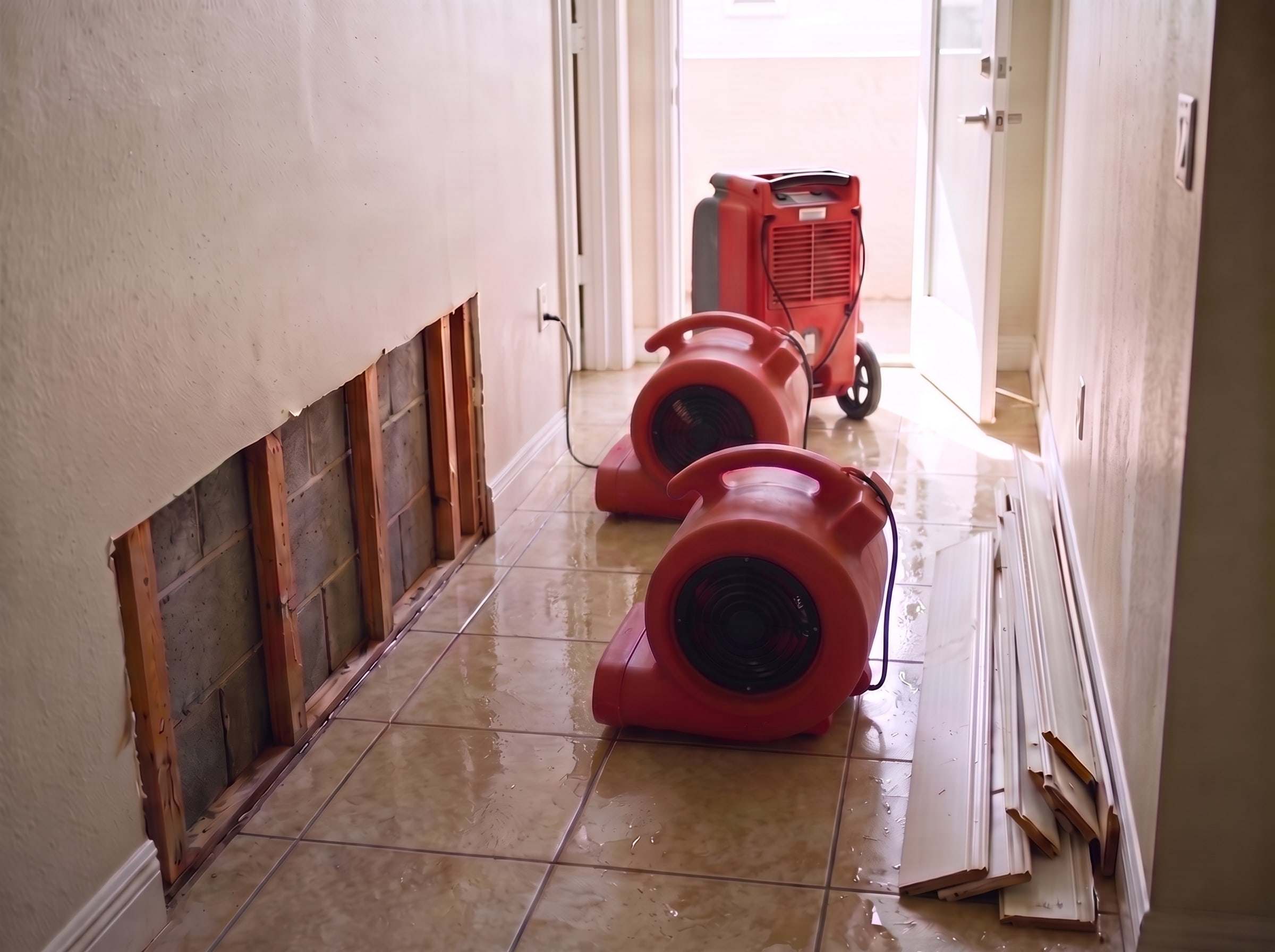
Dehumidification, air movement, and targeted drying for wall cavities, block, slabs, and hardwood, tracked with daily moisture readings.
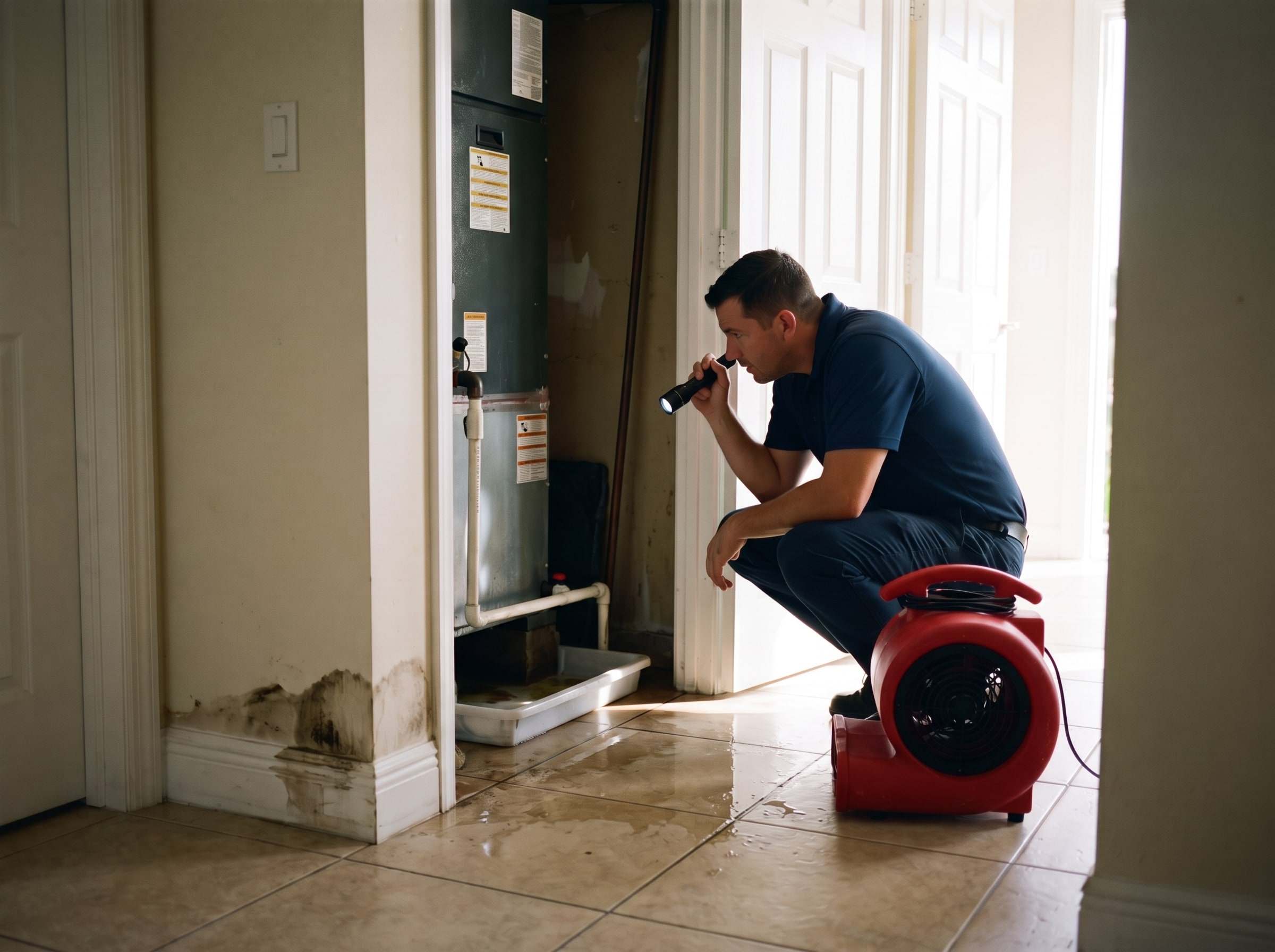
Cleanup and drying after AC condensate overflows, water heater failures, and washer, dishwasher, and ice-maker leaks, including damage under cabinets.
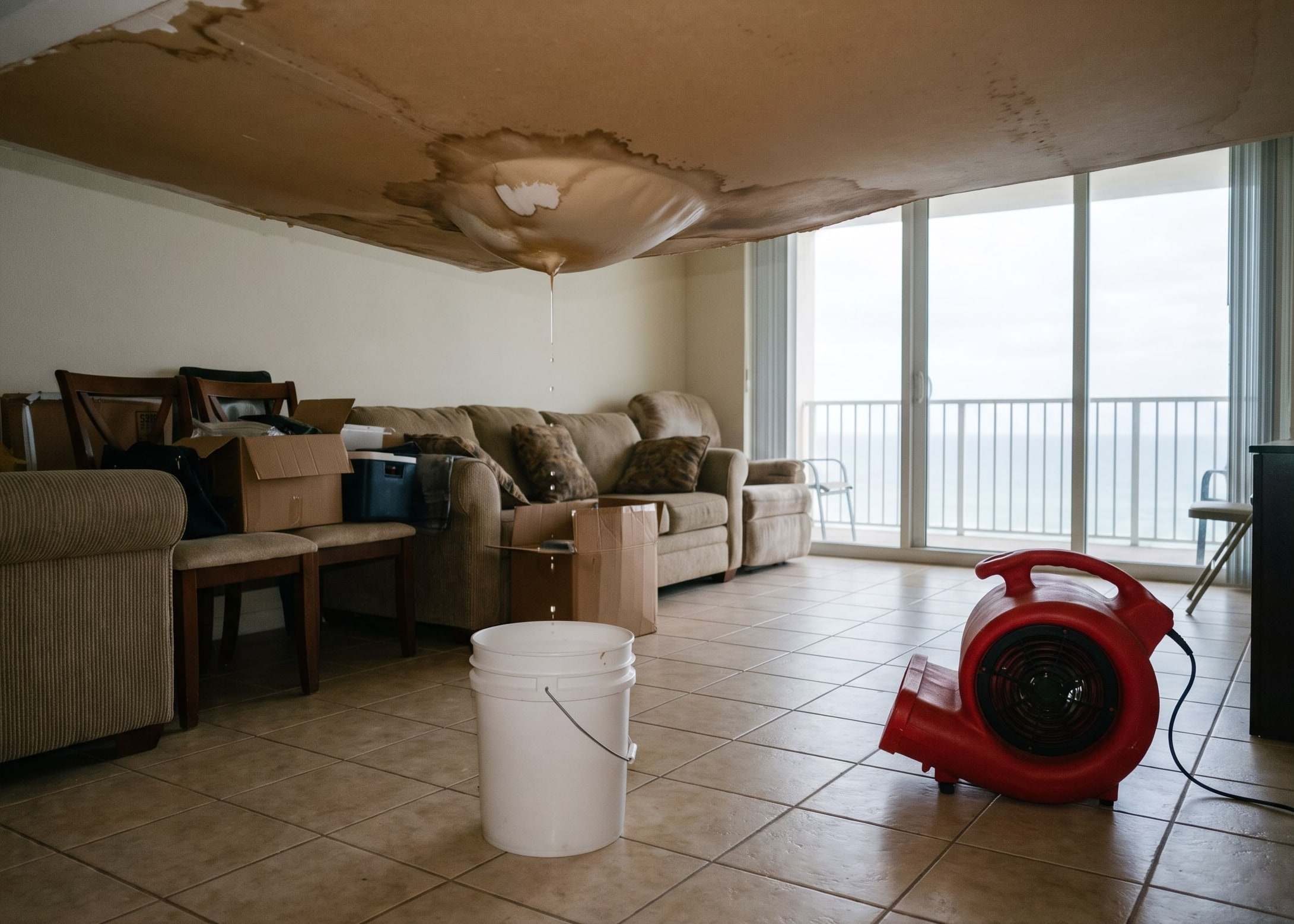
Tracing, making safe, drying, and repairing ceilings soaked by condo leaks, attic AC units, plumbing, and roof leaks.
Service areas
We cover Miami-Dade, Broward, and Palm Beach counties. These are some of the cities where we handle mold remediation most often.
Don't wait. Go with the pros.
Call the 24/7 line. We will help you stop the source, tell you what to move, and get a crew scheduled. Not urgent? Send a request and we will call you back.
Call 24/7 (954) 289-0566On call 24/7
Schedule a no-cost on-site inspection. A restoration specialist will contact you within a few minutes to confirm the details.
Request received
Thank you. A restoration specialist will contact you at the number provided to confirm the details. If water is still coming in, call now and we'll walk you through shutting it off.
(954) 289-0566Recognized by