Emergency Water Removal & Extraction
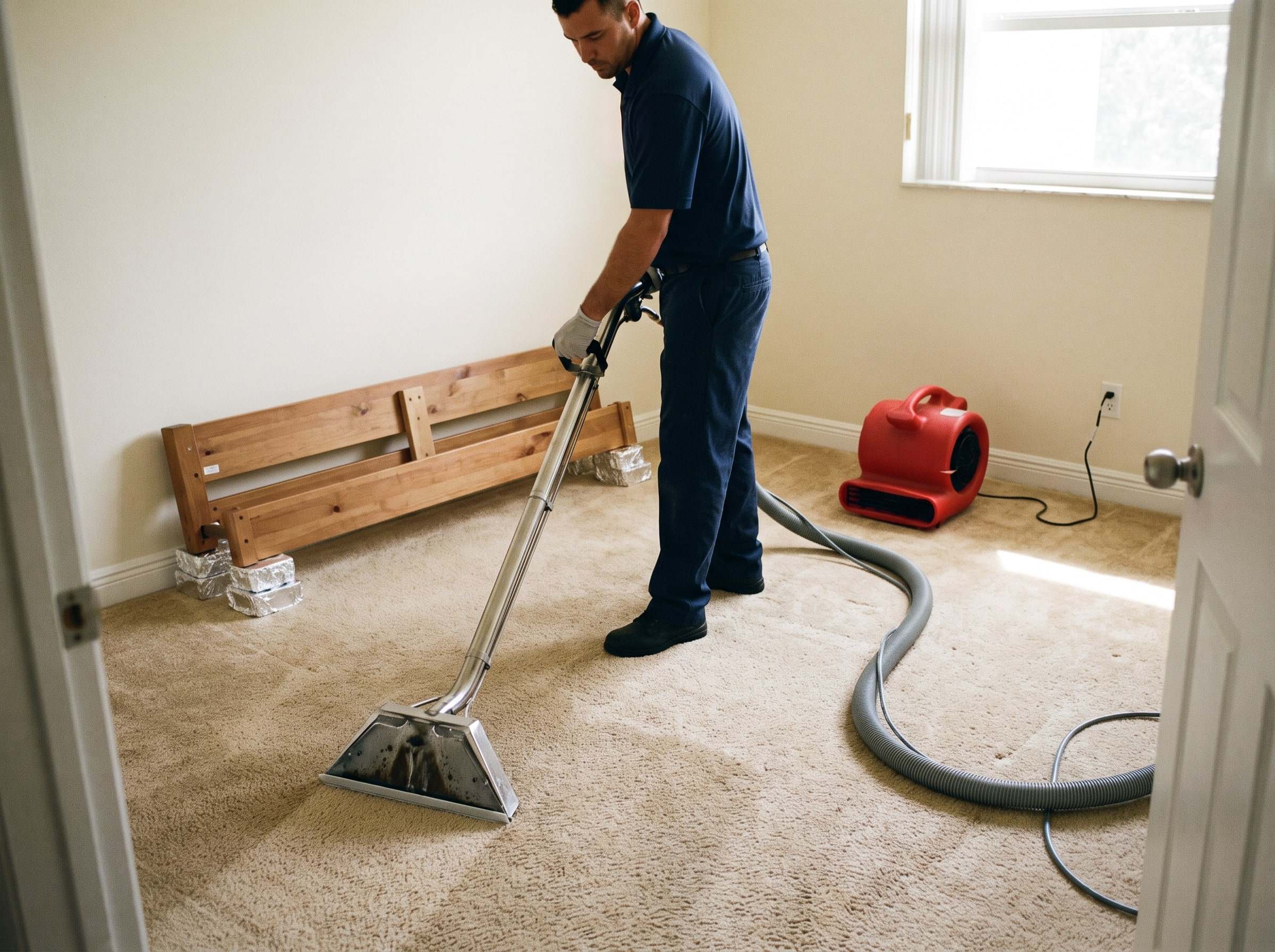
Pumping, truck-mount and portable extraction, and weighted carpet extraction that get standing and absorbed water out before it spreads to walls and the unit below.
Water damage restoration
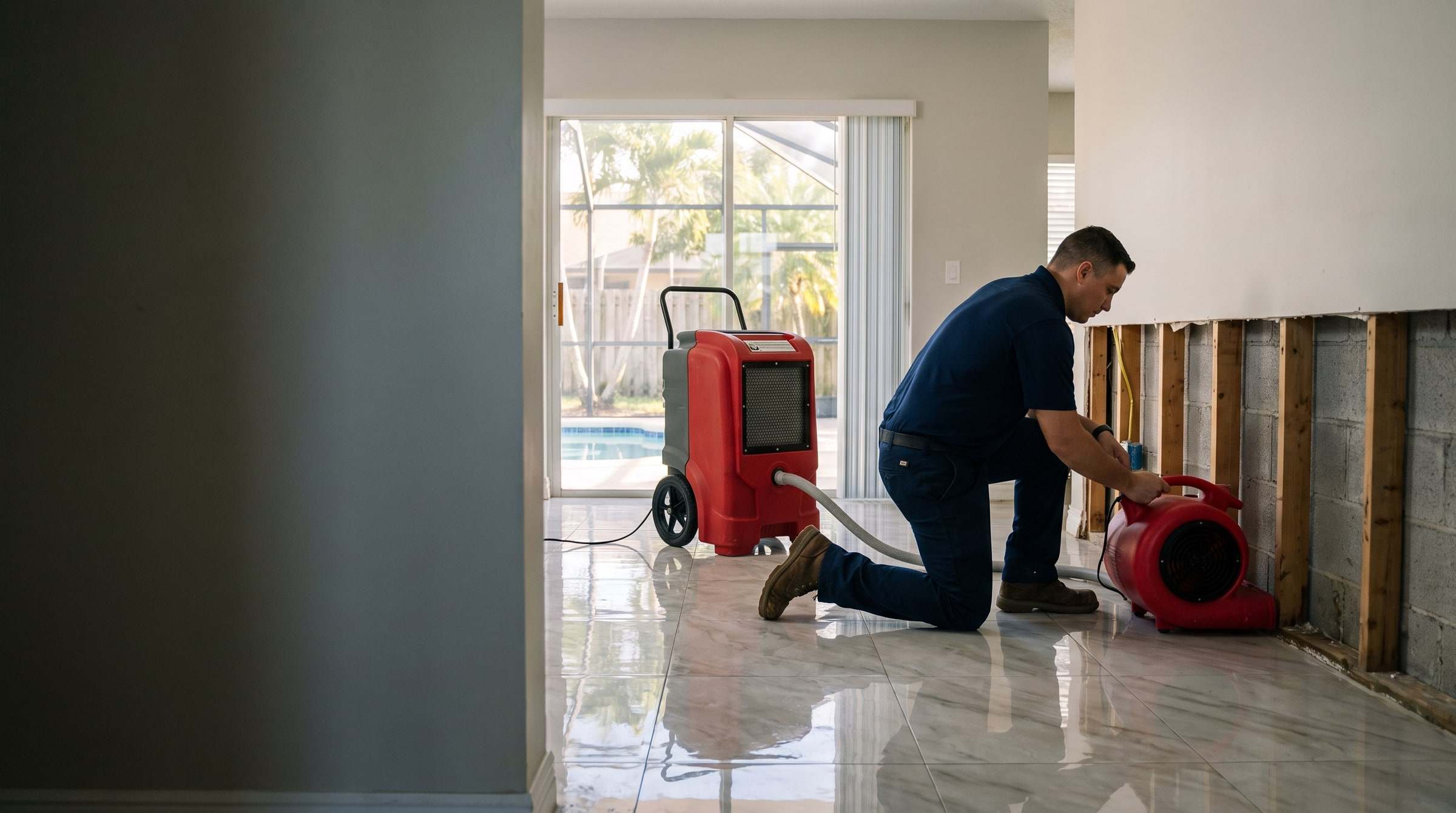
We remove the water, find everything it reached, and dry the structure until the readings say it is dry. Then we document it all for your insurance claim.
On call 24/7
Schedule a no-cost on-site inspection. A restoration specialist will contact you within a few minutes to confirm the details.
Request received
Thank you. A restoration specialist will contact you at the number provided to confirm the details. If water is still coming in, call now and we'll walk you through shutting it off.
(954) 289-0566Recognized by



Restoration is everything between "there is water on the floor" and "the house is back to normal." It starts with stopping the source and extracting standing water, then moves to finding the moisture you cannot see, drying the structure, cleaning what was affected, and repairing what could not be saved.
Most of the work is in the drying. Water wicks up drywall, soaks into baseboards and cabinet bases, and gets under flooring. If those materials are not dried to normal readings, they swell, delaminate, or grow mold weeks later. We measure moisture at the start, every day during drying, and at the end, so you can see the progress.
In South Florida that matters more than most places. Homes sit on concrete slabs with block walls that hold water, and indoor humidity rises fast when the AC is off. A job that looks dry on day two can still be wet inside the wall.
What to look for
Hidden water damage shows up as bubbling or peeling paint, soft or swollen baseboards, loose or hollow-sounding tile, cupping wood or laminate, a musty odor, or an unexplained jump in the water bill. Any one of these means water may still be inside a wall, under the flooring, or under the slab, where moisture meters and thermal imaging can find it.
Moisture behind the paint film pushes it off the wall, often near baseboards or below windows.
MDF baseboards and cabinet toe-kicks swell when they wick water from the floor.
Water under tile can break the bond to the slab. Grout lines may stay dark after mopping.
Boards that curl up at the edges are drawing moisture from below.
A persistent damp smell usually means something is still wet and microbial growth has started.
An unexplained jump can point to a hidden supply leak under the slab or inside a wall.
Our process
We stop the source, map the moisture with meters and thermal imaging, extract the water, remove what cannot be saved, and dry the structure with daily readings until materials reach normal moisture levels. Then we clean and treat affected surfaces and give you photos, readings, and a scope of work for your adjuster before repairs begin.
Tell us what happened. We will walk you through shutting off the water and what to move, and schedule a crew.
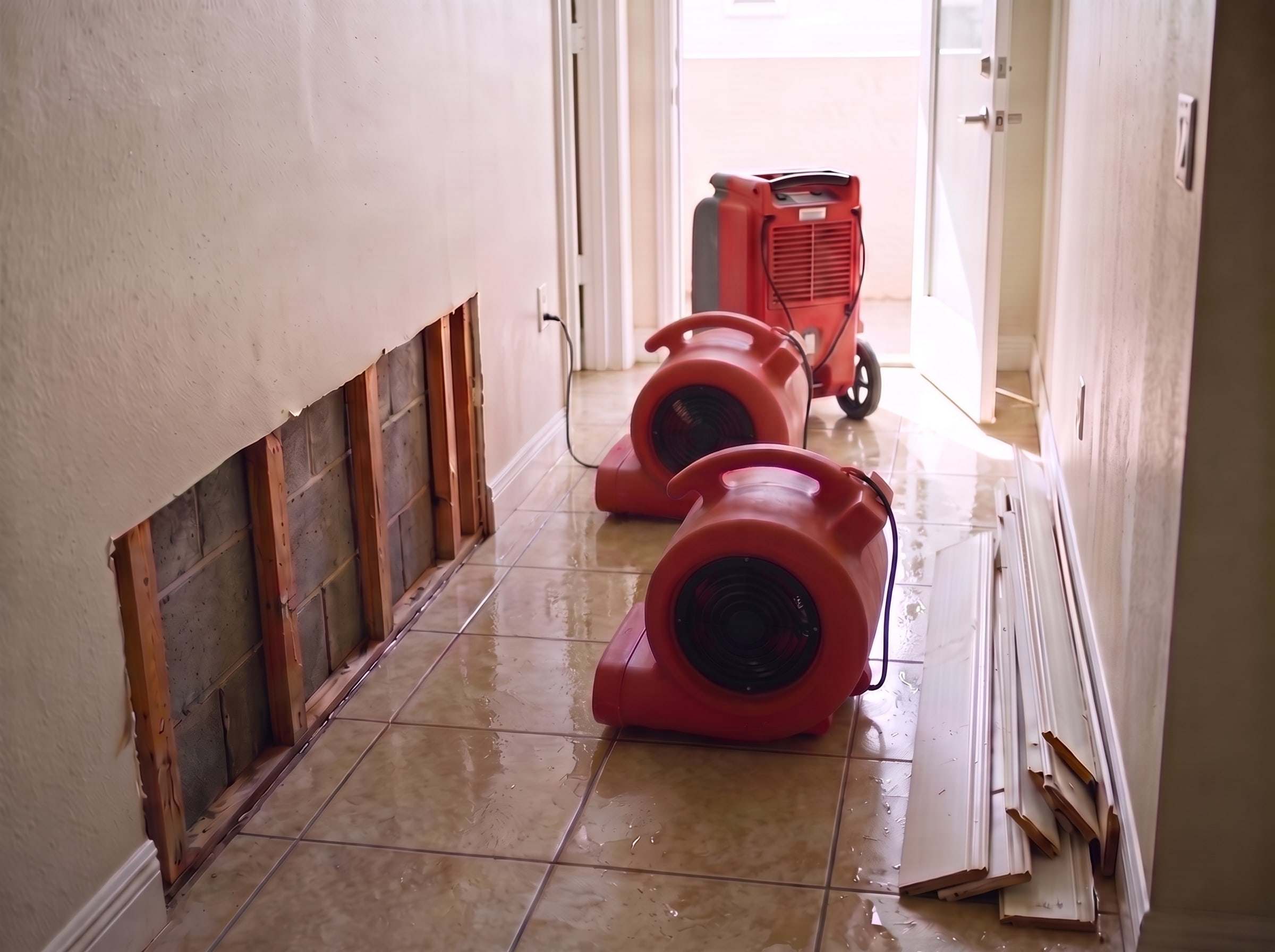
We use moisture meters and thermal imaging to find every wet material, including inside walls and under flooring, and photograph the starting conditions.
Truck-mounted or portable extractors remove standing water and as much as possible from carpet, pad, and other surfaces.
Saturated pad, swollen baseboards, and drywall that will not dry in place are removed. Everything else is dried in place.
Air movers and dehumidifiers are set up for the space. We take readings daily and adjust equipment until materials reach normal moisture levels.
Affected surfaces are cleaned and treated with antimicrobial products. Contaminated water gets a full sanitation protocol.
You receive photos, readings, and a scope of work for your adjuster. Repairs return the property to its pre-loss condition.
Types and causes
The most common source we see in South Florida is an AC or air handler overflow from a clogged condensate line or a failed drain pan. Burst and leaking pipes, appliance failures, roof and window leaks, storm flooding, and sewage or drain backups make up most of the rest.
Clogged condensate lines and failed drain pans, the most common source we see in South Florida.
Supply lines, fittings, slab leaks, and failed shut-off valves.
Water heaters, washing machines, dishwashers, refrigerator ice makers.
Rain intrusion during storms, failed flashing, and older window seals.
Rising water, street flooding, and storm surge. Treated as contaminated water.
Toilet overflows and cast-iron drain failures, which need Category 3 cleanup.
Timing
Until the space is dried, water keeps spreading and soaking into drywall, baseboards, and flooring, so every hour adds material that has to be dried or replaced. The EPA advises drying water-damaged areas and items within 24 to 48 hours to prevent mold growth.
Water spreads across floors and starts wicking into drywall and baseboards.
Wood and MDF swell, paint blisters, and odors begin. Furniture can stain carpet.
Mold can begin growing on wet materials, especially in South Florida humidity.
Flooring may delaminate, more drywall needs replacing, and contamination risk rises.
Why Restoration USA
Moisture is measured at the start, daily, and at the end. Drying is complete when the numbers say so.
Block walls, slab floors, tile, and condo towers dry differently. Our setups account for it.
Photos, moisture logs, and an itemized scope that make the adjuster conversation easier.
Single-family homes, condo buildings, offices, and retail spaces.
Reviews
Grateful for James and his team! They did an outstanding job helping my elderly father whose living room had gotten wet due to weather conditions! Fast, detailed, and professional, with a caring spirit!!! Would highly recommend Restoration USA!! Great job again!!!
James did an amazing job of helping me understand what goes into a water damage claim. They even helped us when it came to the claims process by dealing with adjusters and our insurance provider. Thank you James and the rest of the Restoration USA team!
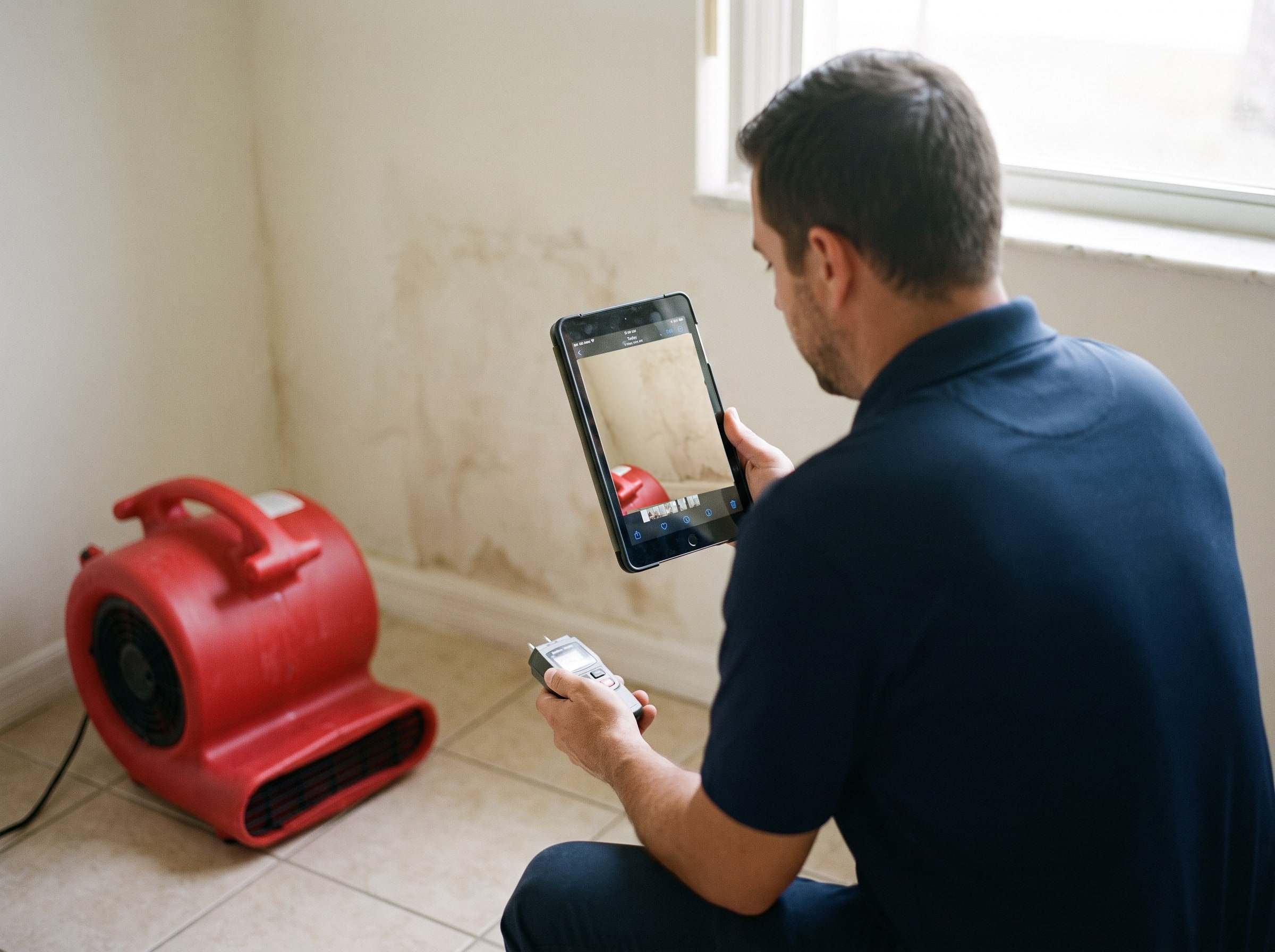
★ Every job is documented: photos, readings, and an itemized scope.
Insurance
Most homeowners policies cover sudden and accidental water damage, such as a burst pipe or an appliance overflow. They usually exclude long-term leaks, and flood damage from rising water is typically covered only by a separate flood policy.
You stay in control of your claim. We provide the documentation adjusters ask for: dated photos, moisture readings, equipment logs, and an itemized scope of work. For covered claims, we bill your insurance company directly; you pay the deductible and anything the policy does not cover.
Call your carrier to open the claim, and call us to stop the damage. Florida's Homeowner Claims Bill of Rights advises you to make and document emergency repairs that prevent further damage.
Carriers we've worked with: Citizens Property Insurance, Universal Property & Casualty, Tower Hill Insurance, State Farm, Allstate, USAA, and many more. We are not affiliated with or endorsed by any insurance company.
Coverage decisions belong to your insurer and depend on your policy. Florida does not allow assignment of benefits on property policies issued on or after January 1, 2023, so you stay in control of your claim.
How water damage claims work in FloridaFAQ
Most residential water losses dry in three to five days once the water is extracted. Larger losses, dense materials like hardwood or plaster, and Category 3 water take longer. Repairs are scheduled after the structure is confirmed dry.
It depends on how much material got wet, the category of water, and how long it sat. A contained clean-water leak caught early costs far less than a contaminated loss that spread for days. We give you a scope after the free inspection, and for covered claims, we bill your insurance company directly; you pay the deductible and anything the policy does not cover.
Usually, yes. The equipment is loud and runs continuously, and affected rooms are off-limits. If the water is contaminated, if the HVAC system is affected, or if someone in the home has respiratory issues, we may recommend staying elsewhere.
You can call both at once. Florida's Homeowner Claims Bill of Rights advises you to make and document emergency repairs needed to prevent further damage, and extraction and drying are exactly that. We document the conditions before and during the work so your adjuster can see what we found.
The IICRC S500 standard classifies water by contamination: Category 1 is clean water from a supply line, Category 2 has some contamination, such as washing machine discharge, and Category 3 is grossly contaminated, such as sewage or floodwater. The category decides what can be dried and saved and what must be removed.
Fast, thorough drying is the most effective way to prevent mold. Mold needs moisture. When materials are returned to normal moisture levels within a day or two of the loss, growth is far less likely.
Related services
Pumping, truck-mount and portable extraction, and weighted carpet extraction that get standing and absorbed water out before it spreads to walls and the unit below.
Dehumidification, air movement, and targeted drying for wall cavities, block, slabs, and hardwood, tracked with daily moisture readings.
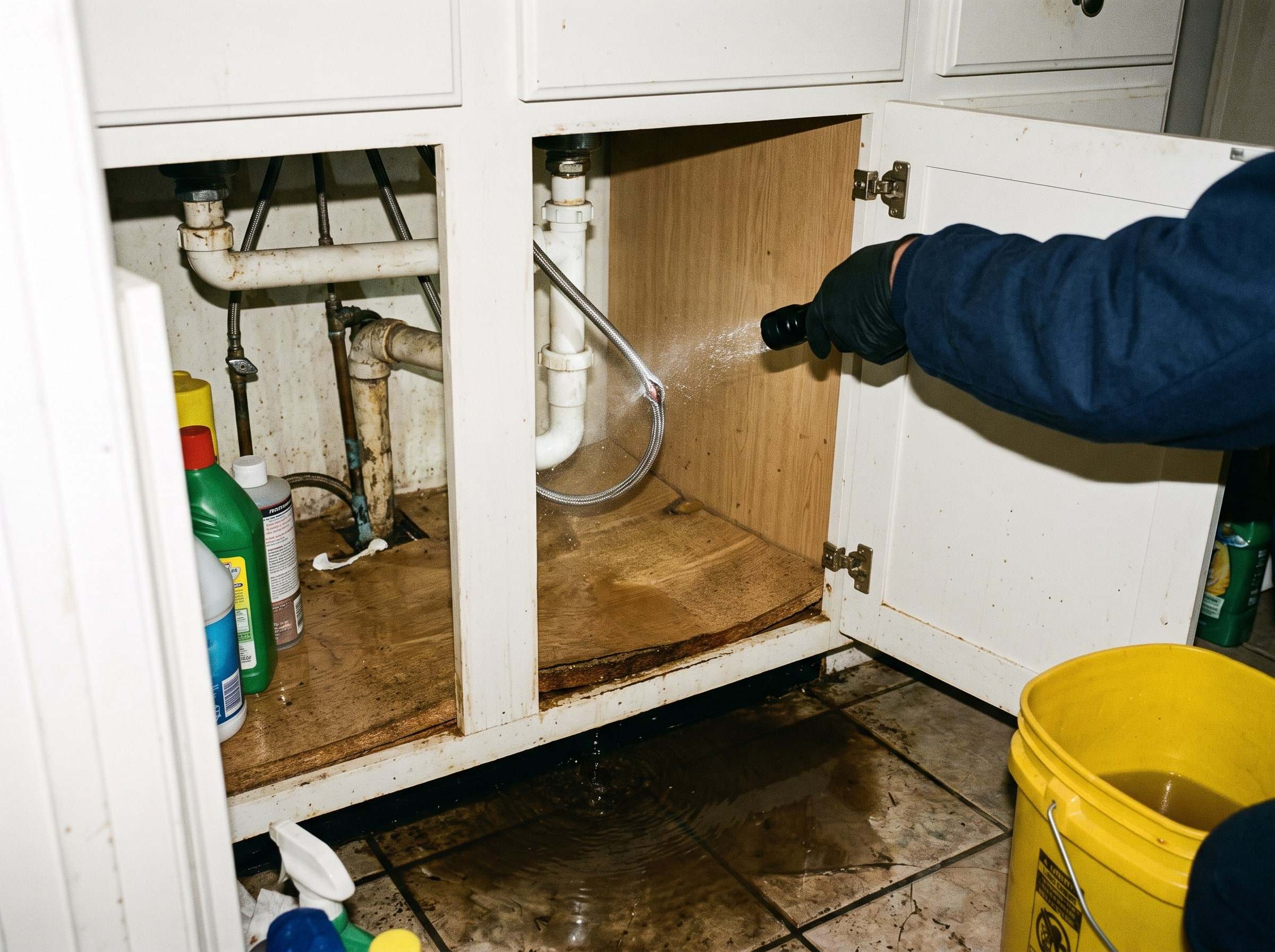
Extraction, drying, and repairs after supply line breaks, pinhole leaks, slab leaks, and failed valves, coordinated with your plumber.
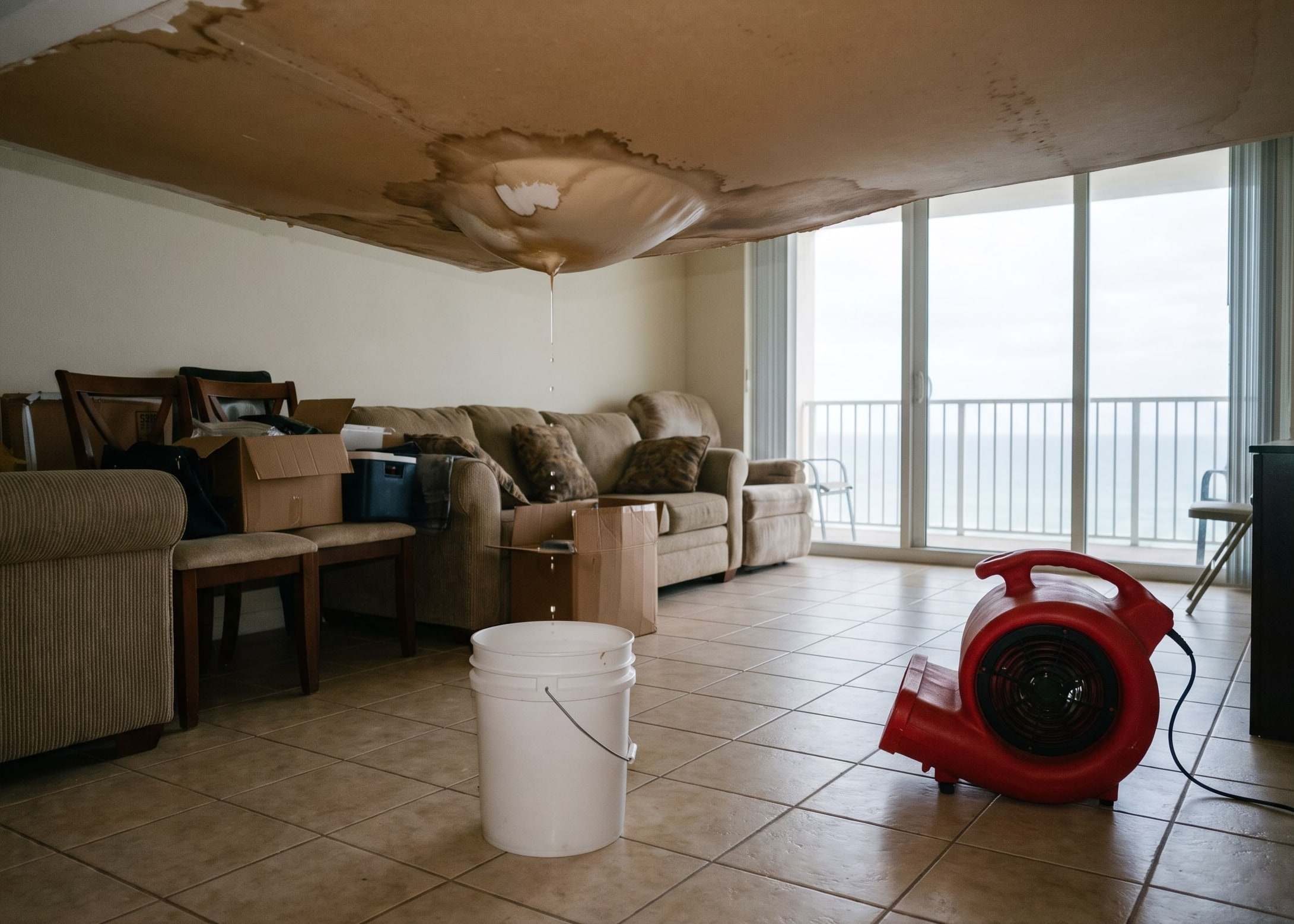
Tracing, making safe, drying, and repairing ceilings soaked by condo leaks, attic AC units, plumbing, and roof leaks.
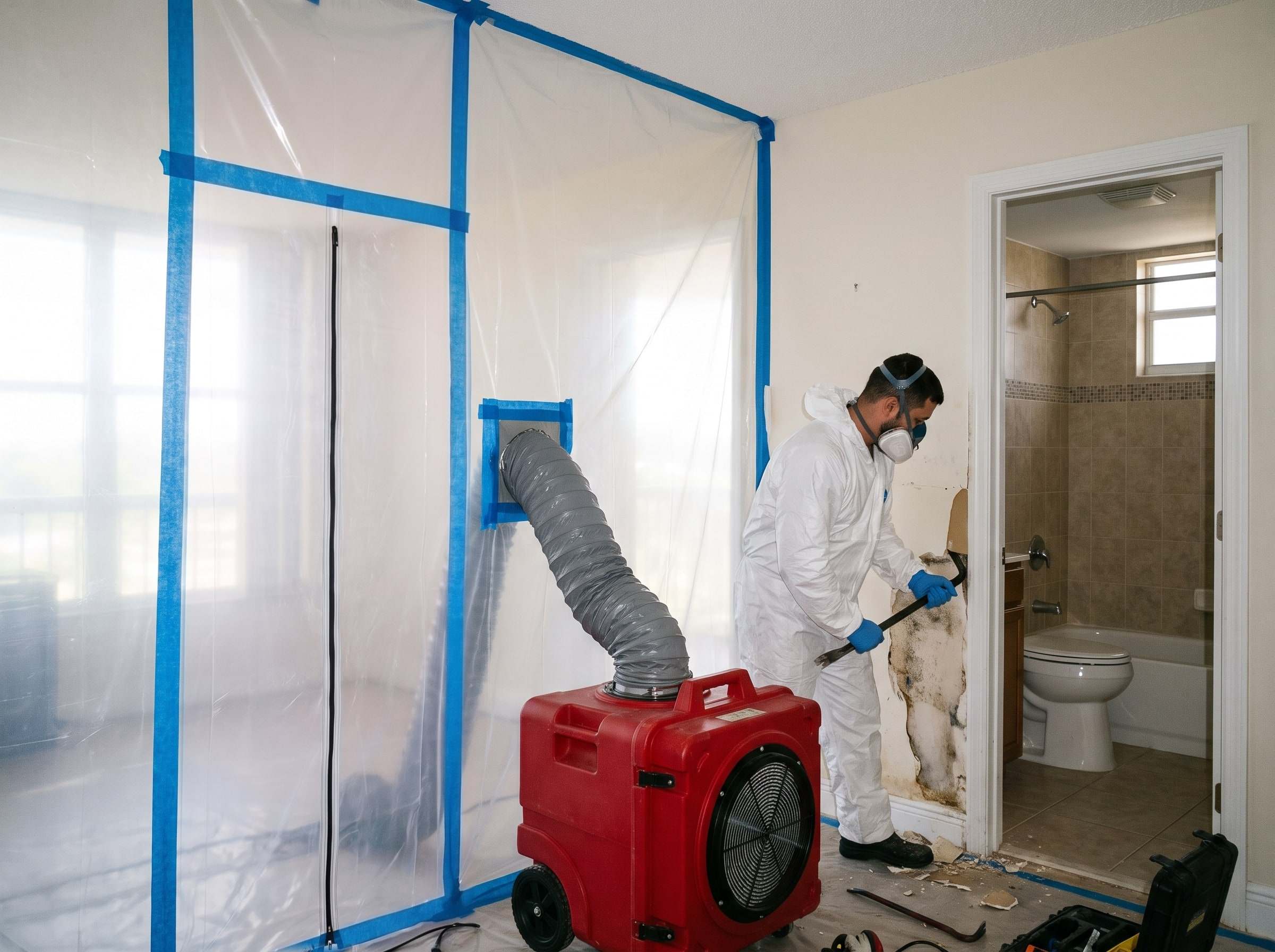
Containment, HEPA filtration, removal of moldy materials, and detailed cleaning to IICRC S520, with the moisture source found and fixed first.
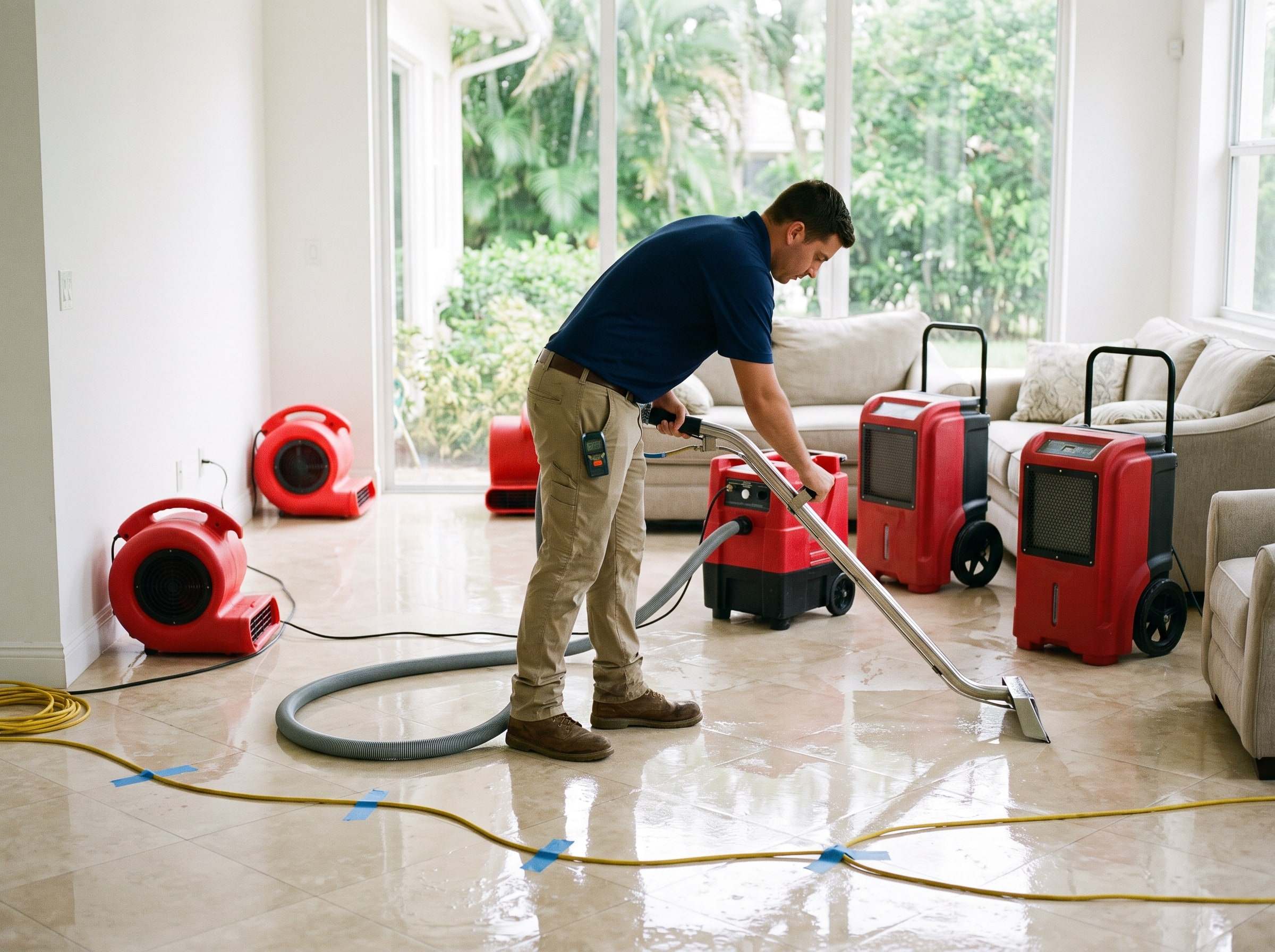
Category 3 cleanup for storm surge, street flooding, and tidal water: extraction, flood cuts, sanitizing, and drying, documented for a flood claim.
Service areas
We cover Miami-Dade, Broward, and Palm Beach counties. These are some of the cities where we handle water damage most often.
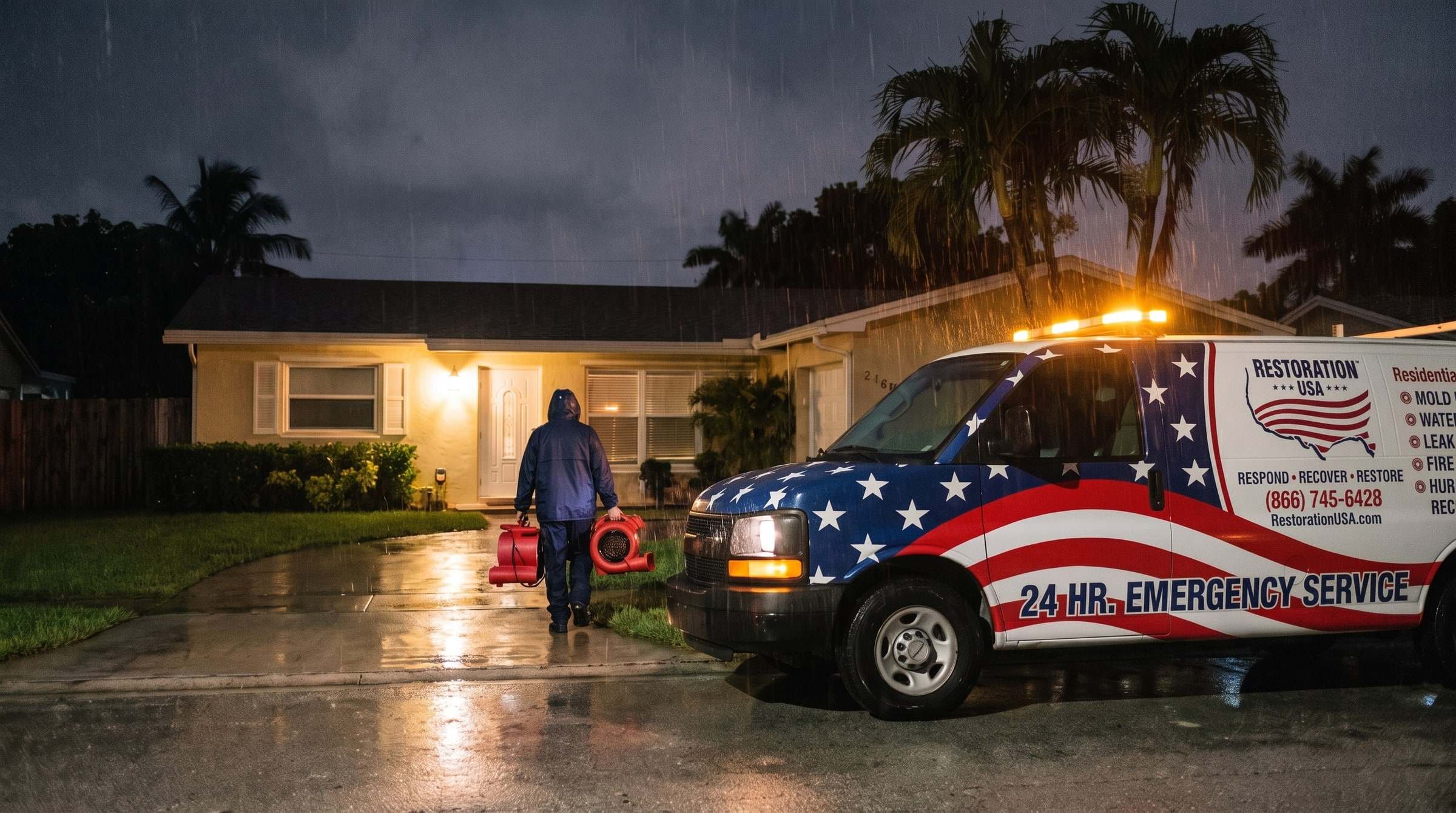
Don't wait. Go with the pros.
Call the 24/7 line. We will help you stop the source, tell you what to move, and get a crew scheduled. Not urgent? Send a request and we will call you back.
Call 24/7 (954) 289-0566On call 24/7
Schedule a no-cost on-site inspection. A restoration specialist will contact you within a few minutes to confirm the details.
Request received
Thank you. A restoration specialist will contact you at the number provided to confirm the details. If water is still coming in, call now and we'll walk you through shutting it off.
(954) 289-0566Recognized by