Emergency Water Removal & Extraction
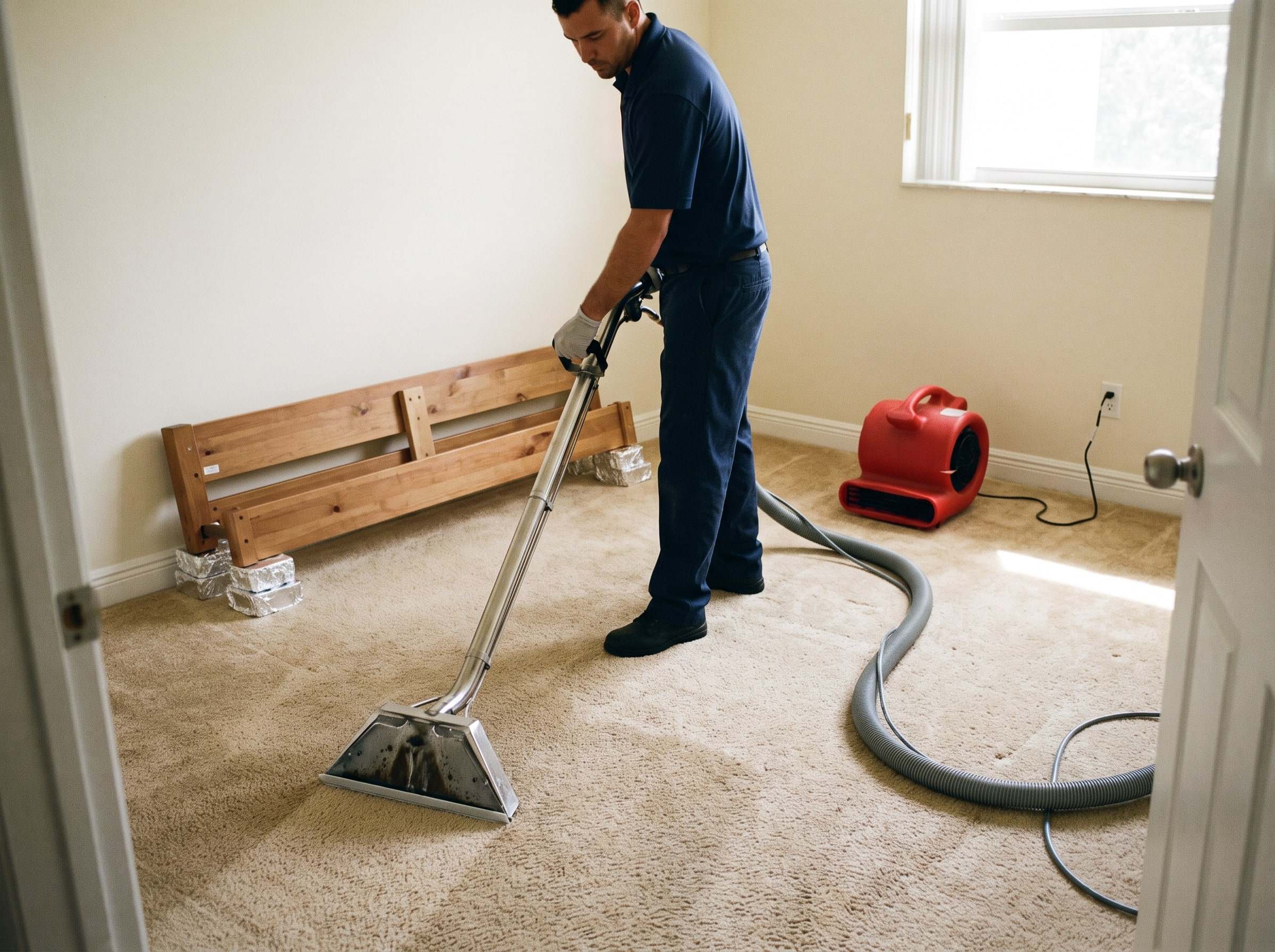
Pumping, truck-mount and portable extraction, and weighted carpet extraction that get standing and absorbed water out before it spreads to walls and the unit below.
Structural drying
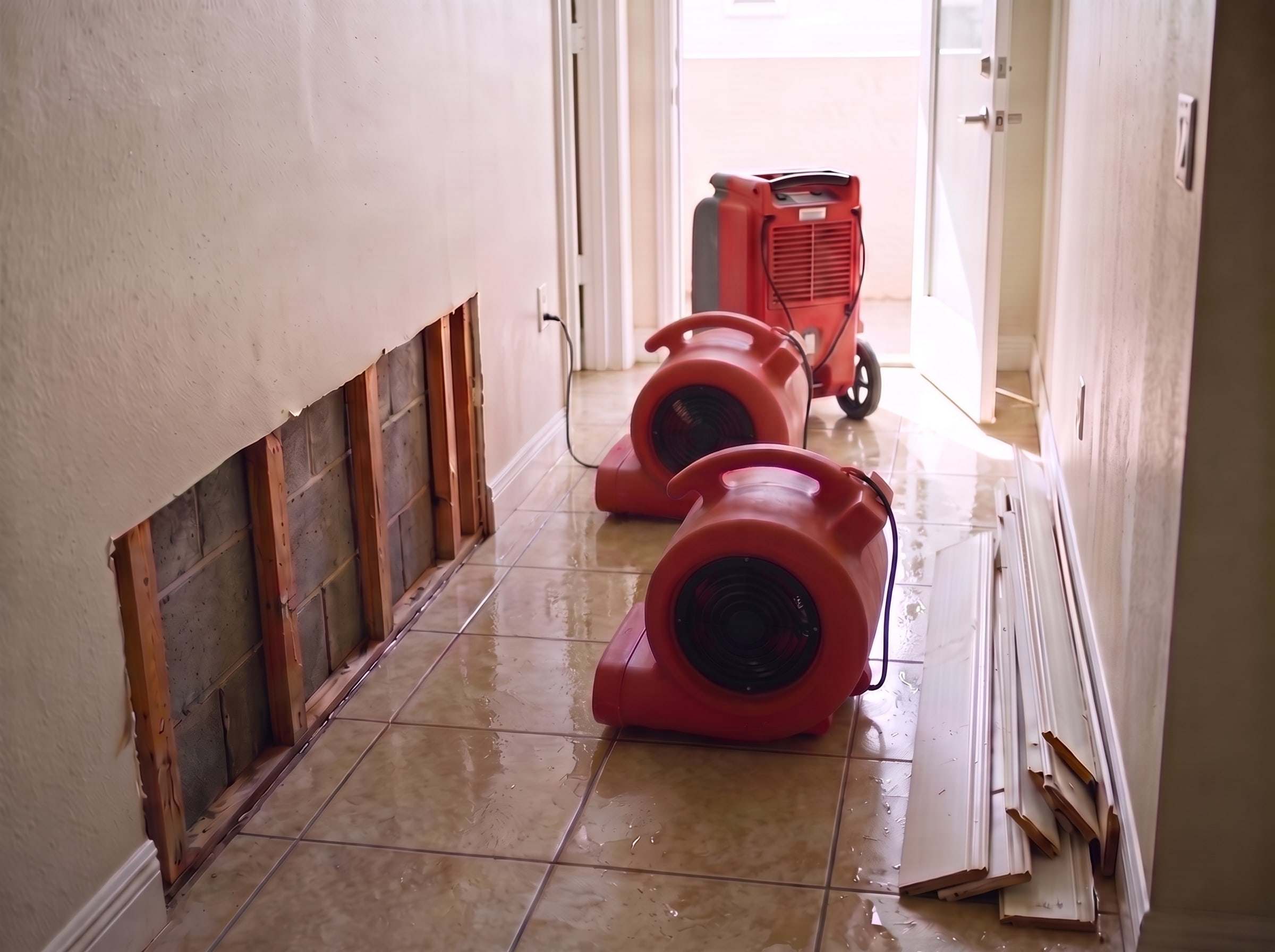
We dry walls, slabs, cabinets, and floors in place with dehumidifiers and air movers sized to the job, and we log moisture every day until each material matches its dry standard.
On call 24/7
Schedule a no-cost on-site inspection. A restoration specialist will contact you within a few minutes to confirm the details.
Request received
Thank you. A restoration specialist will contact you at the number provided to confirm the details. If water is still coming in, call now and we'll walk you through shutting it off.
(954) 289-0566Recognized by




Structural drying removes water that has soaked into the building itself: drywall, concrete block, the slab, framing, cabinets, and flooring. It starts once standing water has been extracted and continues until every wet material is back to its normal moisture level.
Drying is controlled evaporation. Air movers pull moisture out of wet surfaces into the air, and dehumidifiers take it out of the air before it settles into something else. Get that balance wrong and the room only gets more humid.
The finish line is set by measurement. We read unaffected materials of the same type elsewhere in the building, called the dry standard, and keep drying until the wet areas match. In South Florida, where outdoor air is humid most of the year, that usually means keeping the space closed and letting the equipment work.
What to look for
Drywall or wood that reads higher than the same material in an unaffected room still holds water, even when it feels dry to the touch.
A room that feels sticky, or windows that fog on the inside, means moisture is still coming out of the materials faster than it is being removed.
Bubbles that appear after cleanup mean water is still moving out of the wall behind the paint.
Boards with edges higher than their centers are still wet underneath. Sanding them flat before they dry leads to crowning later.
A musty smell that comes back after cleaning points to moisture trapped in a wall cavity, under a cabinet, or in the slab.
A stain line on drywall that creeps higher over a few days shows the wall is still wicking water up from the floor.
Our process
Every drying plan starts from the moisture map and is adjusted each day from the readings.
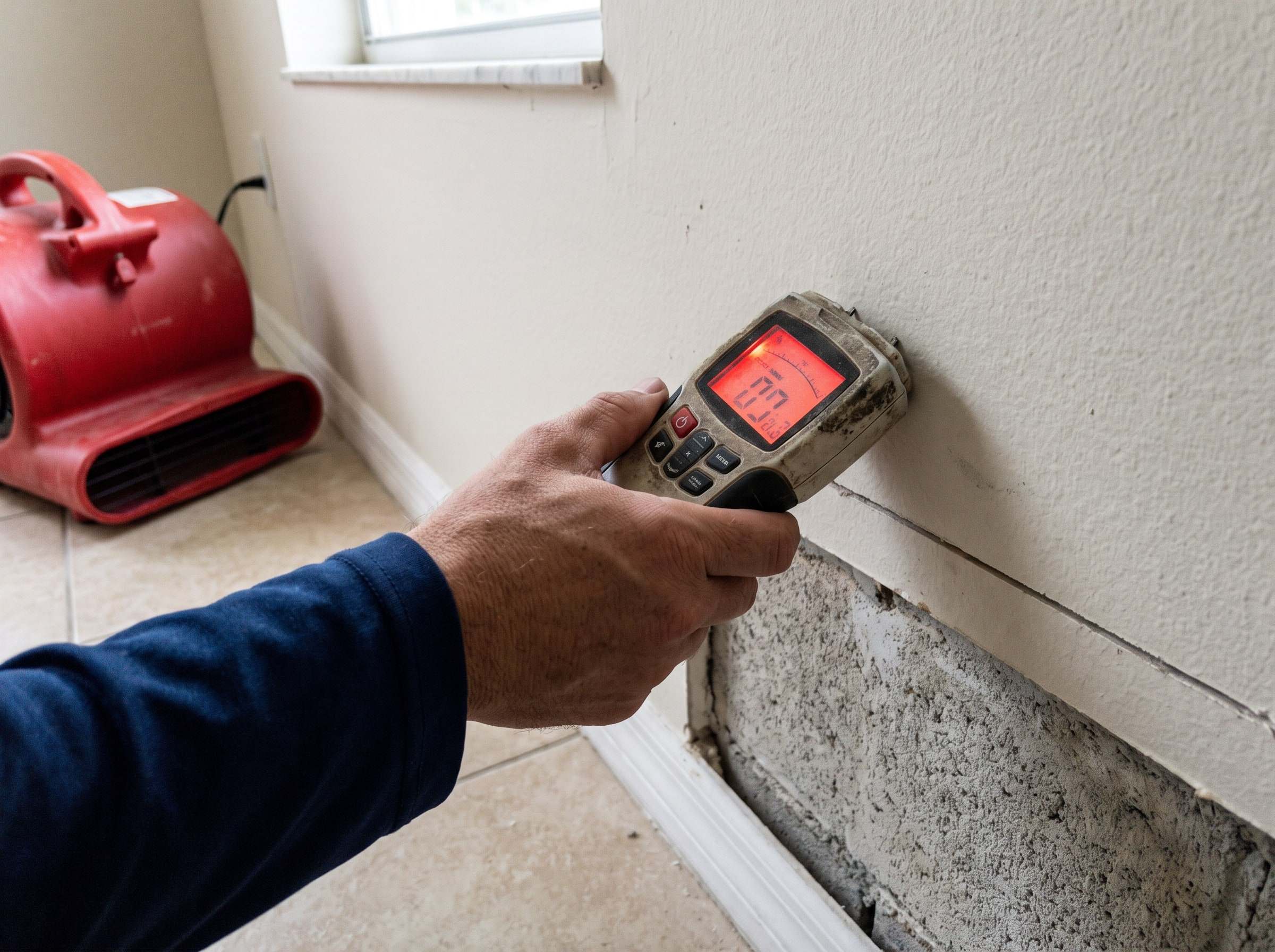
Pin and pinless moisture meters and thermal imaging outline every wet area. We then read dry materials of the same type to set a target for each one.
Baseboards come off, carpet is lifted, and cabinet toe-kicks are removed so air can reach wet surfaces. Vinyl wallpaper and other coverings that block evaporation may need to come off too.
LGR (low grain refrigerant) dehumidifiers, which pull more water from the air than standard units, handle most homes. Desiccant dehumidifiers, which absorb moisture with a treated wheel, are used for dense materials, large commercial spaces, or air that has to be drier than a refrigerant unit can get it.
Air movers are angled low along walls and under lifted carpet to keep dry air moving across wet surfaces. How many go in follows the wet area, not a fixed count per room.
For wet wall cavities we drill small holes behind the baseboard and push dry air through the cavity, which often saves the drywall. Wood floors get drying mats that draw moisture up through the boards.
Concrete block and slabs hold water deep and give it up slowly. They get focused airflow and dehumidification and stay on the monitoring list after the drywall is done.
Each visit we record temperature, relative humidity, and material readings, then move, add, or pull equipment. Drying ends when every reading reaches its goal, and the full log goes to you and your adjuster.
Types and causes
Drywall can wick water well above the visible stain. Caught early and wet with clean water, it can often be dried in place.
Many South Florida homes have exterior walls of concrete block with drywall on furring strips inside. Wet block gives water back slowly and can re-wet the drywall if it is not dried.
A concrete slab can hold water under tile, laminate, and engineered wood long after the surface looks dry.
Wood floors can often be saved when drying starts before the boards cup severely or separate from the slab.
Kitchen and vanity bases trap water underneath. Removing the toe-kick and drying the space below can save a sound cabinet box.
Offices, retail units, and warehouses need larger dehumidification setups and a plan that works around business hours.
Timing
A room can look finished days before it is dry. This is how a drying job usually runs, and what happens when it is cut short.
Equipment goes in and surface moisture comes off fast. Carpet and painted drywall can feel dry by the next morning.
Most drywall and framing reach their goal. Block, slab, and hardwood are still releasing water and need more time.
Moisture left in block or slab moves back into drywall and baseboards once the room is closed up and the AC cycles off.
Paint blisters, baseboards swell, floors cup, and mold can grow inside the wall cavity where no one sees it.
Why Restoration USA
Drying plans follow the IICRC S500 standard: measured goals, equipment sized to the loss, and documented progress.
Daily temperature, humidity, and moisture readings for each wet area, in writing, so you and your adjuster can follow the progress.
Our team brings more than 30 years of combined experience with South Florida construction: block walls, slabs, tile, and condo towers.
From a single bathroom to an office floor, the setup is sized to the space and the materials in it.
Reviews
This company is absolutely nothing short of amazing! John listens and hears what the needs are and makes sure you feel as important as the next job. They are professional, on time and very catering to the clients needs and time. I have used them for years with 2 different houses. They take the time to walk you through the process and spend time even after in order to make you feel comfortable. They are extremely professional and I feel safe having them in my home. They treated my house as if it was their own. They ensure your family is safe and that is the most important thing. I would highly recommend this company.
Grateful for James and his team! They did an outstanding job helping my elderly father whose living room had gotten wet due to weather conditions! Fast, detailed, and professional, with a caring spirit!!! Would highly recommend Restoration USA!! Great job again!!!
These guys are AWESOME. We had a huge flood in our house and they handled everything from packing up our contents, drying out our home and restoring our home like nothing ever happened. They were very professional and brought our home back to normal in the time that they promised and we agreed on. I highly recommend them for all your restoration needs. Cheers
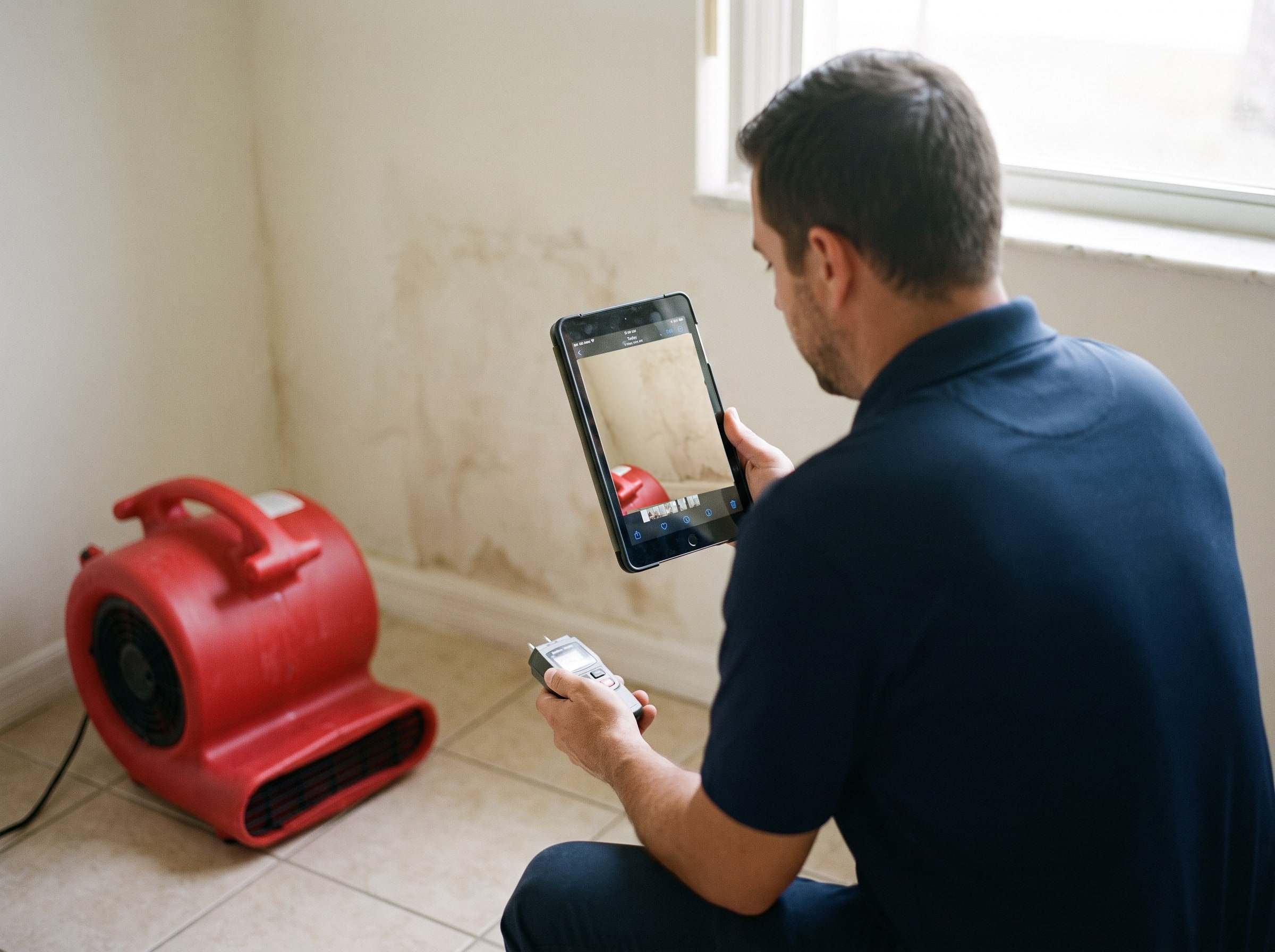
★ Every job is documented: photos, readings, and an itemized scope.
Insurance
Adjusters look closely at drying. They want to see that the equipment matched the size of the loss and that it ran only as long as the readings justified. A daily log answers both questions.
We give you the moisture map, each day's readings, the equipment list with dates, and photos of the setup. The starting readings also show how far the water traveled from the source, which helps when the extent of the damage is in question.
Carriers we've worked with: Citizens Property Insurance, Universal Property & Casualty, Tower Hill Insurance, State Farm, Allstate, USAA, and many more. We are not affiliated with or endorsed by any insurance company.
Coverage decisions belong to your insurer and depend on your policy. Florida does not allow assignment of benefits on property policies issued on or after January 1, 2023, so you stay in control of your claim.
How water damage claims work in FloridaFAQ
Most residential jobs dry in about three to five days after extraction. Concrete block, slabs, hardwood, and plaster can take longer, and so can large commercial spaces. We decide when drying is finished from the readings, not the calendar.
Box fans move air but do not remove water from it. The moisture they pull out of the walls stays in the room and soaks into drywall, furniture, and cabinets that were dry. In South Florida, open windows usually let in air that is more humid than the air inside, which slows drying further. Dehumidification is what actually takes the water out.
Please leave it running. Drying works around the clock, and turning equipment off lets humidity climb and the materials take moisture back in. If noise or a tripped breaker is a problem, call us and we will adjust the setup instead.
Not always. When drywall is wet from clean water and still solid, we can often dry the cavity through small holes behind the baseboard, which are covered when the baseboard goes back on. Drywall that is crumbling, contaminated, or backed by insulation that will not dry is cut out instead.
Often, if drying starts before the boards cup heavily or come loose from the slab. Drying mats pull moisture through the wood while dehumidifiers dry the room. Hold off on refinishing until readings are back to normal, because sanding a floor that is still wet can leave it crowned once it dries.
Related services
Pumping, truck-mount and portable extraction, and weighted carpet extraction that get standing and absorbed water out before it spreads to walls and the unit below.
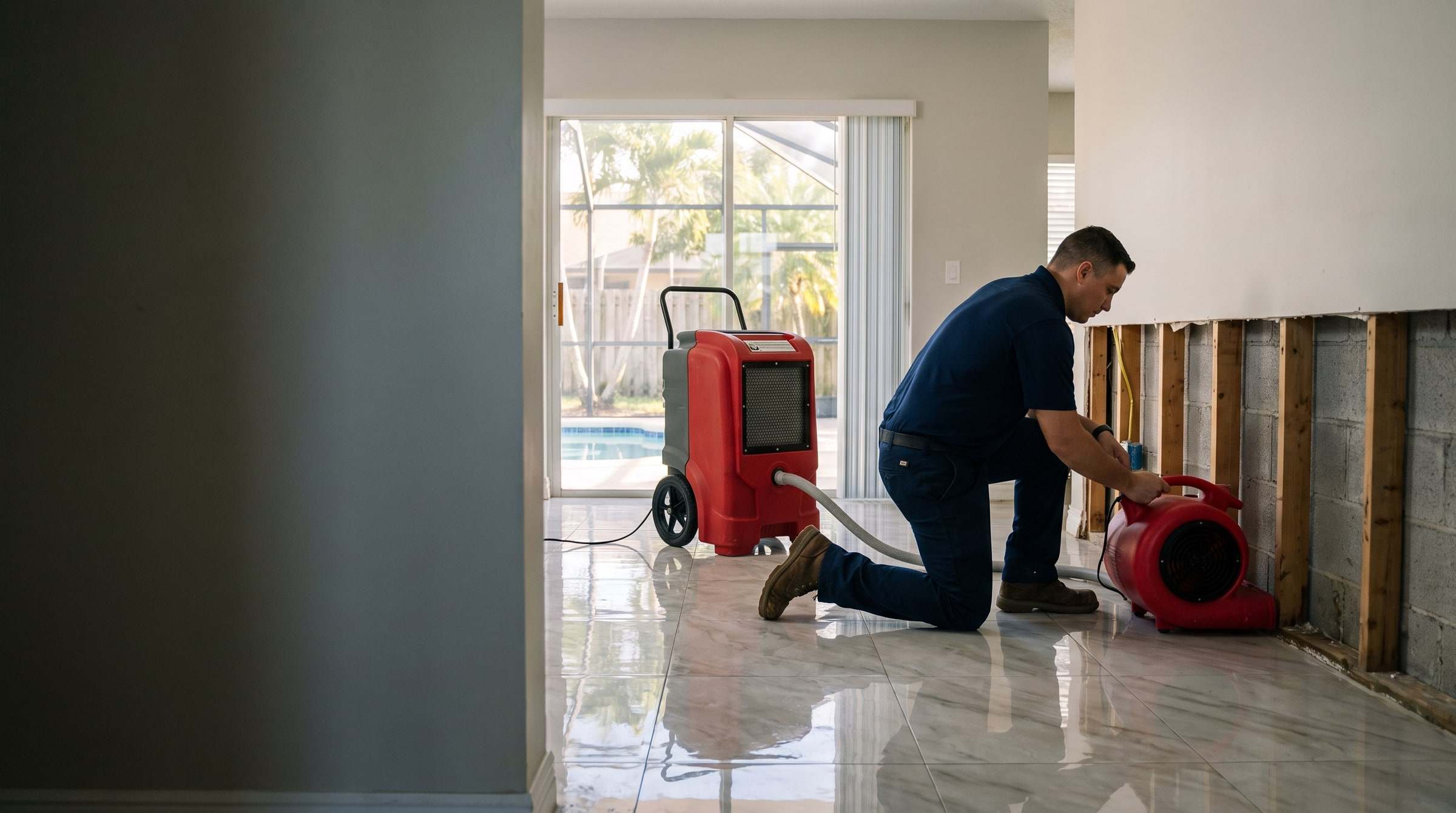
Extraction, moisture mapping, and structural drying for leaks, overflows, and floods, with documentation your adjuster can use.
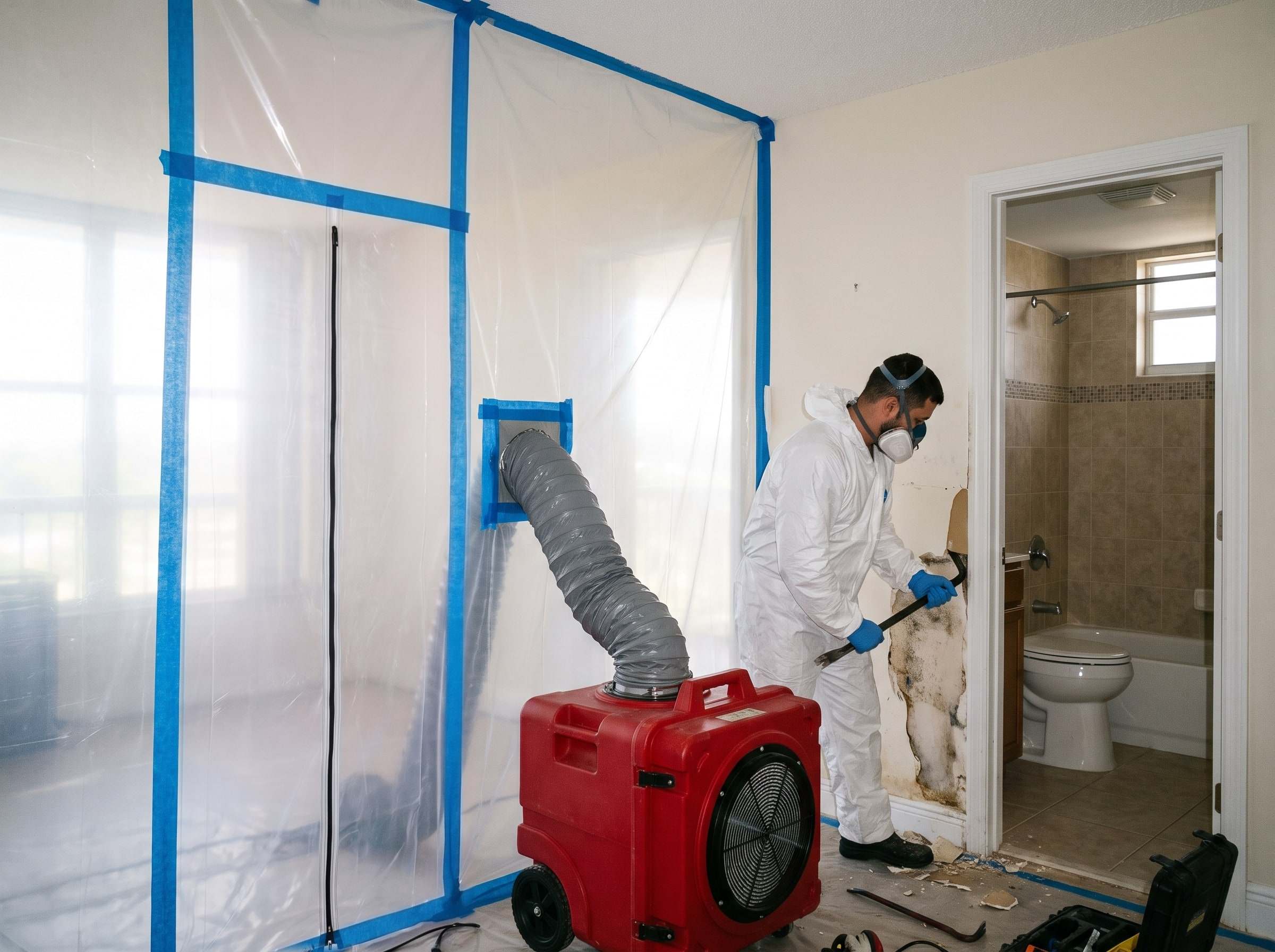
Containment, HEPA filtration, removal of moldy materials, and detailed cleaning to IICRC S520, with the moisture source found and fixed first.
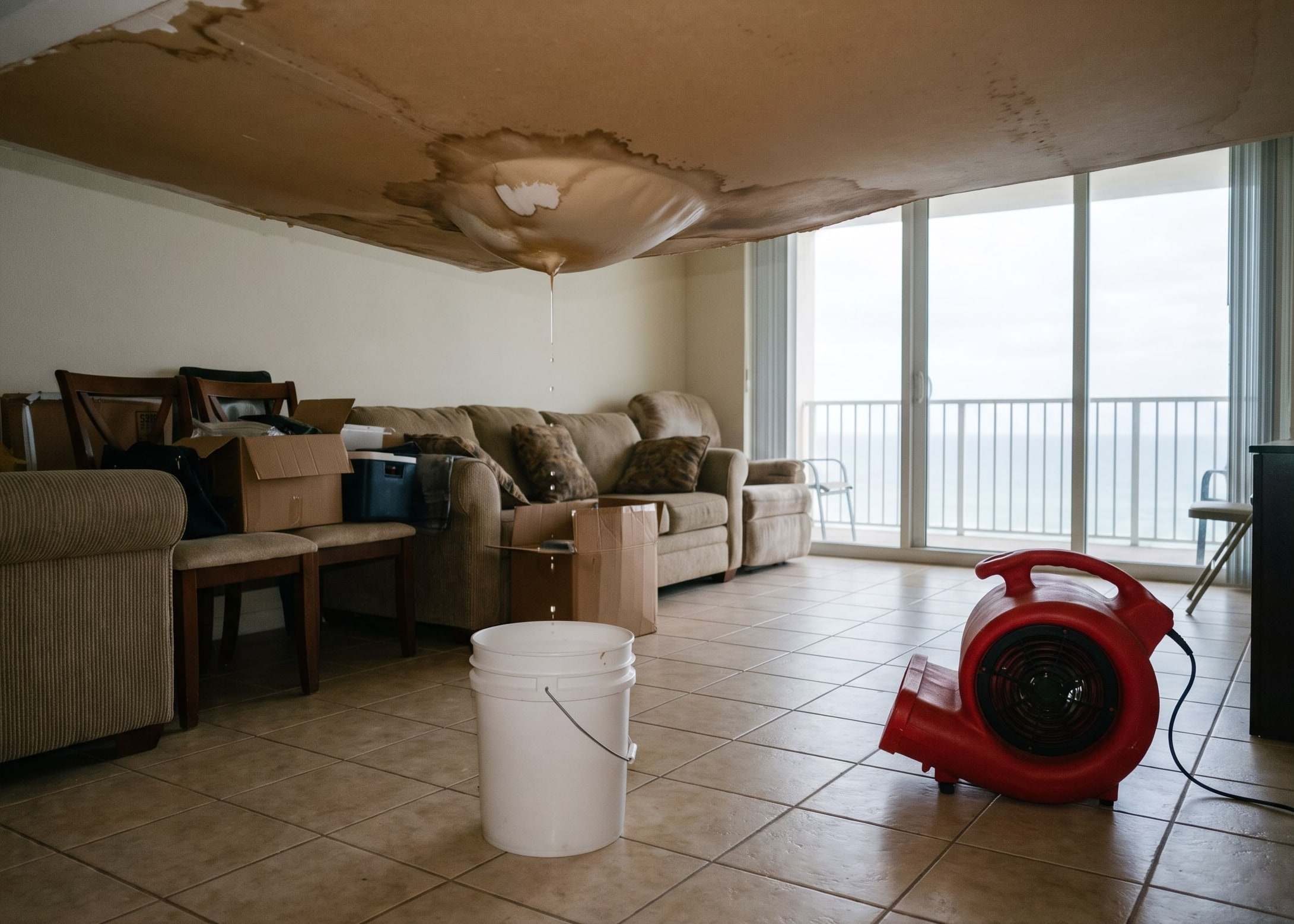
Tracing, making safe, drying, and repairing ceilings soaked by condo leaks, attic AC units, plumbing, and roof leaks.
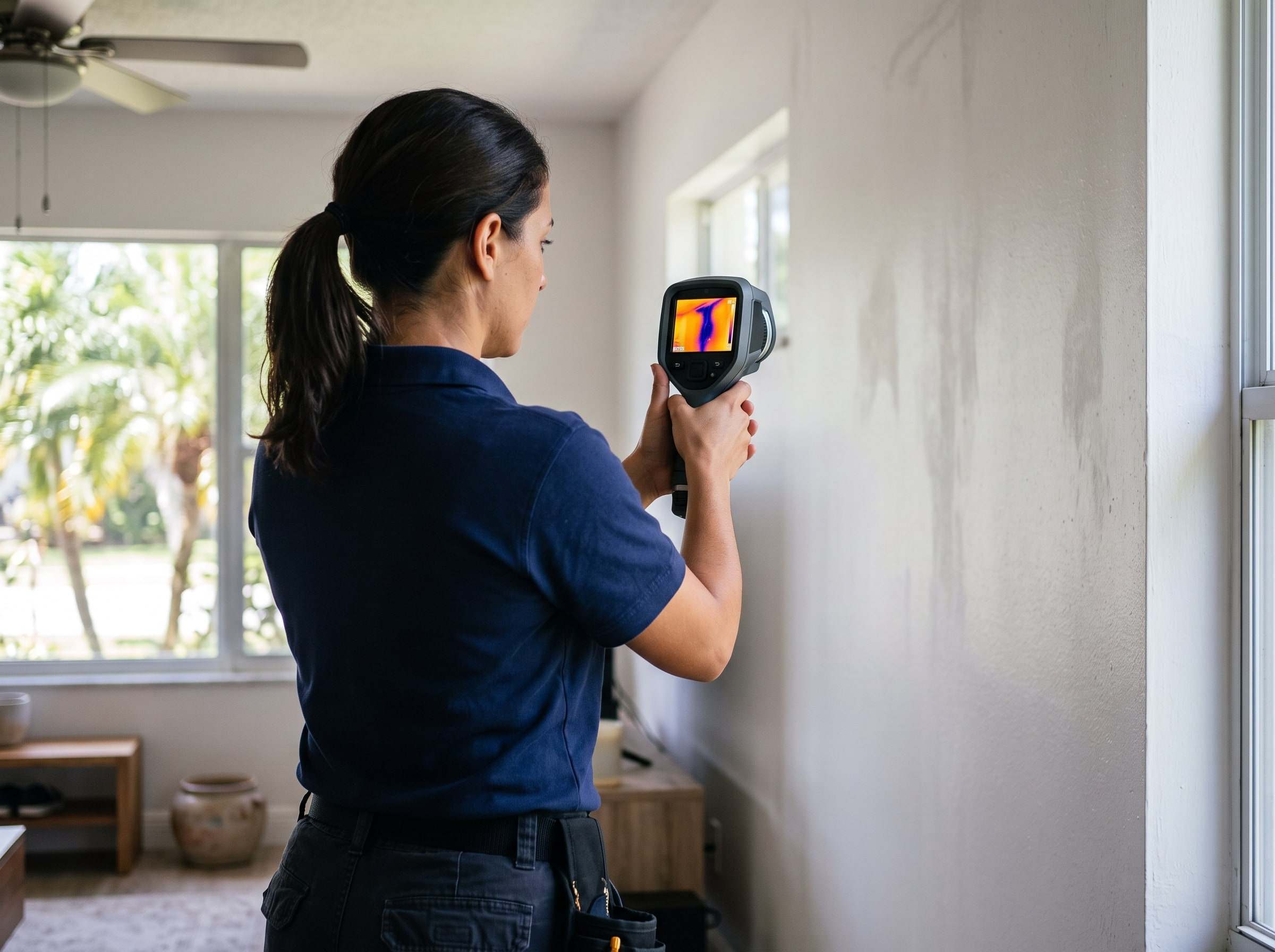
Non-invasive detection for slab, wall, irrigation, and roof leaks using pressure tests, acoustic equipment, thermal imaging, and video pipe inspection.
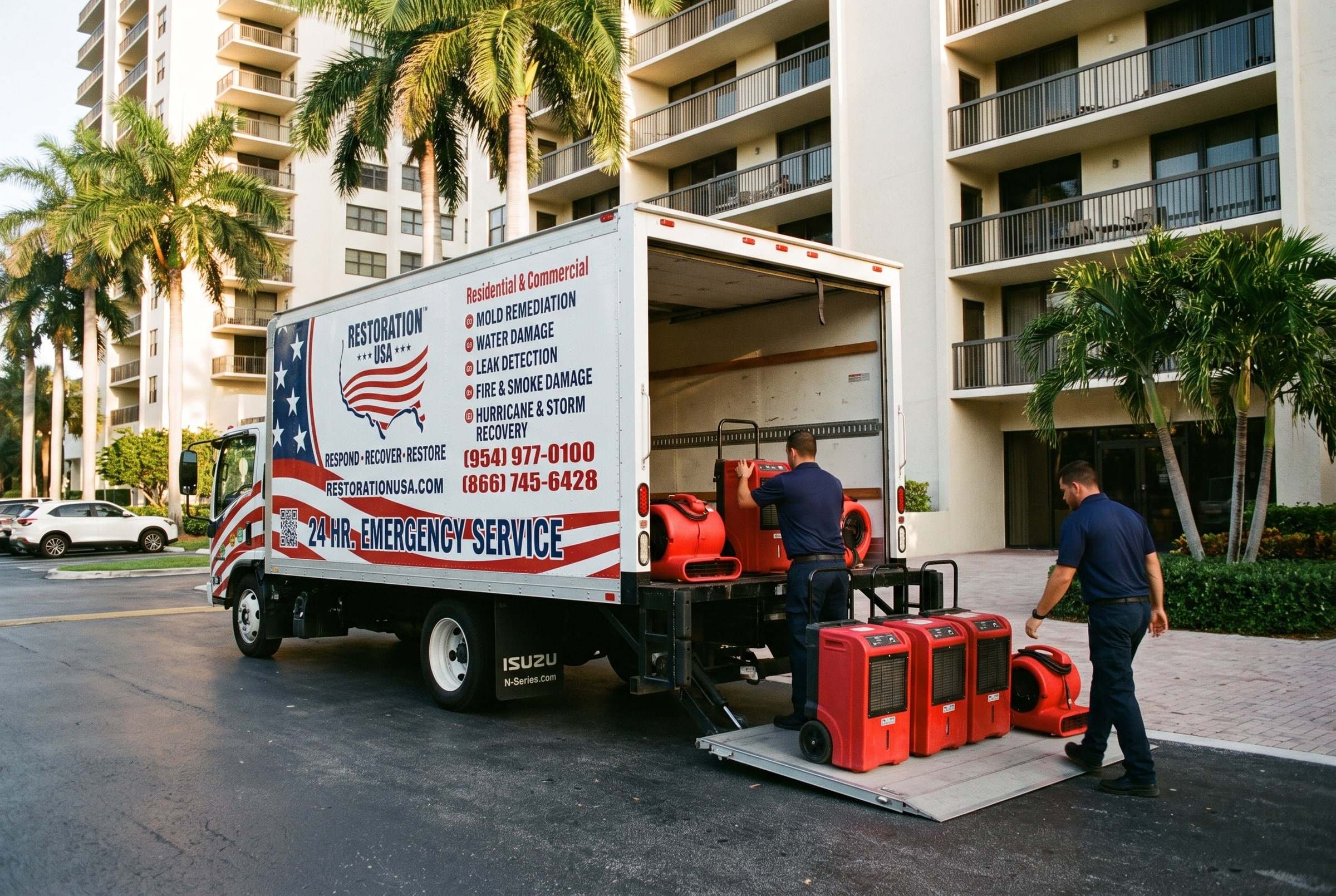
Water, mold, fire, and storm restoration for offices, retail, restaurants, warehouses, and multifamily buildings, phased to keep the rest of the property running.
Service areas
We cover Miami-Dade, Broward, and Palm Beach counties. These are some of the cities where we handle structural drying most often.
Don't wait. Go with the pros.
Call the 24/7 line. We will help you stop the source, tell you what to move, and get a crew scheduled. Not urgent? Send a request and we will call you back.
Call 24/7 (954) 289-0566On call 24/7
Schedule a no-cost on-site inspection. A restoration specialist will contact you within a few minutes to confirm the details.
Request received
Thank you. A restoration specialist will contact you at the number provided to confirm the details. If water is still coming in, call now and we'll walk you through shutting it off.
(954) 289-0566Recognized by