Flood Damage Cleanup & Restoration
Category 3 cleanup for storm surge, street flooding, and tidal water: extraction, flood cuts, sanitizing, and drying, documented for a flood claim.
Sewage cleanup
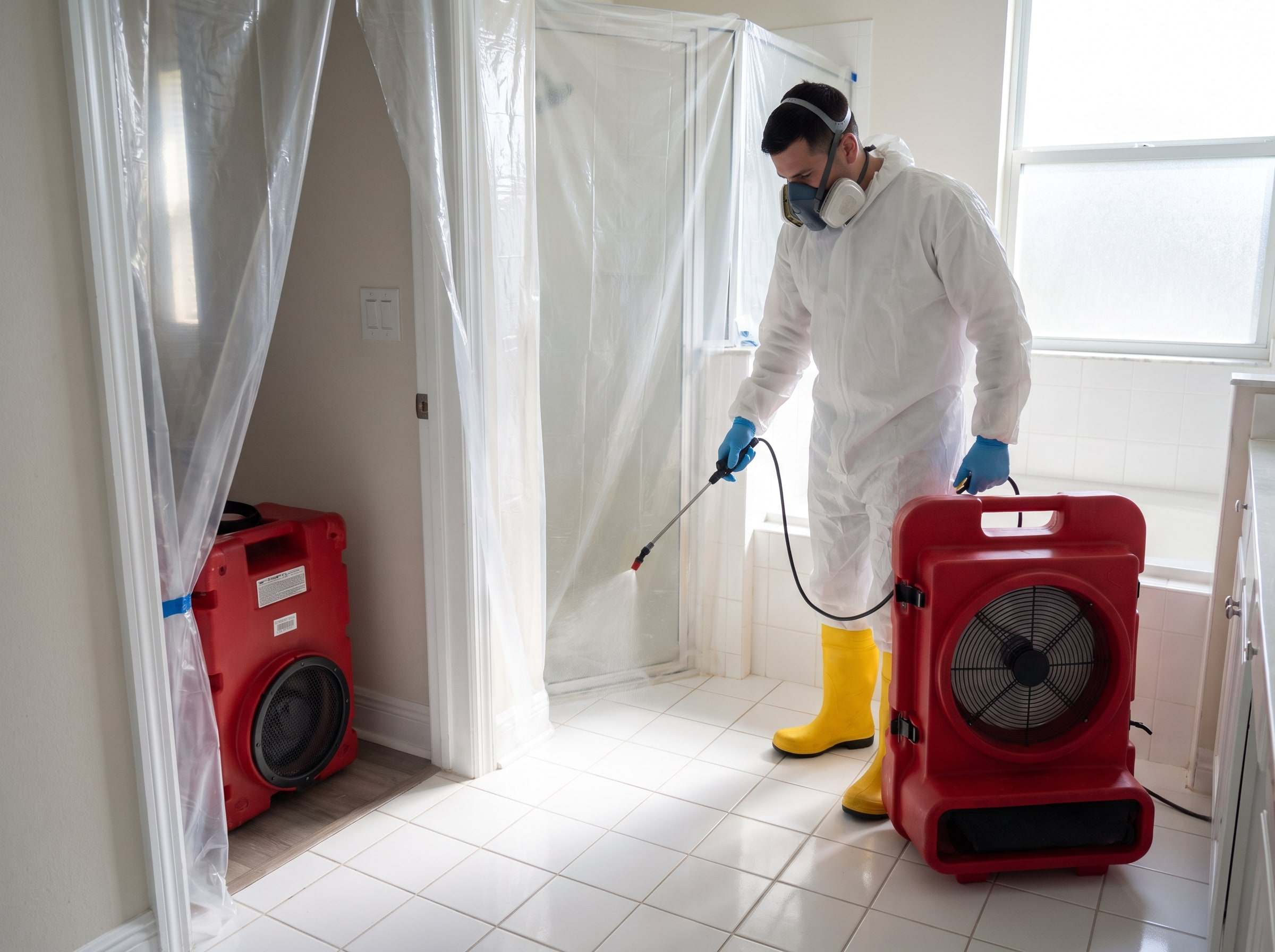
Sewage carries bacteria and viruses that soak into anything porous. We contain the area, remove what the IICRC standard says cannot be saved, and clean, sanitize, and dry what remains.
On call 24/7
Schedule a no-cost on-site inspection. A restoration specialist will contact you within a few minutes to confirm the details.
Request received
Thank you. A restoration specialist will contact you at the number provided to confirm the details. If water is still coming in, call now and we'll walk you through shutting it off.
(954) 289-0566Recognized by


Sewage is Category 3 water, the IICRC term for grossly contaminated water that can carry bacteria, viruses, and parasites that cause serious illness. That includes toilet overflows with waste, main line backups, and leaks from broken drain lines under the slab or inside a wall.
Unlike a clean-water leak, sewage cannot simply be dried. Porous materials it touches, such as carpet, pad, drywall, and insulation, have to be removed, and everything that stays has to be cleaned and sanitized before drying starts.
Two South Florida factors come up often: older homes with cast-iron drain lines under the slab, and homes on septic systems that back up when heavy rain raises the water table. The cleanup is the same either way, but the cause decides who you call to keep it from happening again.
What to look for
Toilets or drains that gurgle when another fixture runs point to a blockage or venting problem in the drain line.
When tubs, showers, and toilets all drain slowly, the problem is usually in the main line rather than one fixture.
Sewage backs up first at the lowest fixture, often a ground-floor shower or tub.
A persistent sewage smell can come from a cracked drain line under the floor or inside a wall.
Loose tile, dark grout, or stained baseboards near plumbing walls may be a leaking drain line, not a supply line.
Standing water or soggy, unusually green grass over the drain field means the system is not absorbing wastewater, and a backup inside may follow.
Our process
Sewage jobs follow a stricter order than clean-water losses. Contamination is removed before anything is dried.
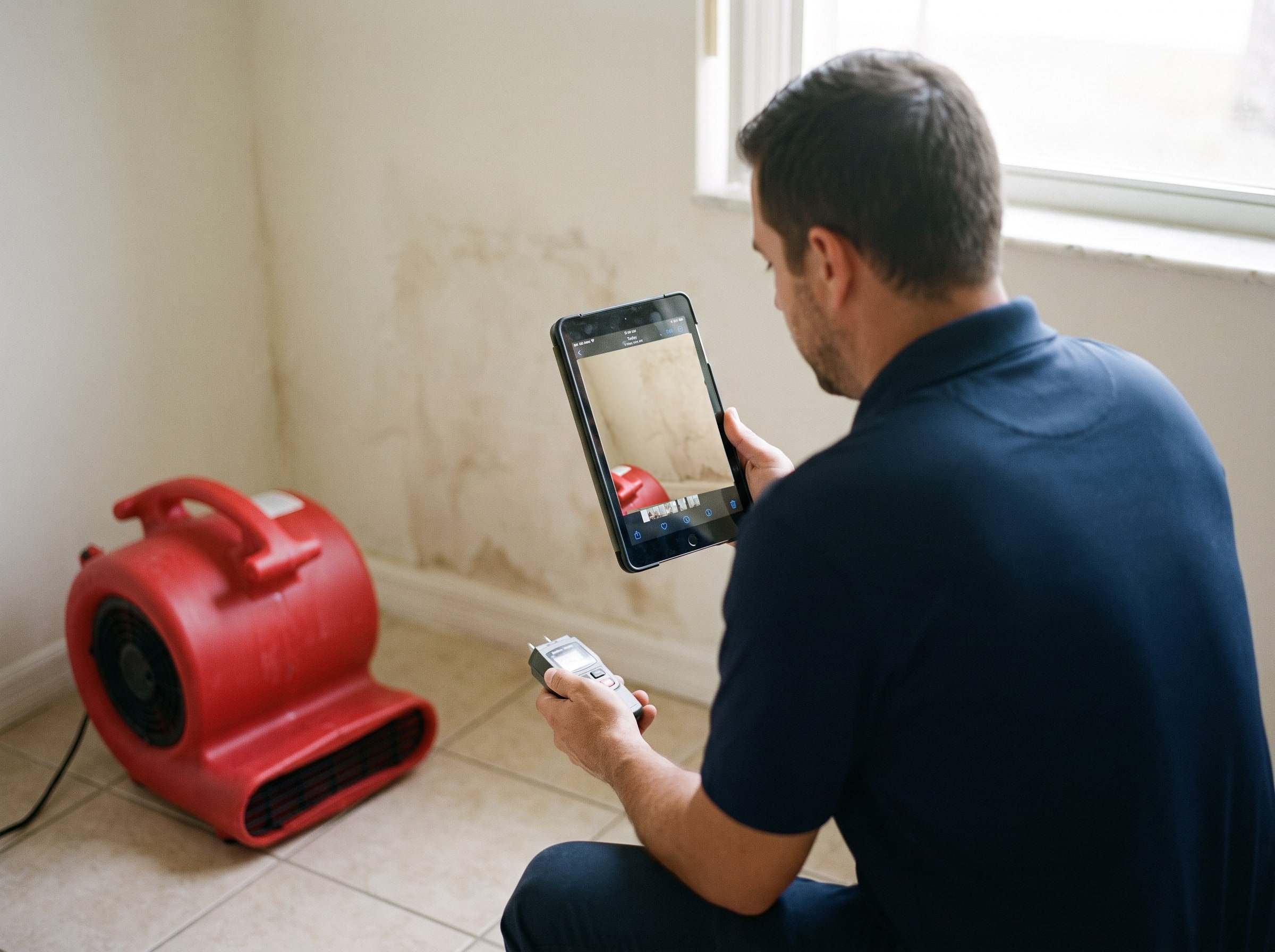
Everyone stays out of the affected area, and no one runs water or flushes until the line is cleared. Keep the HVAC off until we confirm it is not pulling air from the contaminated space.
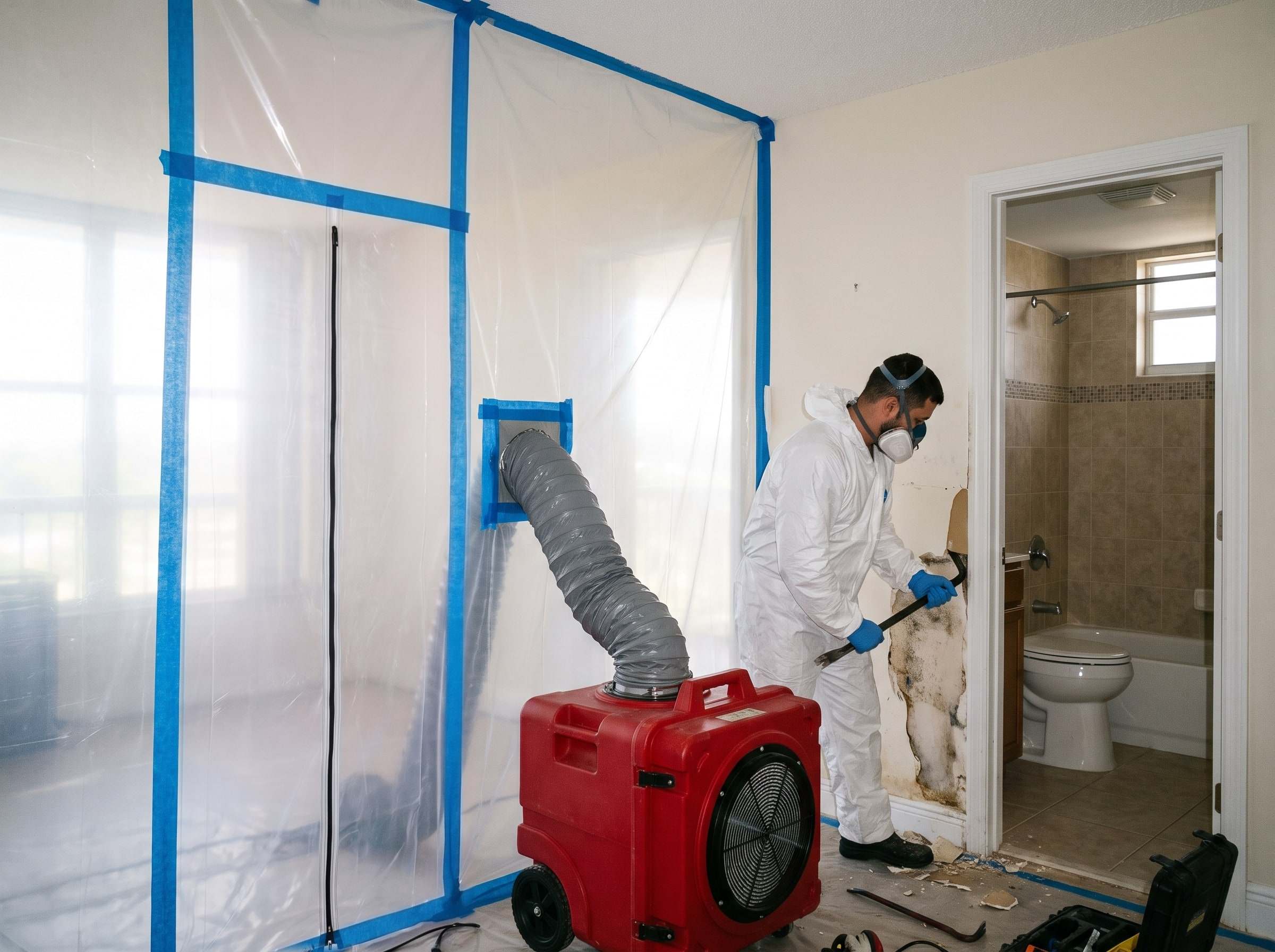
The crew works in respirators, gloves, boots, and protective suits. The area is sealed with plastic sheeting and kept under negative air pressure with HEPA air scrubbers so contaminants do not spread through the building.
Liquid sewage and solids are extracted, and contaminated items are bagged inside the containment before they are carried out.
Following the IICRC S500 standard, porous materials that absorbed sewage are removed and discarded, including carpet and pad, drywall, insulation, upholstered furniture, mattresses, and swollen particleboard. Drywall is cut above the highest wicking line.
The slab, framing, tile, and other remaining surfaces are cleaned of residue, then treated with an EPA-registered disinfectant. Cleaning comes first because disinfectants do not work on surfaces that still carry waste.
Only after cleaning do dehumidifiers and air movers go in, so contaminated material is not blown around. Readings are taken daily until the slab and framing reach their goal.
Your plumber clears or repairs the line. We document what was removed and why, record the drying readings, and coordinate the repairs.
Types and causes
Many South Florida homes built from the 1950s into the 1970s have cast-iron drain lines under the slab. Over time they corrode, crack, and build up scale inside, causing slow drains, backups, and hidden leaks under the floor.
Grease, wipes, and tree roots block the line between the house and the sewer, so waste backs up into the lowest drain.
When heavy rain raises the water table, a septic drain field cannot absorb wastewater and it backs up into the house. Tanks that are overdue for pumping fail sooner.
During heavy storms, an overloaded sewer system can push water back up into homes through floor drains and low fixtures.
A clogged toilet that overflows with waste is Category 3 even when it stays in one bathroom, and water that leaks to the floor or ceiling below spreads the contamination.
In multi-story buildings, a blockage in a shared drain stack can push sewage out through fixtures in the lower units.
Timing
Sewage spreads contamination through contact, the air, and foot traffic. The longer it sits, the more of the structure has to come out.
Stop using water in the home, keep children and pets out, and avoid walking through the area, which tracks contamination into clean rooms.
Carpet, pad, and drywall absorb the contaminated water, and odors build quickly in a closed-up South Florida home.
Contamination wicks higher into drywall and baseboards, and mold can start on wet materials, adding to what has to be removed.
More of the structure has to come out, odors set into what remains, and the health risk to anyone in the home keeps rising.
Why Restoration USA
Category 3 work follows the IICRC S500 standard, from containment and protective gear to what is removed and what is cleaned.
A backup does not wait for business hours. Call any time and we'll tell you what to do and what to avoid until the crew is there.
Every material and item removed is photographed and listed with the reason, which adjusters look for on Category 3 claims.
Homes, condo buildings, restaurants, and offices, where a backup can reach several units or keep a business closed.
Reviews
This company is absolutely nothing short of amazing! John listens and hears what the needs are and makes sure you feel as important as the next job. They are professional, on time and very catering to the clients needs and time. I have used them for years with 2 different houses. They take the time to walk you through the process and spend time even after in order to make you feel comfortable. They are extremely professional and I feel safe having them in my home. They treated my house as if it was their own. They ensure your family is safe and that is the most important thing. I would highly recommend this company.
Grateful for James and his team! They did an outstanding job helping my elderly father whose living room had gotten wet due to weather conditions! Fast, detailed, and professional, with a caring spirit!!! Would highly recommend Restoration USA!! Great job again!!!
These guys are AWESOME. We had a huge flood in our house and they handled everything from packing up our contents, drying out our home and restoring our home like nothing ever happened. They were very professional and brought our home back to normal in the time that they promised and we agreed on. I highly recommend them for all your restoration needs. Cheers
★ Every job is documented: photos, readings, and an itemized scope.
Insurance
Standard homeowners policies often exclude water that backs up through sewers or drains unless you added a water backup endorsement. Check your declarations page for that coverage and its limit, which is often lower than the rest of the policy.
How a claim is treated can also depend on the cause. A backup from a blocked public sewer, a leak from a cracked drain pipe inside the home, and sewage carried in by floodwater may each fall under a different part of a policy, or under a separate flood policy. We document the source, the extent of contamination, and every item removed so your adjuster has the full picture.
Carriers we've worked with: Citizens Property Insurance, Universal Property & Casualty, Tower Hill Insurance, State Farm, Allstate, USAA, and many more. We are not affiliated with or endorsed by any insurance company.
Coverage decisions belong to your insurer and depend on your policy. Florida does not allow assignment of benefits on property policies issued on or after January 1, 2023, so you stay in control of your claim.
How water damage claims work in FloridaFAQ
A small toilet overflow on tile, cleaned up right away with gloves and a disinfectant, may be manageable. Anything that reached carpet, drywall, cabinets, or more than one room needs professional Category 3 cleanup, because porous materials hold contamination that household cleaning will not reach.
Often, if the affected area can be sealed off and you have a working bathroom elsewhere. Young children, older adults, pregnant women, and anyone with a weakened immune system or a respiratory condition should stay away from the work area, and sometimes out of the home until cleaning is done. We will give you our recommendation once we see how far the contamination reached.
Under the IICRC S500 standard, porous materials that absorbed sewage are removed, including carpet and pad, drywall, insulation, upholstered furniture, mattresses, and most particleboard. Hard, non-porous items such as tile, metal, and glass can usually be cleaned and sanitized. Photograph everything before it is discarded, for your claim.
Only if your policy includes it. Many standard policies exclude water backup from sewers and drains unless you bought a backup endorsement, and that endorsement usually has its own limit. Damage from a broken drain pipe inside the house may be treated differently, so ask your carrier and read the exclusions section.
Repeated backups in a home built before the 1980s often point to the cast-iron drain line: scale buildup, cracks, or a sagging section under the slab. Tree roots in the line to the street are another common cause. A plumber can run a camera through the line to find the problem; until it is repaired, each backup will need the same cleanup.
Related services
Category 3 cleanup for storm surge, street flooding, and tidal water: extraction, flood cuts, sanitizing, and drying, documented for a flood claim.
Containment, HEPA filtration, removal of moldy materials, and detailed cleaning to IICRC S520, with the moisture source found and fixed first.
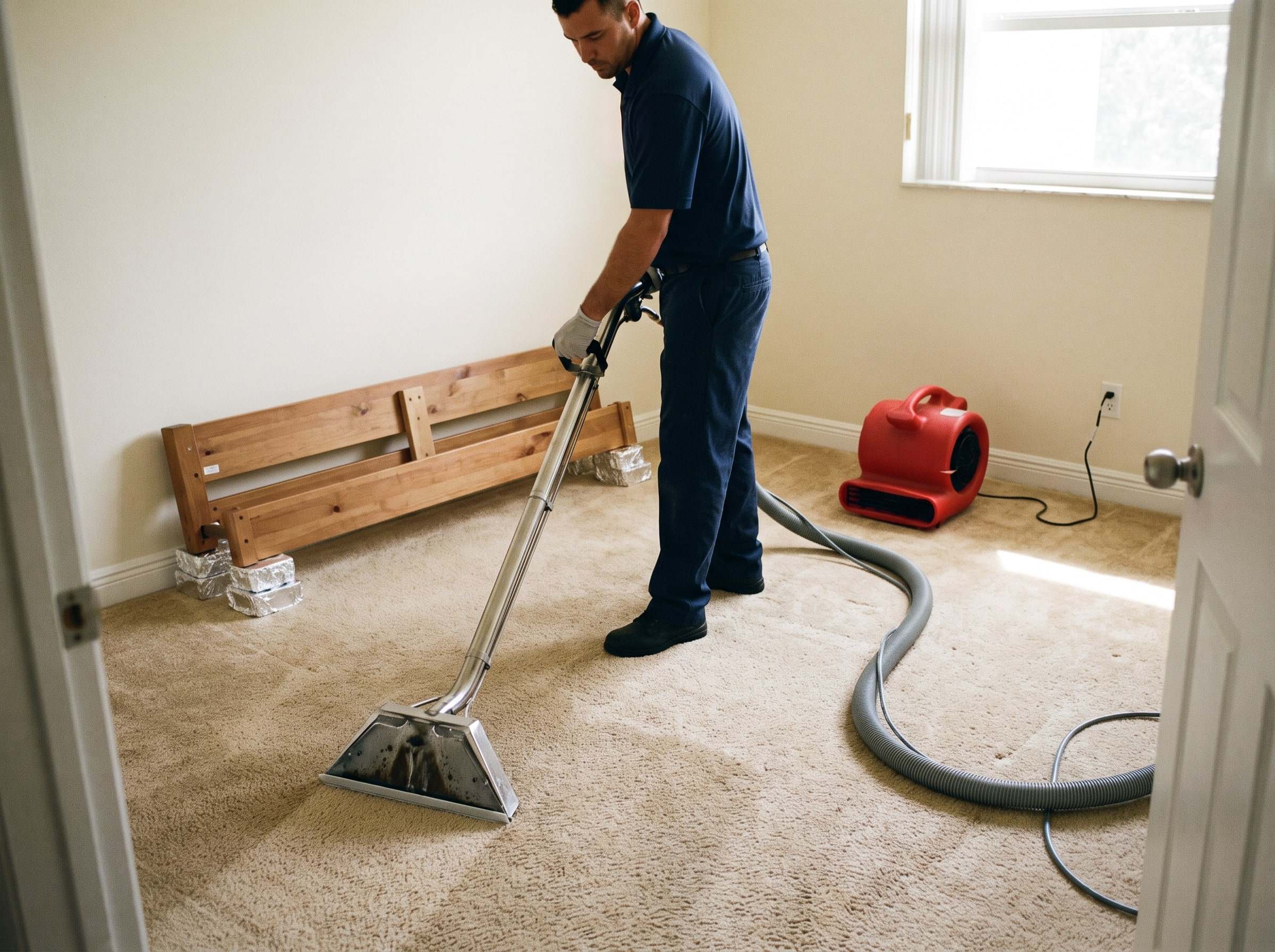
Pumping, truck-mount and portable extraction, and weighted carpet extraction that get standing and absorbed water out before it spreads to walls and the unit below.
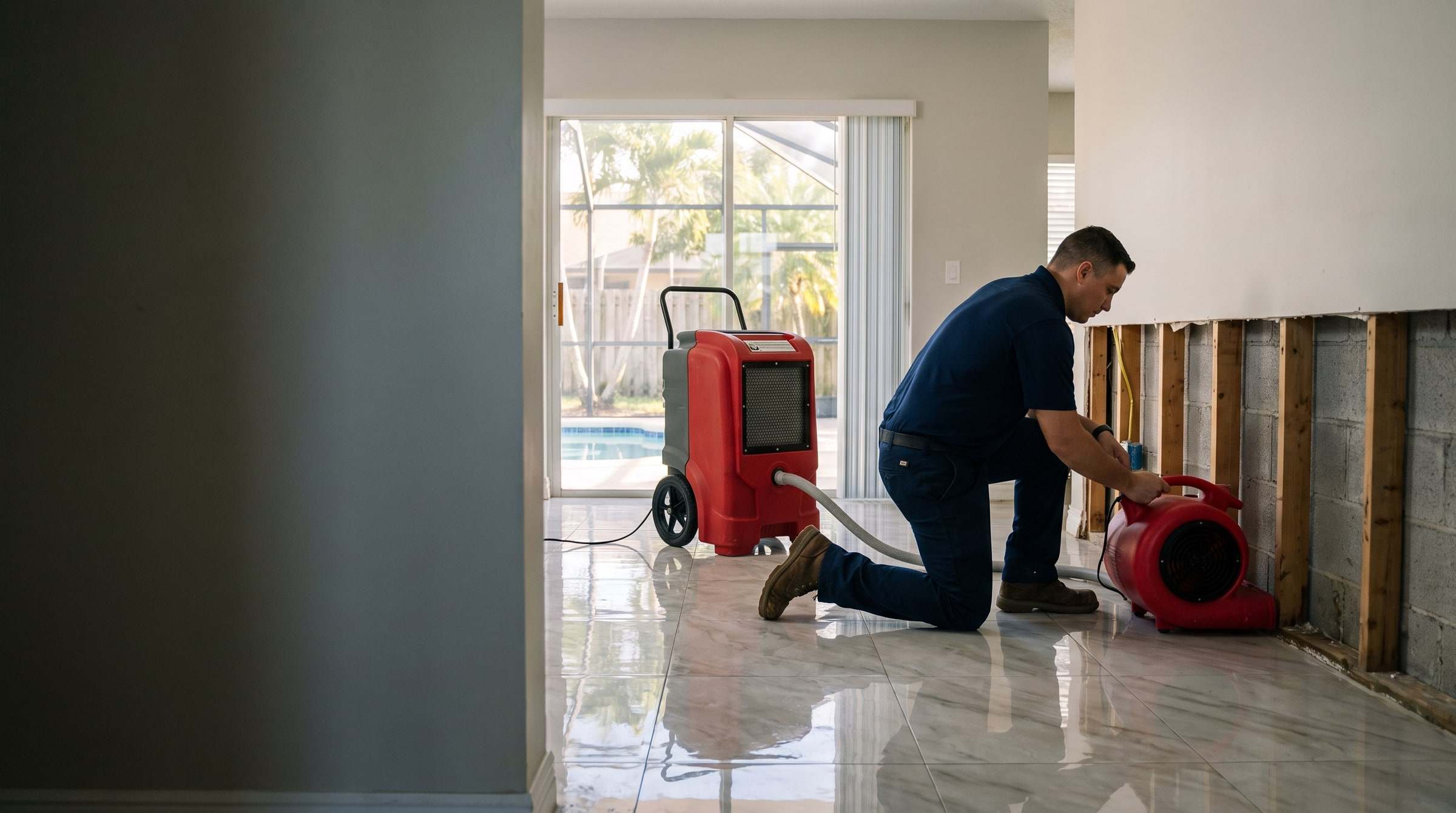
Extraction, moisture mapping, and structural drying for leaks, overflows, and floods, with documentation your adjuster can use.
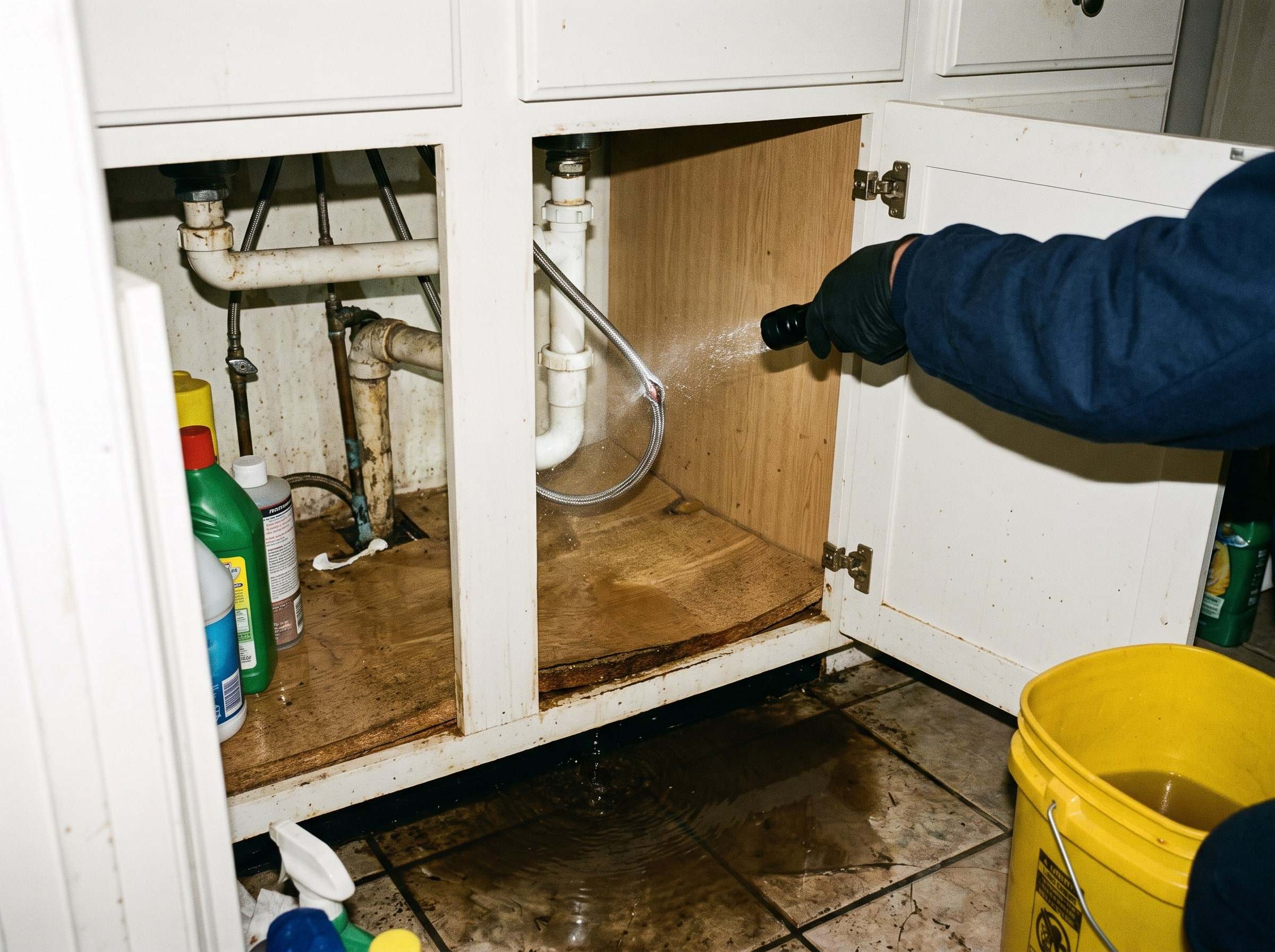
Extraction, drying, and repairs after supply line breaks, pinhole leaks, slab leaks, and failed valves, coordinated with your plumber.
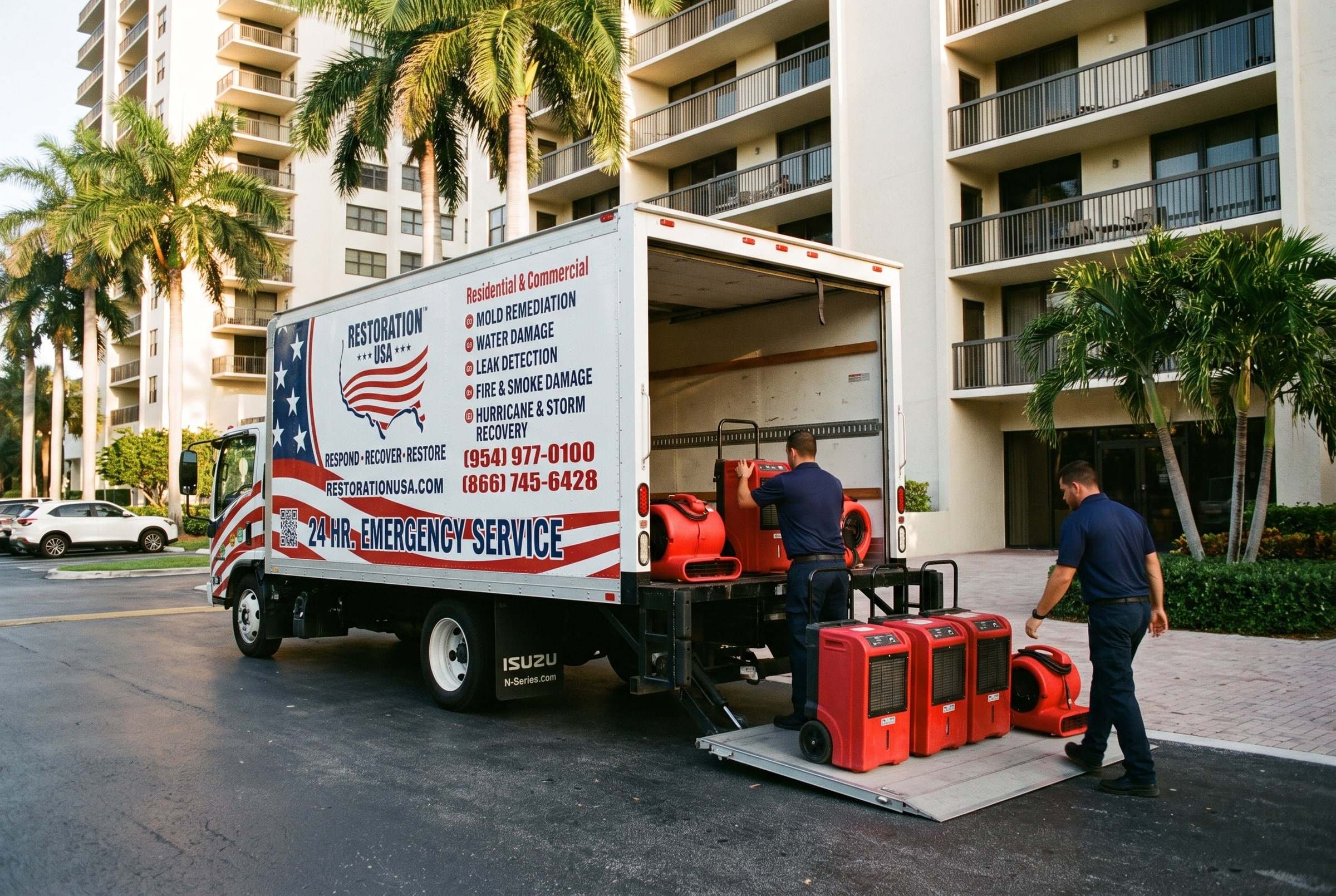
Water, mold, fire, and storm restoration for offices, retail, restaurants, warehouses, and multifamily buildings, phased to keep the rest of the property running.
Service areas
We cover Miami-Dade, Broward, and Palm Beach counties. These are some of the cities where we handle sewage cleanup most often.
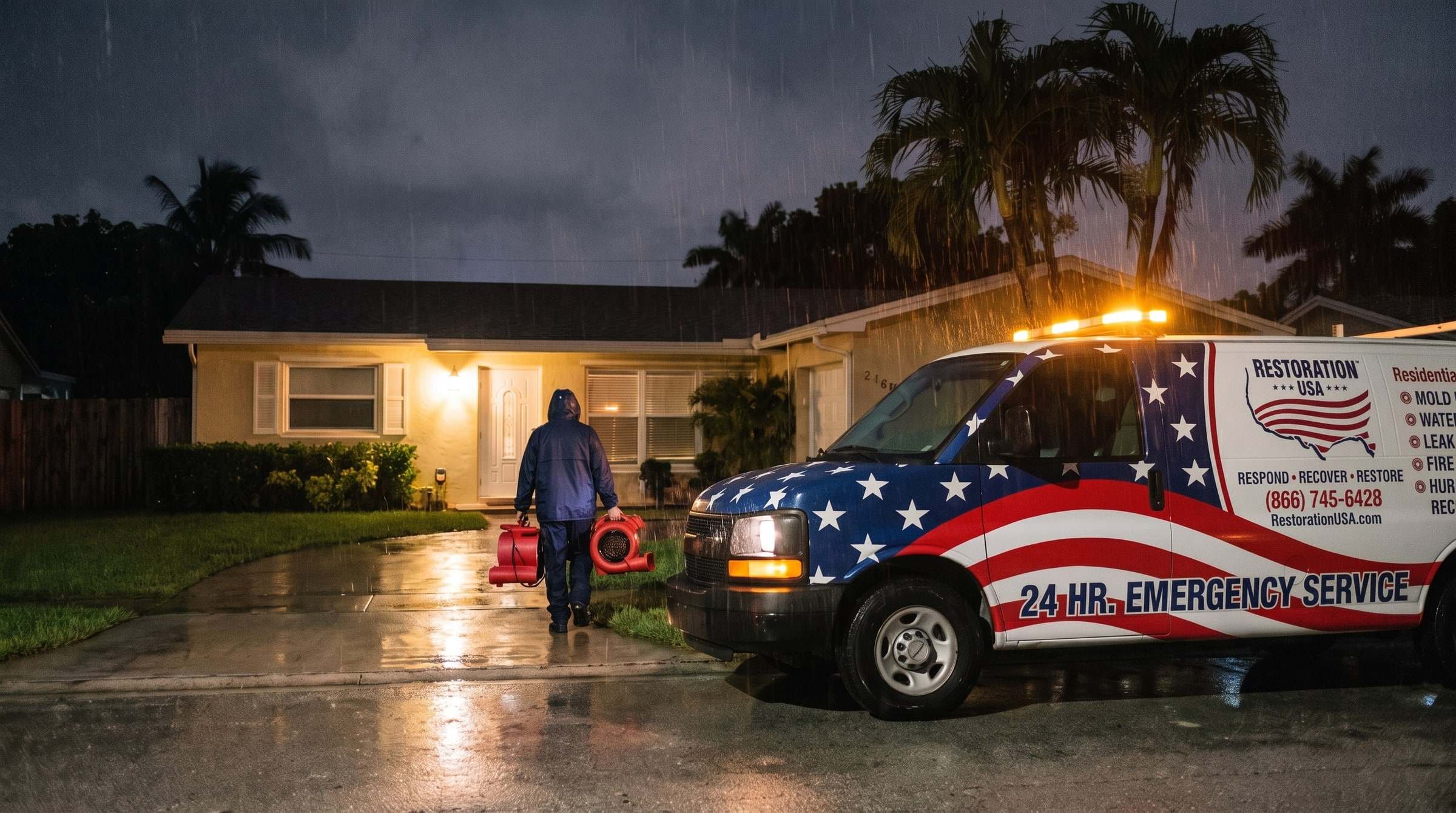
Don't wait. Go with the pros.
Call the 24/7 line. We will help you stop the source, tell you what to move, and get a crew scheduled. Not urgent? Send a request and we will call you back.
Call 24/7 (954) 289-0566On call 24/7
Schedule a no-cost on-site inspection. A restoration specialist will contact you within a few minutes to confirm the details.
Request received
Thank you. A restoration specialist will contact you at the number provided to confirm the details. If water is still coming in, call now and we'll walk you through shutting it off.
(954) 289-0566Recognized by