Water Damage Restoration in Broward County
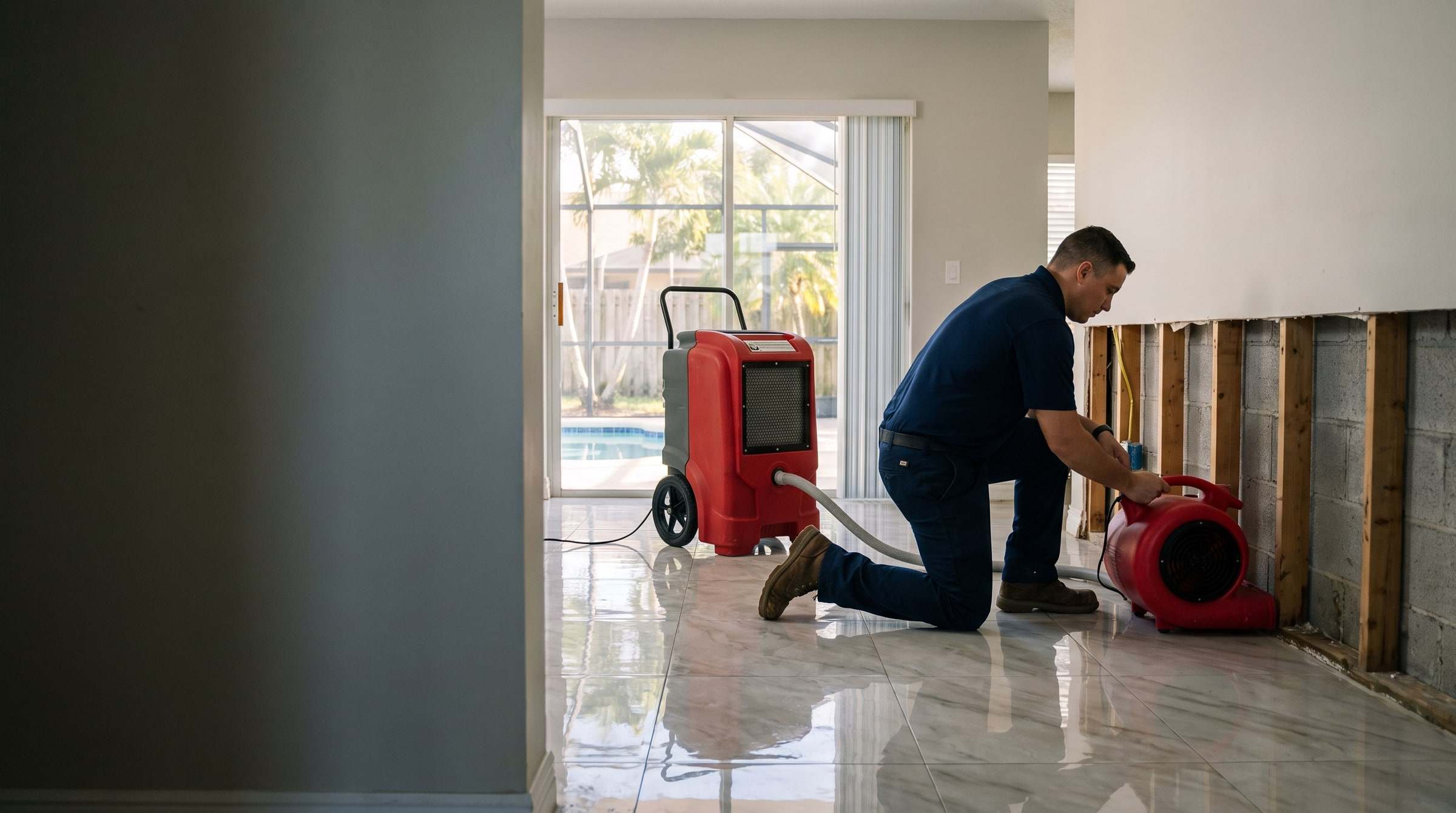
Extraction, moisture mapping, and structural drying for leaks, overflows, and floods, with documentation your adjuster can use.
Broward County, Florida
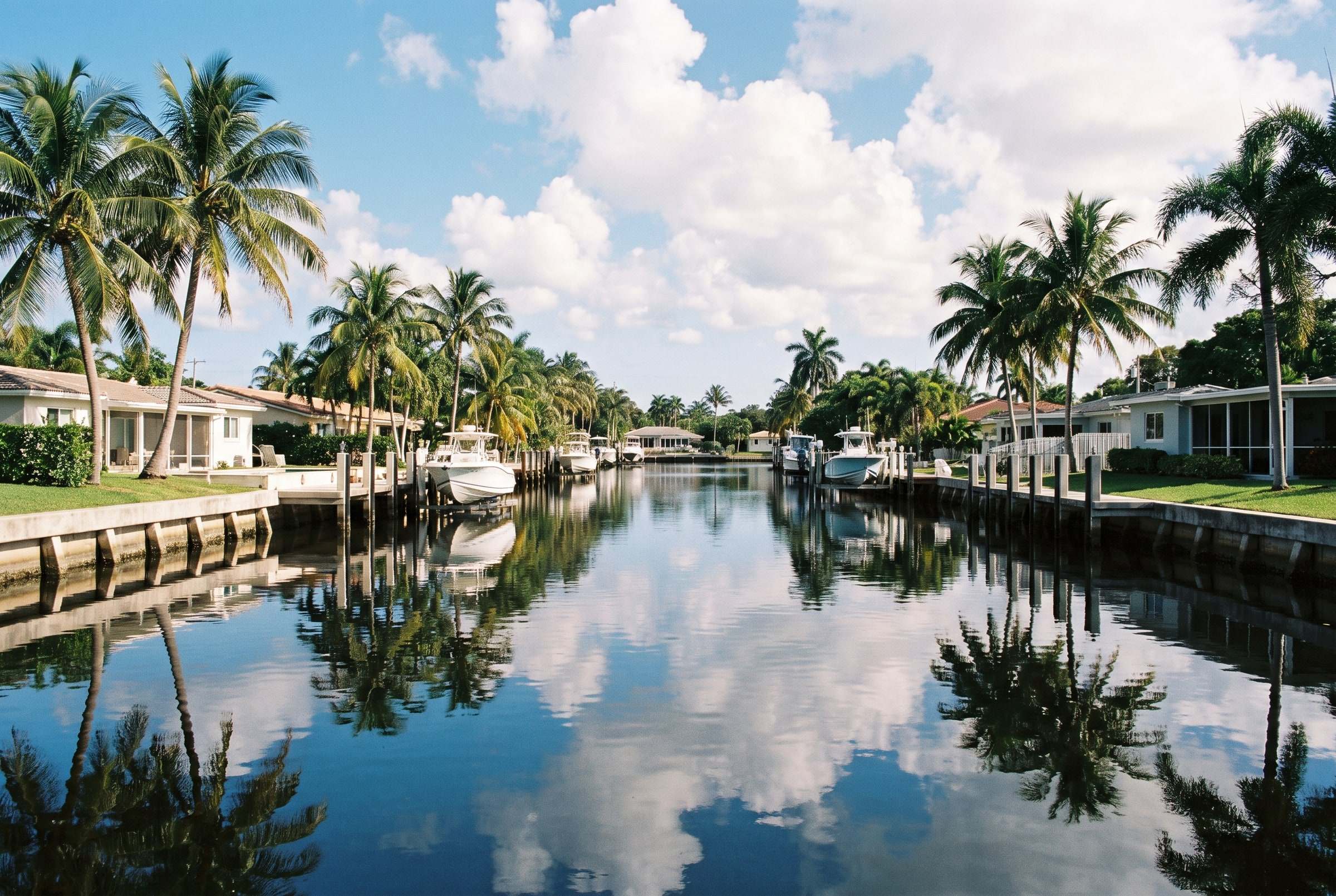
Beachfront condo towers, canal-front homes from the 1950s and 1960s, and western suburbs built on former Everglades land. We extract, dry, and document water losses in all of them.
On call 24/7
Schedule a no-cost on-site inspection. A restoration specialist will contact you within a few minutes to confirm the details.
Request received
Thank you. A restoration specialist will contact you at the number provided to confirm the details. If water is still coming in, call now and we'll walk you through shutting it off.
(954) 289-0566Recognized by



Broward was built fast after World War II. Much of the housing east of I-95 dates from the 1950s through the 1970s, while the western cities, from Parkland and Coral Springs down to Weston and Pembroke Pines, grew on drained Everglades land from the 1970s onward.
Water management shapes the whole county. The South Florida Water Management District runs the major canals, such as the Hillsboro, Cypress Creek, and North New River canals, and a patchwork of local water control districts manages the canals and lakes in between. When that system is overwhelmed, as it was on April 12, 2023, when Fort Lauderdale recorded about 26 inches of rain in roughly a day, homes far outside mapped flood zones take on water.
Broward and Miami-Dade make up the High-Velocity Hurricane Zone, the strictest wind standard in the Florida Building Code. Buildings built or re-roofed since the code took effect in 2002 tend to keep rain out better, but a large share of the county's housing is older than that.
Cities
Each city page covers the buildings, water problems, and conditions specific to that city.
Local conditions
From Hallandale Beach to Deerfield Beach the coast is lined with condo towers, and inland cities have large garden-style and 55+ condo communities. Unit-to-unit leaks and association involvement are part of most jobs.
In western Broward, neighborhood canals and lakes are often run by a district such as the Central Broward Water Control District, South Broward Drainage District, or North Springs Improvement District rather than the city. Knowing which one manages your canal helps when you report high water.
Hurricane Wilma in October 2005 caused widespread roof and window damage across Broward, and many homes were re-roofed in the years after. A lot of those roofs are now around twenty years old and nearing the end of their service life.
Lenders require flood insurance only in high-risk zones, but the April 2023 storm flooded homes well outside them. NFIP policies generally have a 30-day waiting period, so coverage has to be in place before the storm.
Services
Extraction, moisture mapping, and structural drying for leaks, overflows, and floods, with documentation your adjuster can use.
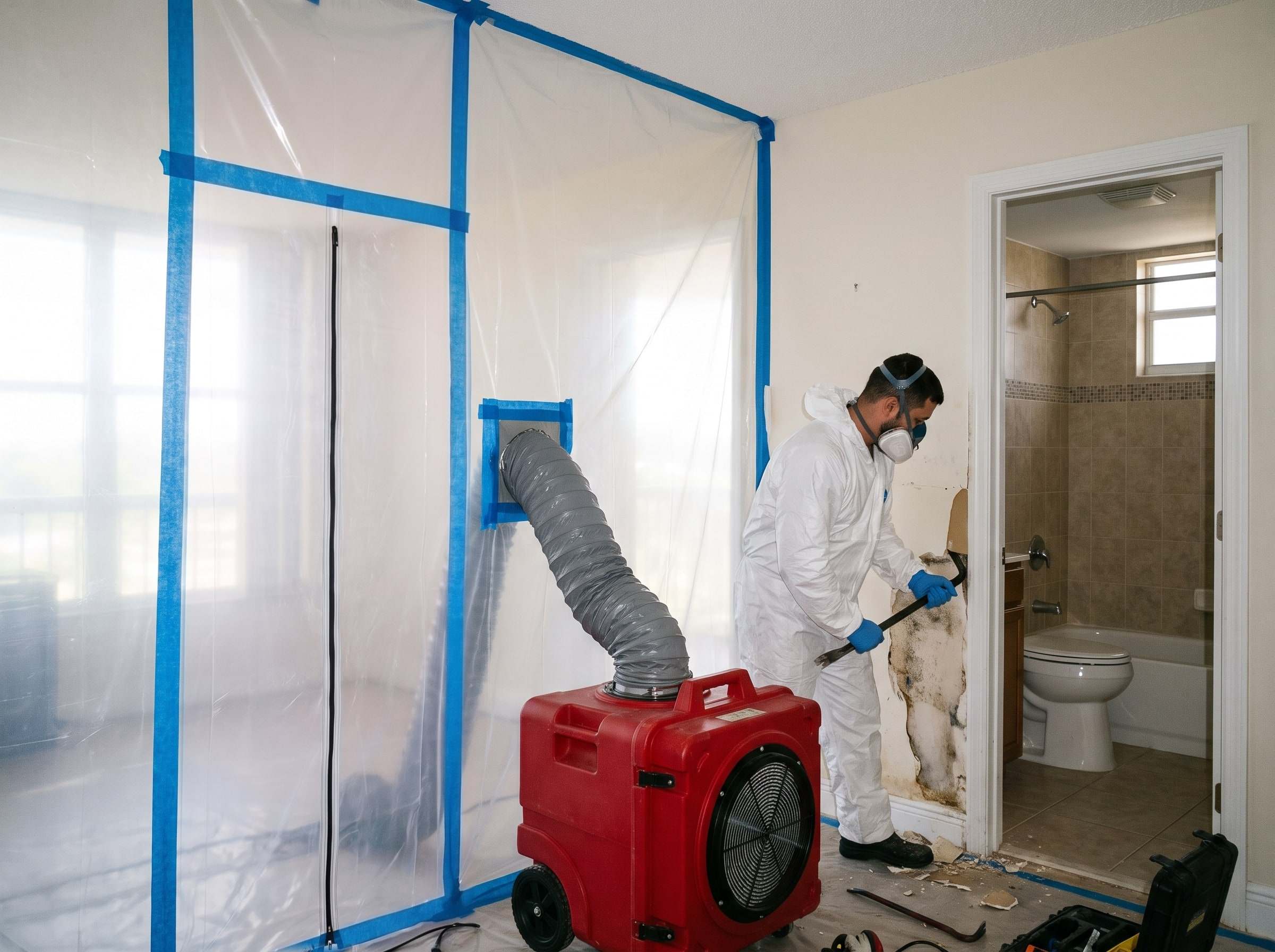
Containment, HEPA filtration, removal of moldy materials, and detailed cleaning to IICRC S520, with the moisture source found and fixed first.
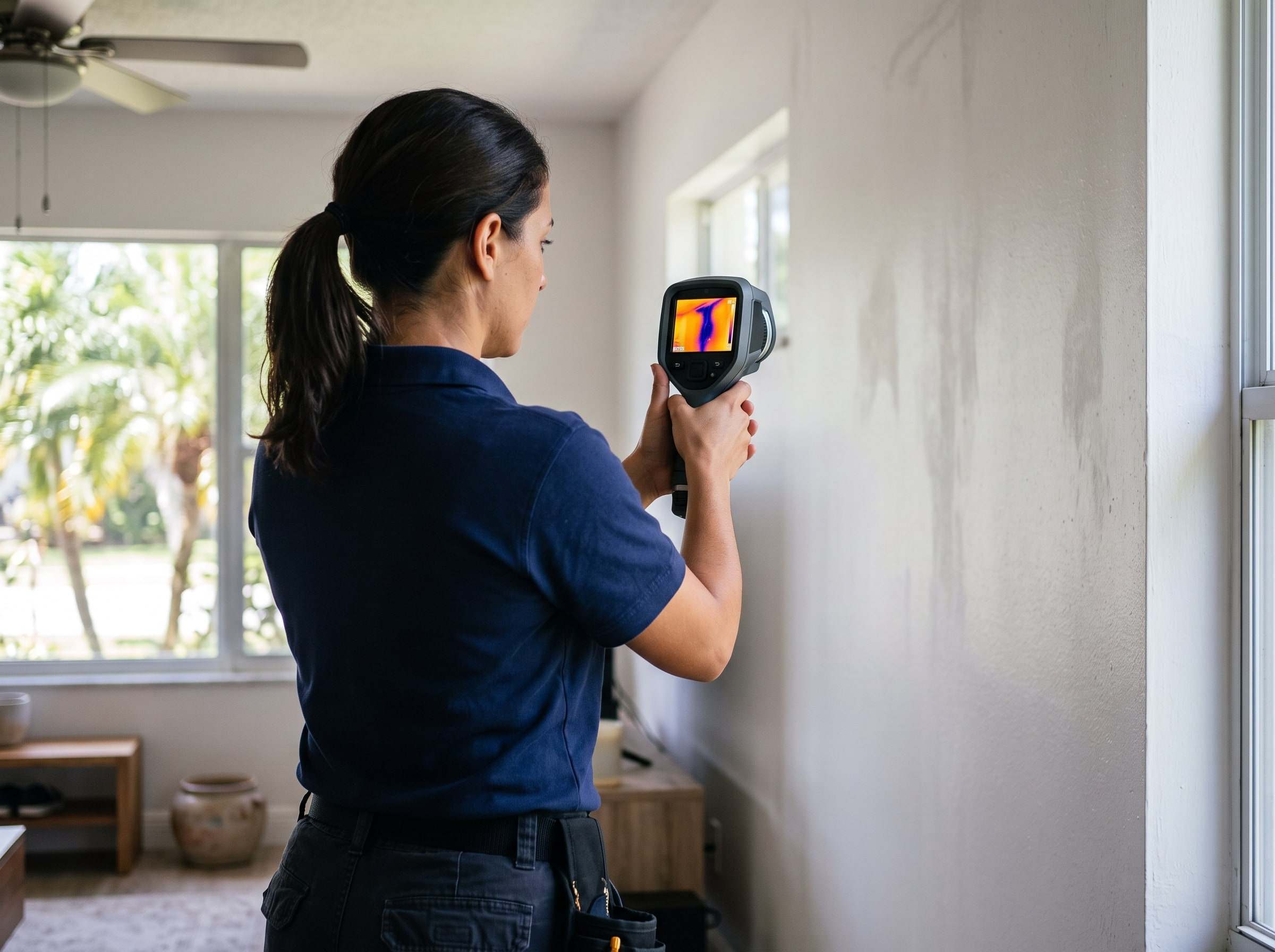
Non-invasive detection for slab, wall, irrigation, and roof leaks using pressure tests, acoustic equipment, thermal imaging, and video pipe inspection.
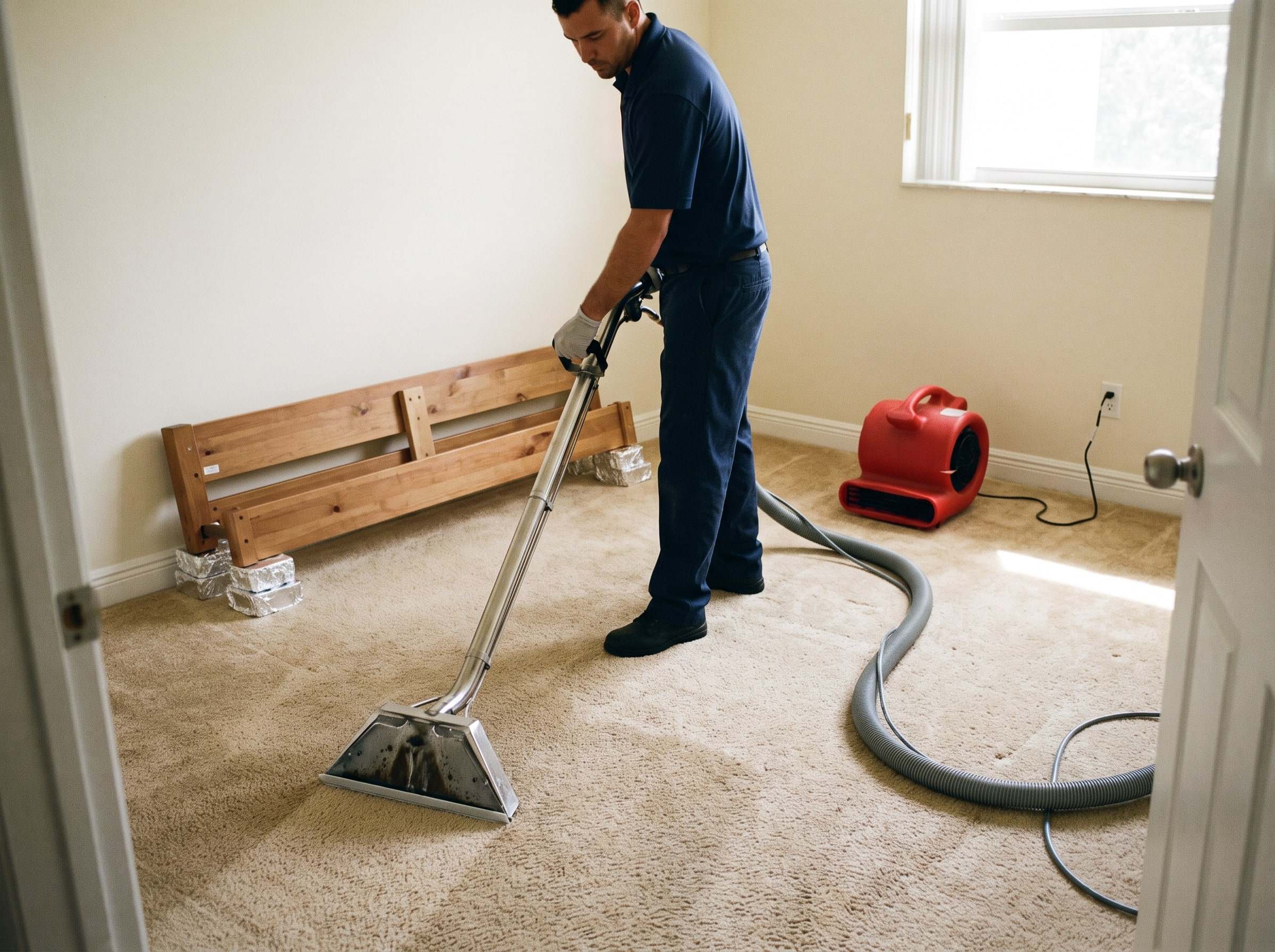
Pumping, truck-mount and portable extraction, and weighted carpet extraction that get standing and absorbed water out before it spreads to walls and the unit below.
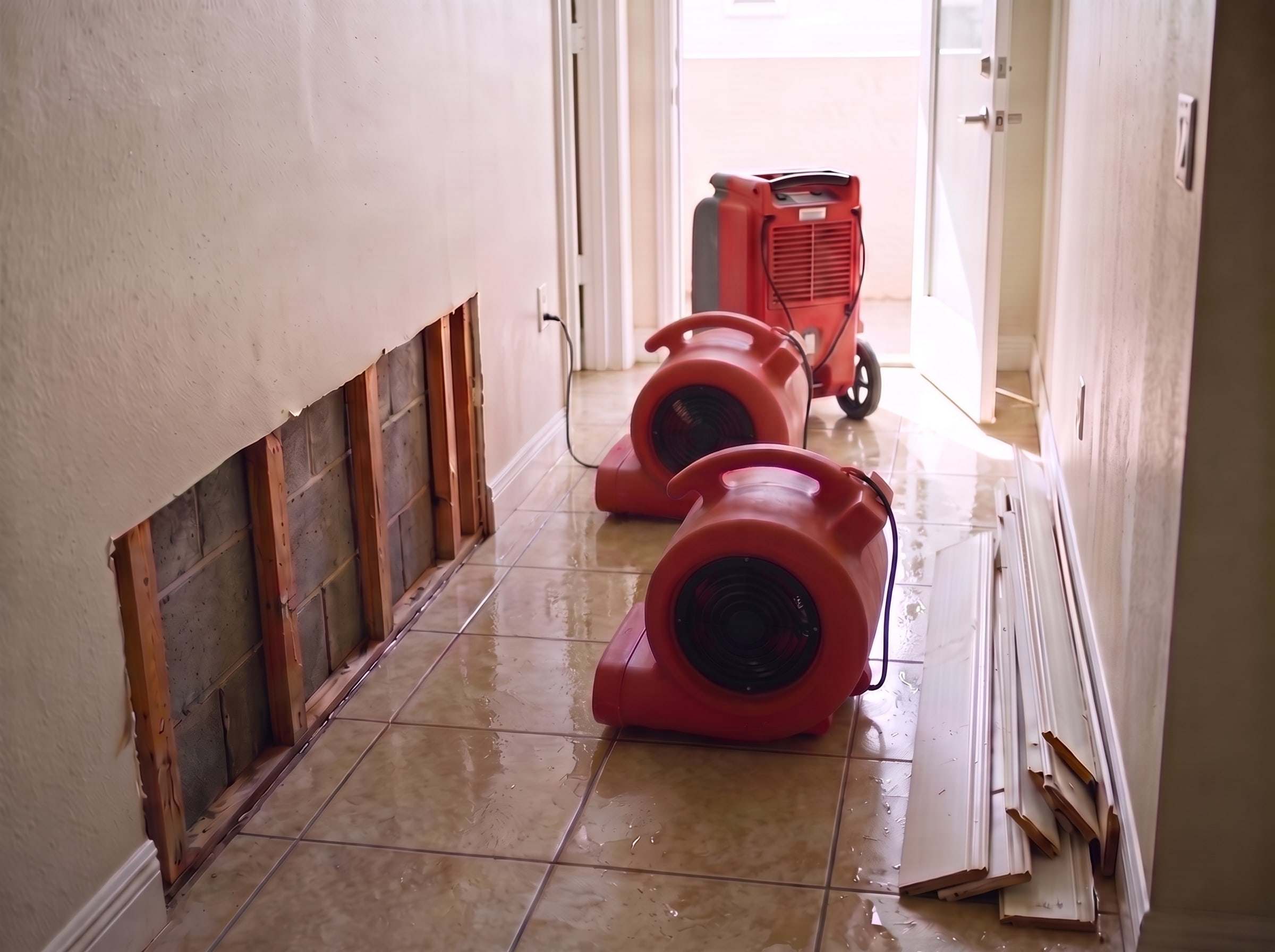
Dehumidification, air movement, and targeted drying for wall cavities, block, slabs, and hardwood, tracked with daily moisture readings.
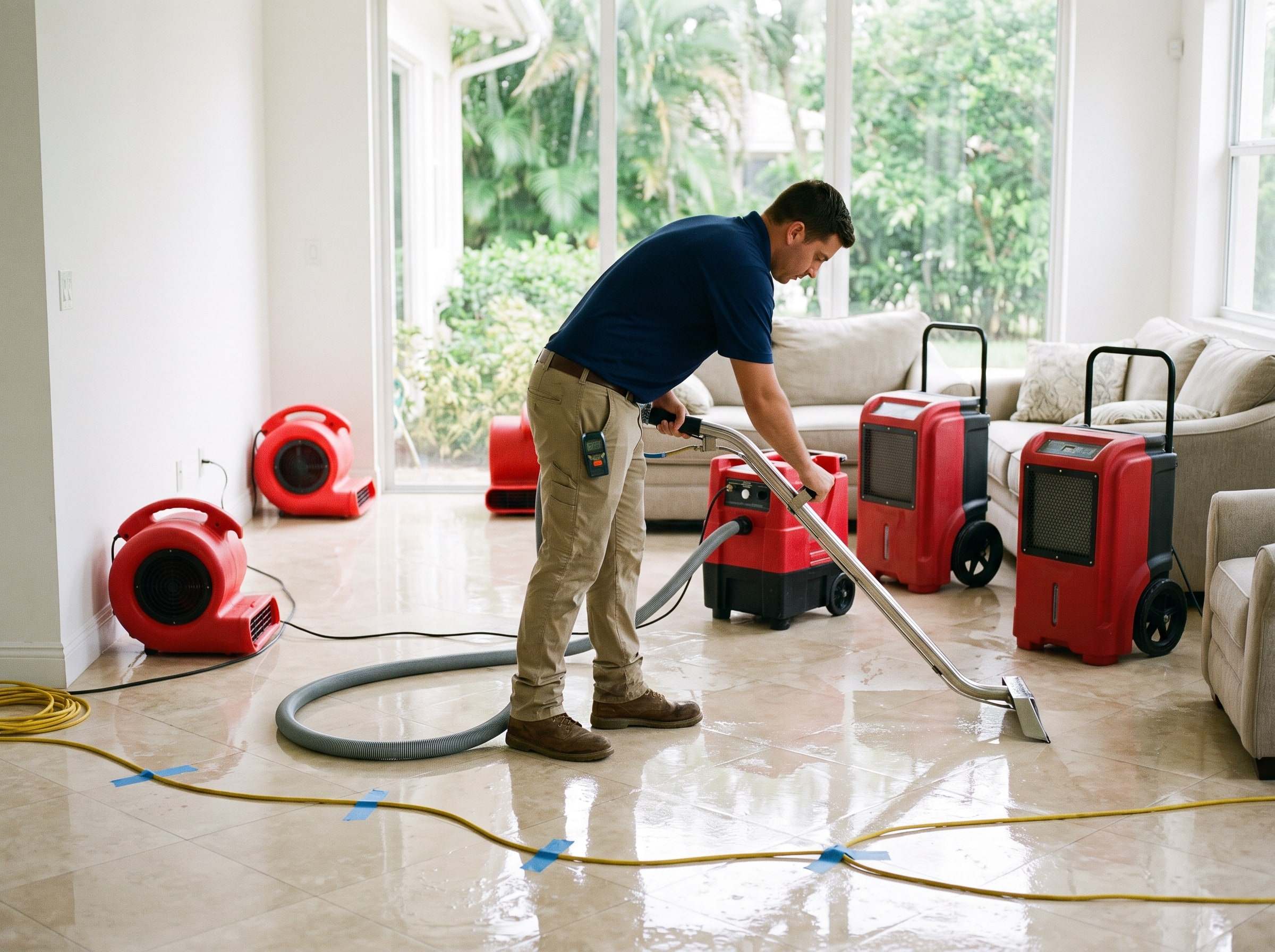
Category 3 cleanup for storm surge, street flooding, and tidal water: extraction, flood cuts, sanitizing, and drying, documented for a flood claim.
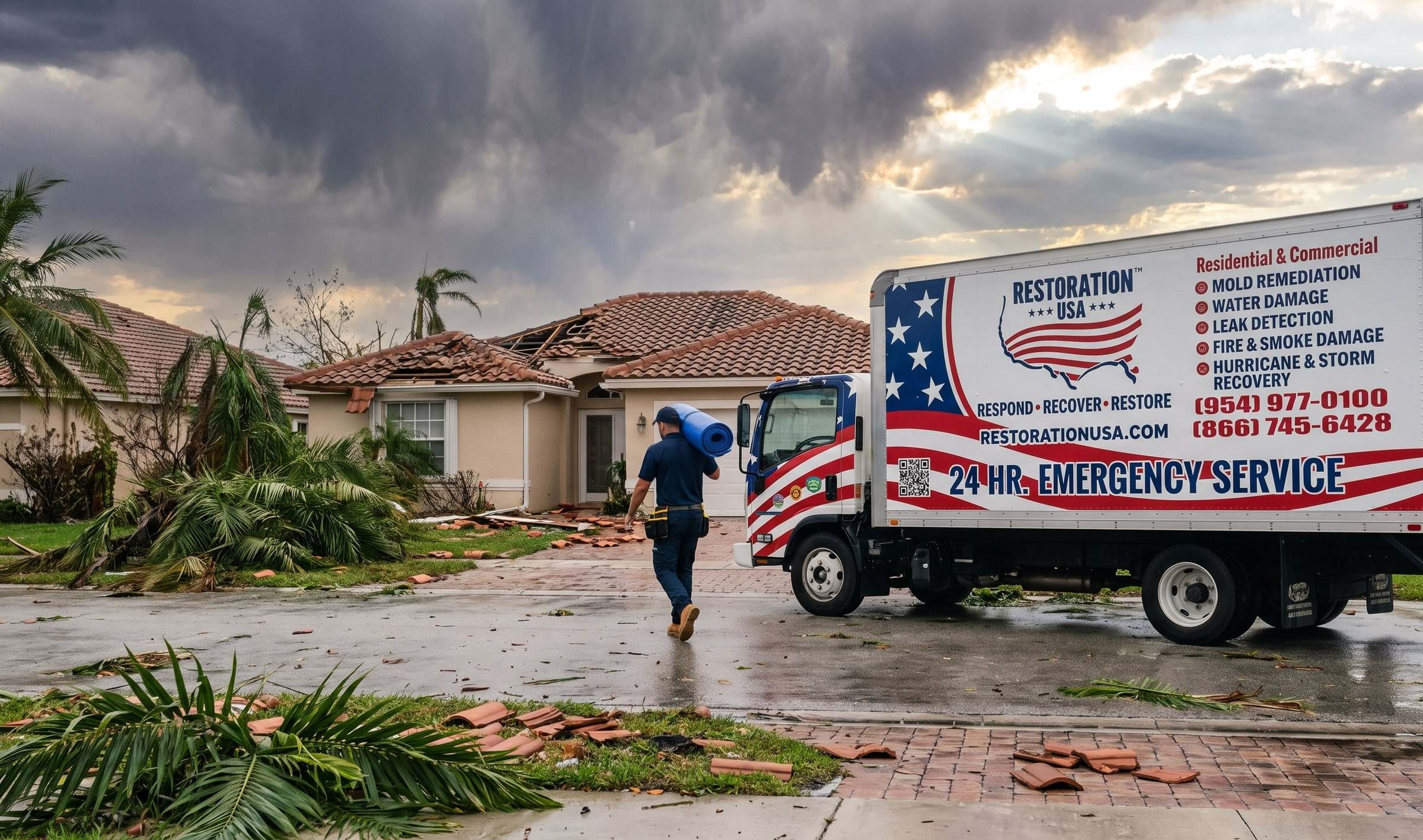
Emergency tarping and board-up, water removal, and drying after hurricanes, tropical storms, and severe thunderstorms, with damage documented for your claim.
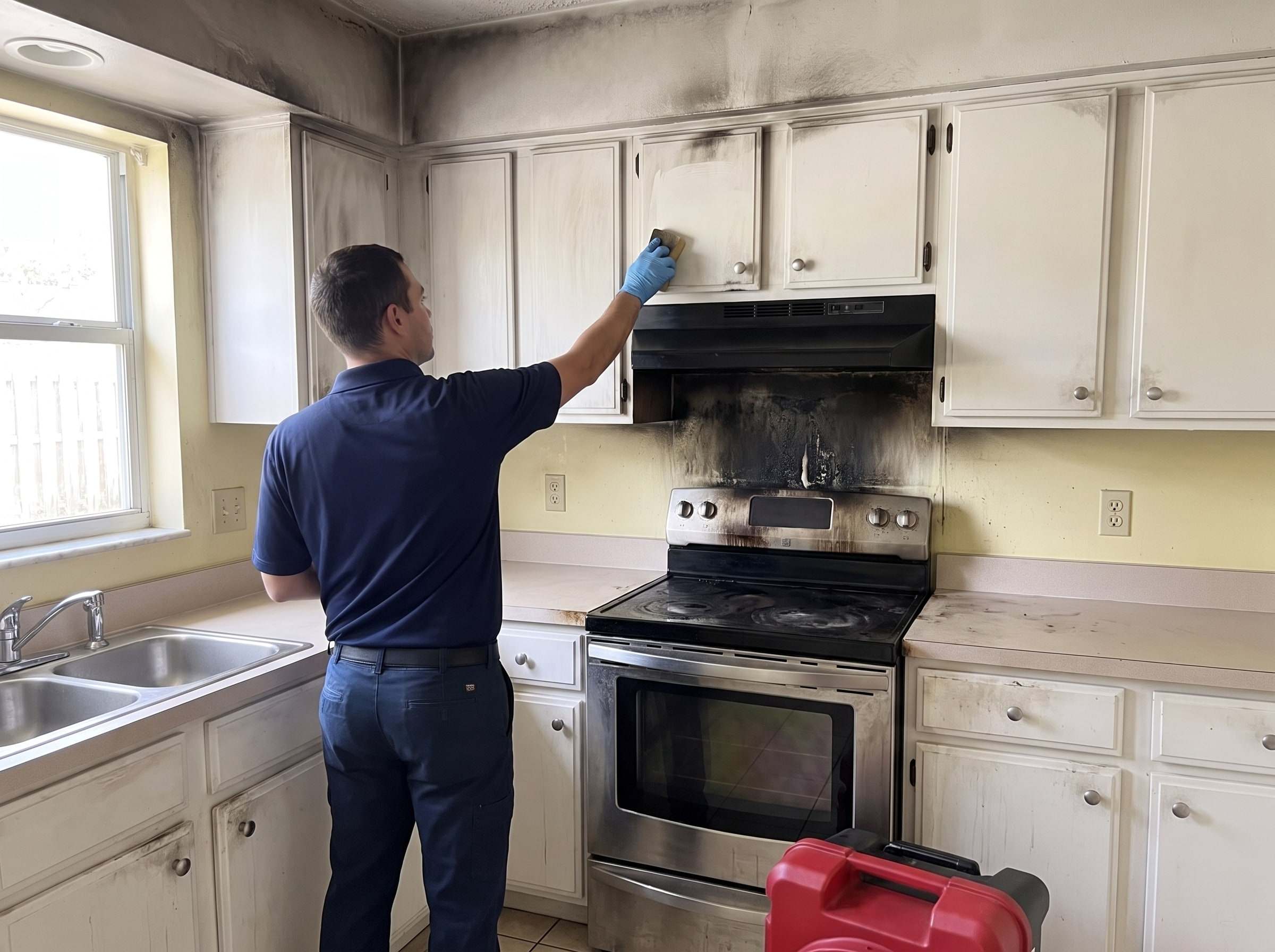
Board-up, soot removal, smoke odor treatment, contents cleaning, and drying of firefighting water after kitchen, electrical, and other fires.
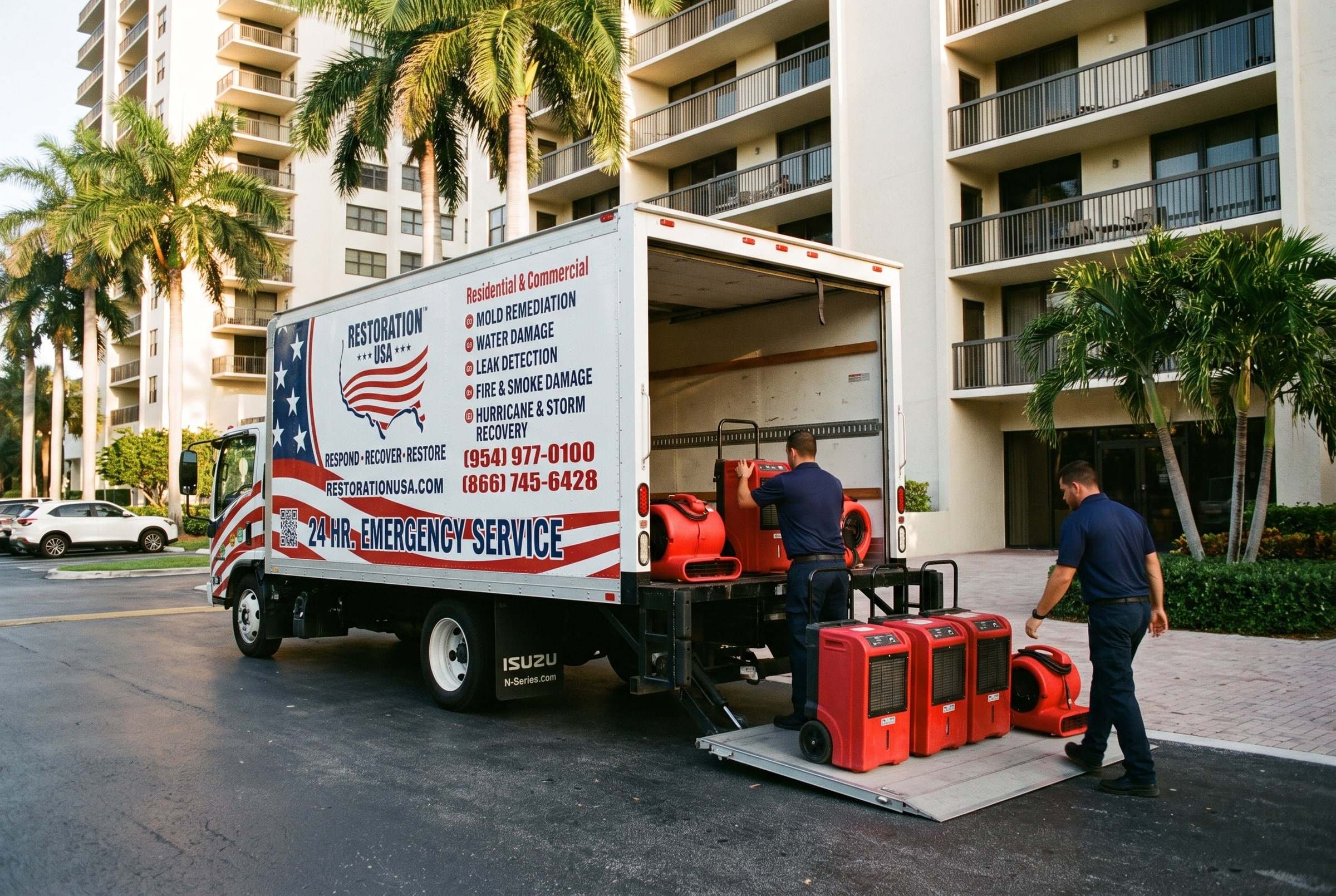
Water, mold, fire, and storm restoration for offices, retail, restaurants, warehouses, and multifamily buildings, phased to keep the rest of the property running.
How it works
Respond
Stop the damage from spreading.
We answer 24/7. We walk you through shutting off the water and power to wet areas, then schedule a crew.
Meters and thermal imaging show where the water went, including inside walls and under flooring. Starting conditions are photographed.
Recover
Get the water out and the structure dry.
Extraction removes the bulk of the water fast, which shortens drying time more than anything else.
Air movers and dehumidifiers are set for the space. We take readings every day and adjust until materials reach the dry standard.
Restore
Return the property to pre-loss condition.
Affected areas are cleaned and treated. Materials that could not be saved are replaced.
You get the photos, moisture logs, and itemized scope your adjuster needs, so the claim is supported by records.
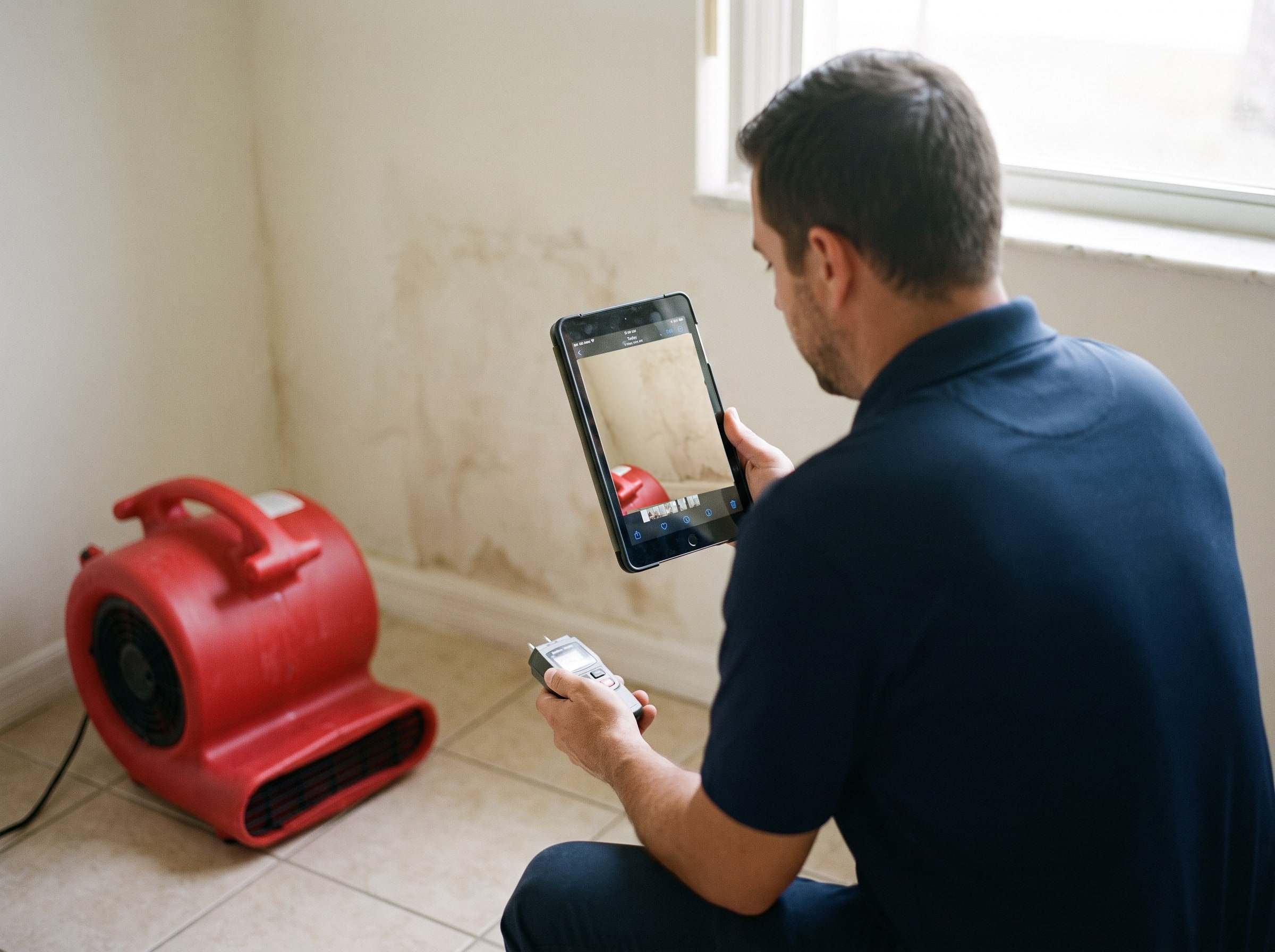
★ Every job is documented: photos, readings, and an itemized scope.
Insurance
You own the claim and talk to your adjuster. We make sure the adjuster has what they need to make a decision: what happened, what got wet, and how it was dried. For covered claims, we bill your insurance company directly.
Carriers we've worked with: Citizens Property Insurance, Universal Property & Casualty, Tower Hill Insurance, State Farm, Allstate, USAA, and many more. We are not affiliated with or endorsed by any insurance company.
Coverage decisions belong to your insurer and depend on your policy. Florida does not allow assignment of benefits on property policies issued on or after January 1, 2023, so you stay in control of your claim.
How water damage claims work in FloridaFAQ
We serve cities across the county, including Fort Lauderdale, Hollywood, Pompano Beach, Coral Springs, Pembroke Pines, Miramar, Plantation, Davie, Weston, Sunrise, Deerfield Beach, Coconut Creek, Parkland, Cooper City, Dania Beach, Hallandale Beach, and Oakland Park. Call with your address and we will tell you when a crew can be there.
That is a decision for you and your agent, but the April 2023 rain showed that homes outside high-risk zones can flood. Flood policies for lower-risk zones are often less expensive, and NFIP coverage generally starts 30 days after purchase.
It depends on where you live. Major canals belong to the South Florida Water Management District, and neighborhood canals and lakes may be run by a local water control district, the city, or an HOA. Your city's public works department can tell you which, and that is who to call about high water or a blocked culvert.
Repairs generally have to meet the current Florida Building Code, including High-Velocity Hurricane Zone rules for windows, doors, and roofing in Broward. Many policies include ordinance or law coverage for the added cost of bringing repairs up to code, so check your declarations page.
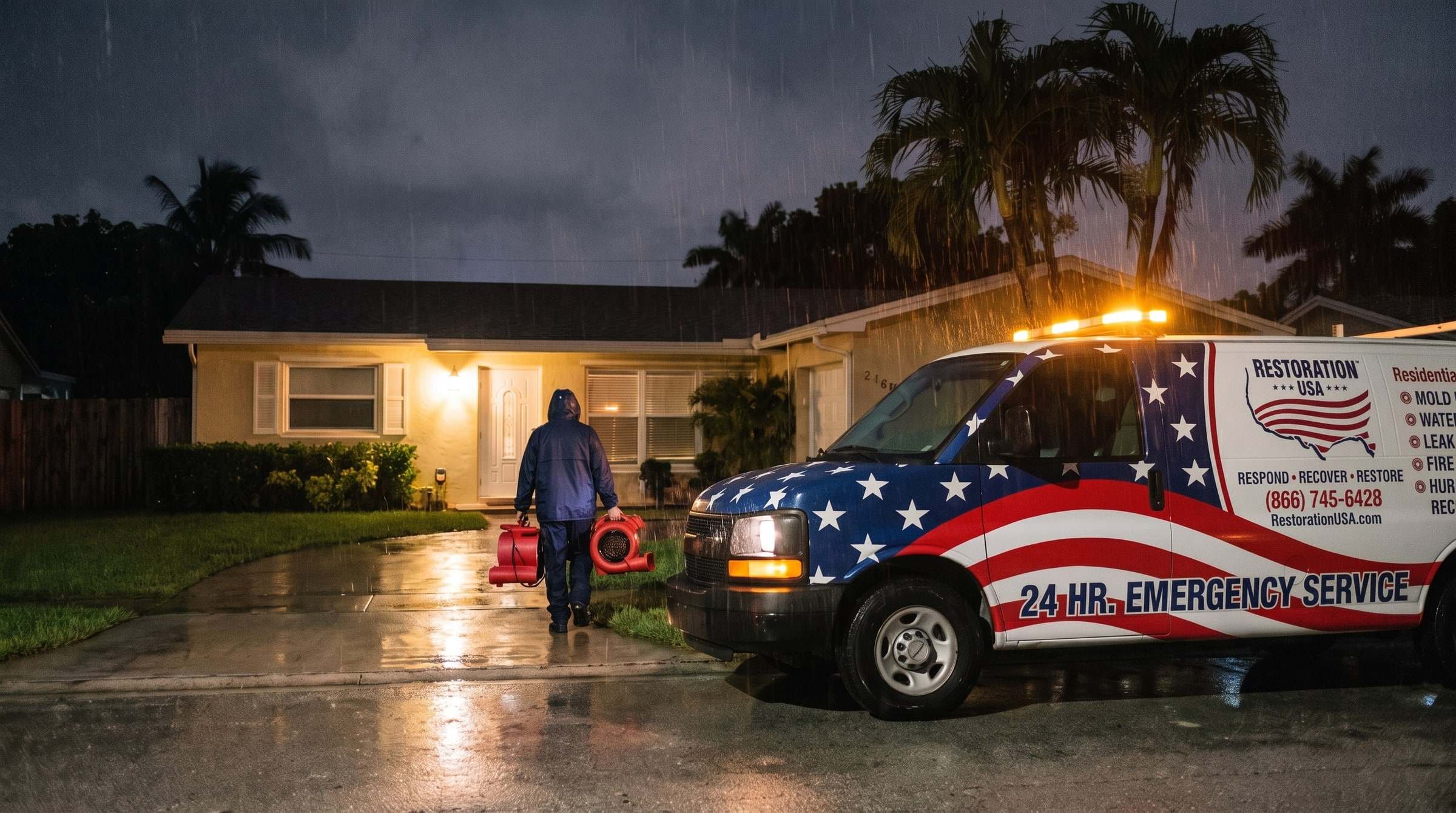
Don't wait. Go with the pros.
Call the 24/7 line. We will help you stop the source, tell you what to move, and get a crew scheduled. Not urgent? Send a request and we will call you back.
Call 24/7 (954) 289-0566On call 24/7
Schedule a no-cost on-site inspection. A restoration specialist will contact you within a few minutes to confirm the details.
Request received
Thank you. A restoration specialist will contact you at the number provided to confirm the details. If water is still coming in, call now and we'll walk you through shutting it off.
(954) 289-0566Recognized by