FAQ
Questions property owners ask us
Straight answers about water damage, drying, mold, storms, and insurance. If yours isn't here, call and ask.
Getting started
What should I do while I wait for the crew?
Shut off the water at the fixture or the main valve, and turn off power to any room where water is near outlets or cords. Move valuables, electronics, and rugs out of the wet area, and put foil or plastic under furniture legs on wet carpet. Take photos before you move anything. Do not use a household vacuum on water.
How much does water damage restoration cost?
It depends on how much material got wet, the category of water, and how long it sat. A contained clean-water leak caught early costs far less than a contaminated loss that spread for days. We give you a scope after the inspection, and when the loss is covered, most of the cost typically goes through your insurance claim minus your deductible.
Will my homeowners insurance cover it?
Most policies cover sudden and accidental water damage such as a burst pipe or an appliance overflow. Gradual leaks and rising floodwater are commonly excluded, and flood needs a separate flood policy. Your policy and adjuster make the coverage decision; we provide the documentation they ask for.
Do I have to use the restoration company my insurer recommends?
It depends on your policy. Check it before you sign a repair contract, because some policies include managed repair programs with their own rules. Either way, you can call us to stop the damage right away.
How long does drying take?
Most residential water losses dry in three to five days after extraction. Dense materials such as hardwood, plaster, and concrete block, or contaminated water, can take longer. We decide drying is finished based on readings, not on a set number of days.
Which areas do you serve?
We serve homes and businesses across Miami-Dade, Broward, and Palm Beach counties. See the service areas page for the cities we cover most often, or call to confirm availability for your address.
Water Damage Restoration
Full water damage restoration guide How long does water damage restoration take?
Most residential water losses dry in three to five days once the water is extracted. Larger losses, dense materials like hardwood or plaster, and Category 3 water take longer. Repairs are scheduled after the structure is confirmed dry.
How much does water damage restoration cost?
It depends on how much material got wet, the category of water, and how long it sat. A contained clean-water leak caught early costs far less than a contaminated loss that spread for days. We give you a scope after the free inspection, and for covered claims, we bill your insurance company directly; you pay the deductible and anything the policy does not cover.
Can I stay in my home during drying?
Usually, yes. The equipment is loud and runs continuously, and affected rooms are off-limits. If the water is contaminated, if the HVAC system is affected, or if someone in the home has respiratory issues, we may recommend staying elsewhere.
Mold Remediation
Full mold remediation guide Do you test for mold?
We handle it for you. Our free mold inspection checks for visible growth and moisture. When you need lab sampling before the work or verification after it, the testing is performed by a Florida-licensed mold assessor, kept separate from the remediation as Florida law requires, and we schedule it and work from the report.
How much does mold remediation cost?
It depends on how much material has to come out and how large the containment must be: one wall behind an air handler is a small job, while growth through several rooms or into the ductwork is a large one. The mold inspection is free, and afterward you get a written scope. When the mold came from a covered water loss, part of the cost may go through your claim, up to your policy's mold limit, and for covered claims, we bill your insurance company directly.
Can I remove mold myself?
A small patch on a hard surface, under about 10 square feet, can often be cleaned by a homeowner wearing gloves, eye protection, and an N95 respirator, once the moisture source is fixed. Do not dry-brush or sand it, which spreads spores. Larger areas, growth inside walls or the HVAC system, and anything after sewage or floodwater should be handled professionally; in Florida, companies remediating more than 10 square feet must be licensed.
Flood Damage Cleanup & Restoration
Full flood damage cleanup & restoration guide Can I just dry out my house after a flood?
Not the materials floodwater soaked. Carpet, pad, drywall, insulation, and particleboard that sat in Category 3 water hold contamination that drying does not remove, so they are taken out. Tile, concrete block, the slab, and most solid wood framing can be cleaned, sanitized, and dried in place.
How high do you cut the drywall after a flood?
Above the highest point where our meters find moisture, not just above the visible stain, because drywall wicks water upward. The cut usually lands at a height that matches standard drywall sheets, which keeps the repair simpler. Where water wicked higher, the cut goes higher.
Is it safe to go back into a flooded house?
Wait until power to the flooded area is off and someone has checked for structural damage and gas leaks. Wear rubber boots and gloves, keep children and pets out, and do not touch electrical equipment that was under water. Have a licensed electrician inspect wet outlets, wiring, and appliances before they are used again.
Storm & Hurricane Damage Restoration
Full storm & hurricane damage restoration guide What should I do right after a hurricane damages my home?
Make sure everyone is safe, and stay out of rooms with sagging ceilings or standing water near outlets. Photograph and video the damage before moving anything, report the claim to your carrier, and call us to tarp, board up, and remove water. Keep receipts for anything you spend to protect the property.
Do you tarp roofs and board up windows?
Yes. We provide emergency roof tarping and board-up to stop rain from getting in and to secure broken windows and doors. A tarp is temporary protection for the interior until your roofer can make permanent repairs.
Leak Detection
Full leak detection guide How do I check my water meter for a leak?
Turn off every faucet, appliance, and irrigation zone, and make sure no toilet is running. Find the meter, usually in a ground box near the street, and watch the leak indicator, a small dial or triangle that turns with even a trickle of flow. If it moves, or the reading changes over two hours with no water in use, there is a leak somewhere after the meter.
What is a slab leak, and will you have to break up my floor?
A slab leak is a leak in a water line under the concrete foundation. We locate it from above with pressure testing, acoustic equipment, and thermal imaging, so the floor is not opened to search for it. The repair usually means opening a small section of floor at the marked spot, or your plumber may reroute the line through the walls or attic instead.
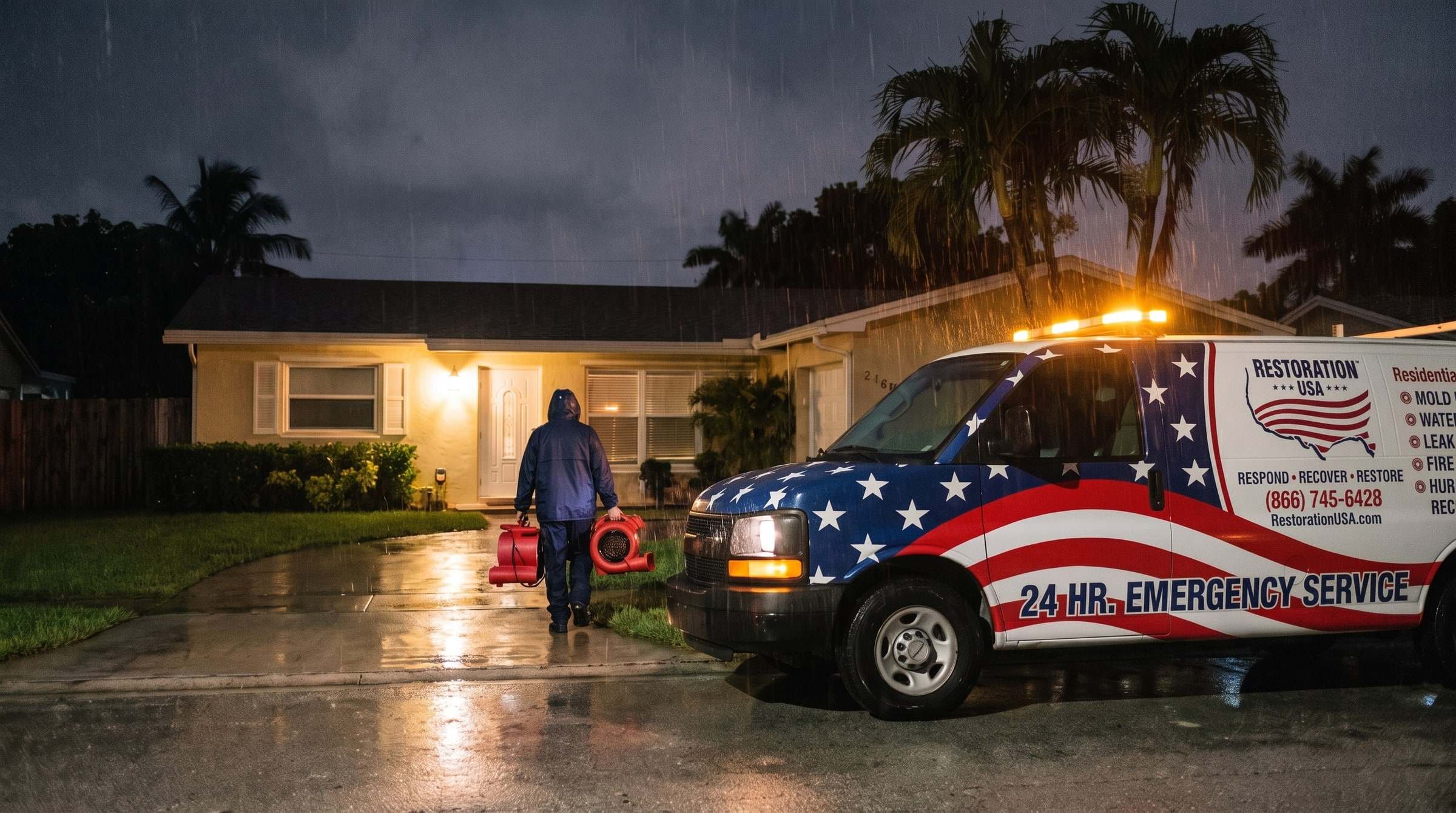
Don't wait. Go with the pros.
Water in the building right now?
Call the 24/7 line. We will help you stop the source, tell you what to move, and get a crew scheduled. Not urgent? Send a request and we will call you back.
Call 24/7 (954) 289-0566- 1 We answer 24/7, day or night
- 2 We help you stop the water and protect belongings
- 3 We schedule a crew and tell you when to expect them
On call 24/7
Free inspection
Schedule a no-cost on-site inspection. A restoration specialist will contact you within a few minutes to confirm the details.
Request received
Thank you. A restoration specialist will contact you at the number provided to confirm the details. If water is still coming in, call now and we'll walk you through shutting it off.
(954) 289-0566Recognized by