
Leak Detection · West Palm Beach, FL
Leak detection in West Palm Beach homes and condos
The wet spot is rarely where the leak is. We use meter and pressure tests, moisture readings, thermal imaging, and acoustic equipment to pinpoint the source before a single tile or wall comes open.
- 24/7 emergency line
- IICRC Certified Firm
- Insurance claim documentation
On call 24/7
Free inspection
Schedule a no-cost on-site inspection. A restoration specialist will contact you within a few minutes to confirm the details.
Request received
Thank you. A restoration specialist will contact you at the number provided to confirm the details. If water is still coming in, call now and we'll walk you through shutting it off.
(561) 247-9488Recognized by





Leak Detection in West Palm Beach
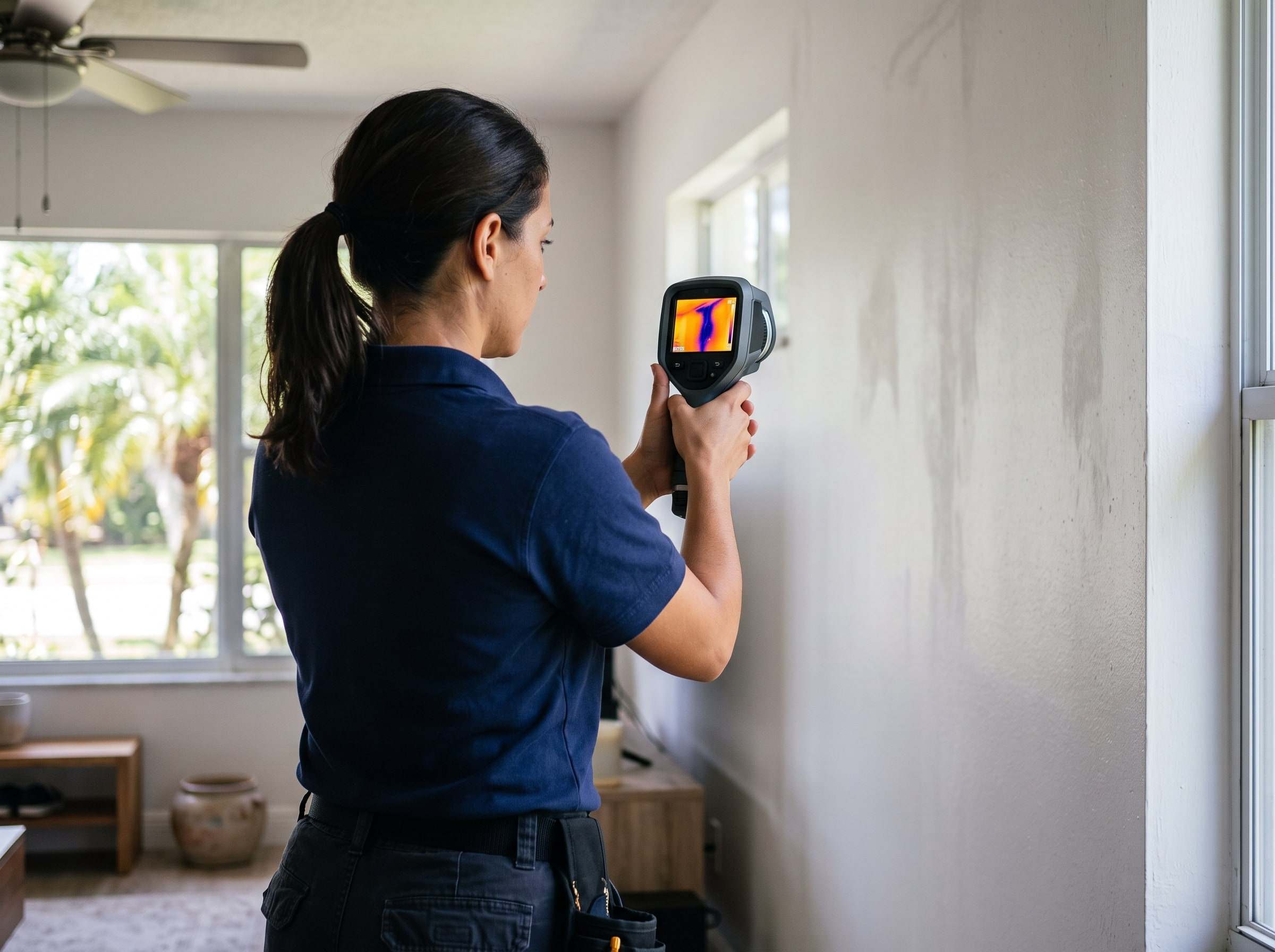
Leak detection in West Palm Beach means finding the exact source of a leak before anything is torn out. We test the meter and the lines, then use moisture readings, thermal imaging, and acoustic listening equipment to narrow the search to one spot we can mark on the floor or wall.
In West Palm Beach homes, the water you see is often nowhere near the actual leak. It can run under tile and wood flooring or travel through a wall cavity before it finally shows, so one of the most expensive mistakes we see is tearing into the floor or wall at the first wet spot. Pinpointing the source first means one planned opening for the repair instead of a trail of demolition.
Leaks are easiest to miss in two kinds of homes here: seasonal residences and condos that sat empty for months, and older houses near downtown whose plumbing has been patched for decades. Either way, you get a written report with photos and thermal images, the leak is marked, and we coordinate the repair with your plumber. If water has already reached the walls or floors, drying starts right away.
Local factors
What's different about leak detection in West Palm Beach
-
Why is my water bill so high when I come back for the season?
Usually because a leak ran the whole time the home was empty. A toilet flapper, a water heater valve, an irrigation zone, or a supply line under the floor can leak for weeks with nobody there to notice. The quickest check is the EPA's meter test: check your water meter before and after a two-hour period when no water is being used, and if it changes at all, you probably have a leak.
-
How do I protect an empty home or condo from leaks?
Shut off the main water valve before you leave, or ask your plumber about an automatic shutoff valve. If someone checks on the home, have them read the meter on each visit. In the 55+ condo communities, a leak in one unit often shows up first in the unit below, so make sure the association knows how to reach you while you are away.
-
What makes leaks in older West Palm Beach houses hard to find?
Many of the 1920s houses in El Cid, Flamingo Park, Grandview Heights, and Northwood sit on raised floors over a crawl space, so a leak can wet the framing for months before anything shows inside. Some still have galvanized steel supply pipes, which were commonly used before the 1960s and corrode from the inside once their zinc coating wears away. We check the crawl space, the supply lines, and the drains before deciding where to open.
-
What are the signs of a slab leak?
A meter that moves with every fixture off, a warm spot on the tile above a hot-water line, cracked or hollow-sounding tile, and a water heater that seems to run constantly. Houses built on a concrete slab leak under the slab; older raised-floor houses leak into the crawl space instead, which is why we start by confirming how the house was built.
-
Do I need a plumber or a leak detection company?
Usually both, in that order. A plumber can fix a leak they can see, but a hidden leak under the floor or inside a wall is quicker and cheaper to repair once it has been located with detection equipment. We find and mark the leak, hand you the report, and coordinate with your plumber for the repair.
-
How much does leak detection cost in West Palm Beach?
Leak detection is part of our free inspection, so there is no charge to find and mark the leak. The repair is separate: your plumber does that work, and with the source already pinpointed it takes one planned opening instead of a search through the floor or wall. If the water has already reached floors or walls, the drying goes in a written, itemized scope.
Our process
How do you find a hidden leak?
- 01
Review the symptoms
We start with your water bills, where the symptoms appear, the age of the plumbing, and whether the lines are copper, CPVC, PEX, or cast iron.
- 02
Meter and pressure tests
With fixtures off, we read the meter, then isolate and pressure-test lines to learn whether the leak is on the hot side, the cold side, the service line, or the irrigation.
- 03
Acoustic listening
Ground microphones and listening equipment pick up water escaping a pressurized line through tile, concrete, and soil. The sound is strongest closest to the leak.
- 04
Thermal imaging
Infrared cameras show the heat signature of a hot water leak and the cooler pattern of moisture in walls, ceilings, and floors.
- 05
Moisture mapping
Meters confirm what the camera shows and trace how far the water has traveled, which tells us how much drying the area needs.
- 06
Video pipe inspection
For drain and sewer lines, a camera is run through the pipe to look for cracks, separated joints, roots, and corrosion.
- 07
Mark, report, and coordinate
We mark the leak, give you a written summary with photos and thermal images, and coordinate the repair with your plumber. If water has reached the structure, drying starts right away.
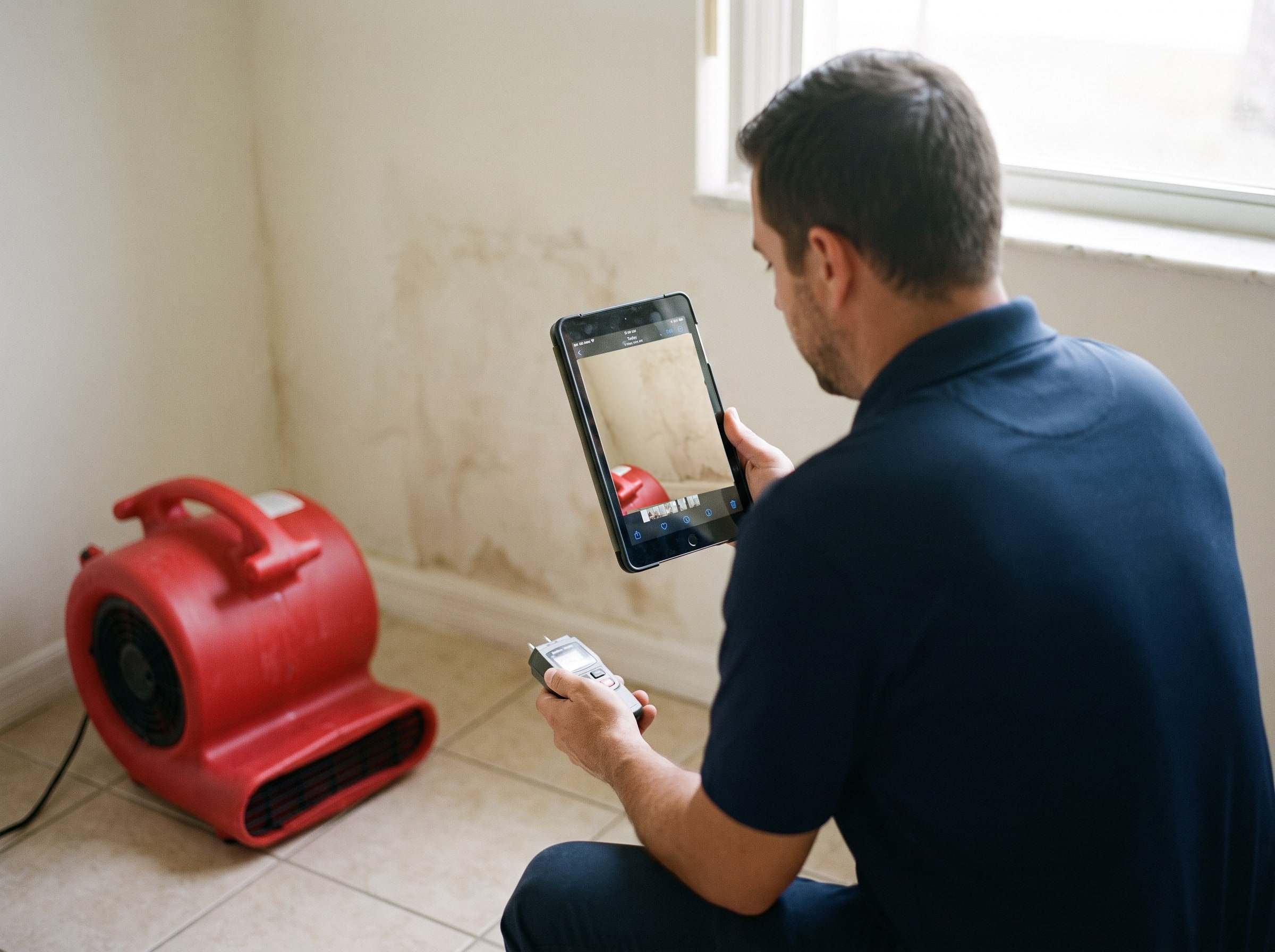
★ Every job is documented: photos, readings, and an itemized scope.
Insurance
Does homeowners insurance cover leak detection?
Leak detection is part of our free inspection, so there is no bill for finding the leak. Your policy decides the rest: sudden water damage from a plumbing leak is generally covered, while the pipe repair itself is often handled differently, and damage from a leak that ran for a long time is usually excluded.
Some policies also pay to open and close the wall or floor needed to reach the pipe, so check your policy's water damage section. We document the location, the source, and the extent of the water damage with photos, thermal images, and moisture readings so your adjuster has what is needed to decide.
Report a leak to your carrier promptly, since Florida policies set deadlines for reporting claims. For covered claims, we bill your insurance company directly.
Usually covered
- Sudden pipe bursts and supply-line failures
- Water heater ruptures
- Toilet, sink, and tub overflows
- Appliance and AC overflows
- Burst or accidentally discharged fire sprinklers
- Water that enters through storm damage to the roof or windows
- Mold caused by a covered water loss, often up to a set limit
What we document
- Source of the loss and affected areas
- Daily moisture readings and equipment logs
- Thermal images of hidden moisture
- Every material removed, and why
- Each condo unit and common area, documented separately
- Dated photos and an itemized scope of work
Carriers we've worked with: Citizens Property Insurance, Universal Property & Casualty, Tower Hill Insurance, State Farm, Allstate, USAA, and many more. We are not affiliated with or endorsed by any insurance company.
Coverage decisions belong to your insurer and depend on your policy. Florida does not allow assignment of benefits on property policies issued on or after January 1, 2023, so you stay in control of your claim.
How water damage claims work in FloridaFAQ
Leak Detection in West Palm Beach: questions
Will you have to break tile or drywall to find the leak?
Not to find it. Detection is done from the surface with the meter, pressure tests, thermal imaging, moisture meters, and listening equipment. The only opening is the one needed for the repair, at the spot we mark.
Does homeowners insurance cover a slab leak?
It depends on your policy. Many policies cover sudden water damage that a leak causes, while repairing the pipe itself or damage from a slow, long-term leak may not be covered. Call your insurer before any major demolition. Our written report and moisture readings document where the leak was and what it damaged.
Do you check irrigation lines and the service line too?
Yes. Irrigation lines and the buried service line from the meter to the house are tested too. Either one can leak into sandy soil for months without a puddle.
Nearby
More leak detection coverage
Leak Detection city guides
- Leak Detection in Miami Miami-Dade County
- Leak Detection in Pembroke Pines Broward County
- Leak Detection in Pompano Beach Broward County
Service areas near West Palm Beach
- Water damage restoration in Wellington Palm Beach County
- Water damage restoration in Boynton Beach Palm Beach County
- Water damage restoration in Delray Beach Palm Beach County
- Water damage restoration in Boca Raton Palm Beach County
Don't wait. Go with the pros.
Need leak detection help in West Palm Beach?
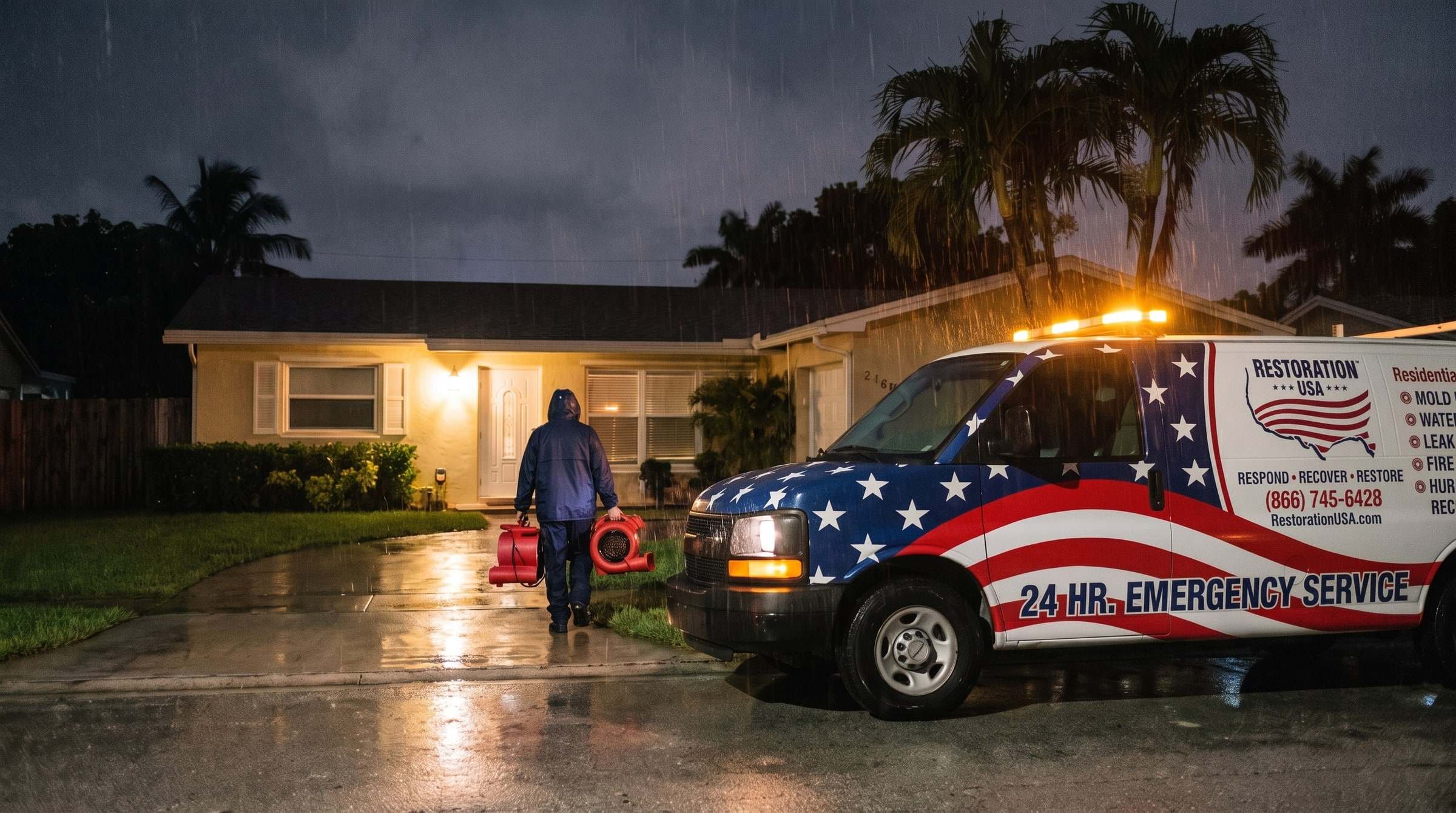
Call the 24/7 line. We will help you stop the source, tell you what to move, and get a crew scheduled. Not urgent? Send a request and we will call you back.
Call 24/7 (561) 247-9488- 1 We answer 24/7, day or night
- 2 We help you stop the water and protect belongings
- 3 We schedule a crew and tell you when to expect them
On call 24/7
Free inspection
Schedule a no-cost on-site inspection. A restoration specialist will contact you within a few minutes to confirm the details.
Request received
Thank you. A restoration specialist will contact you at the number provided to confirm the details. If water is still coming in, call now and we'll walk you through shutting it off.
(561) 247-9488Recognized by