
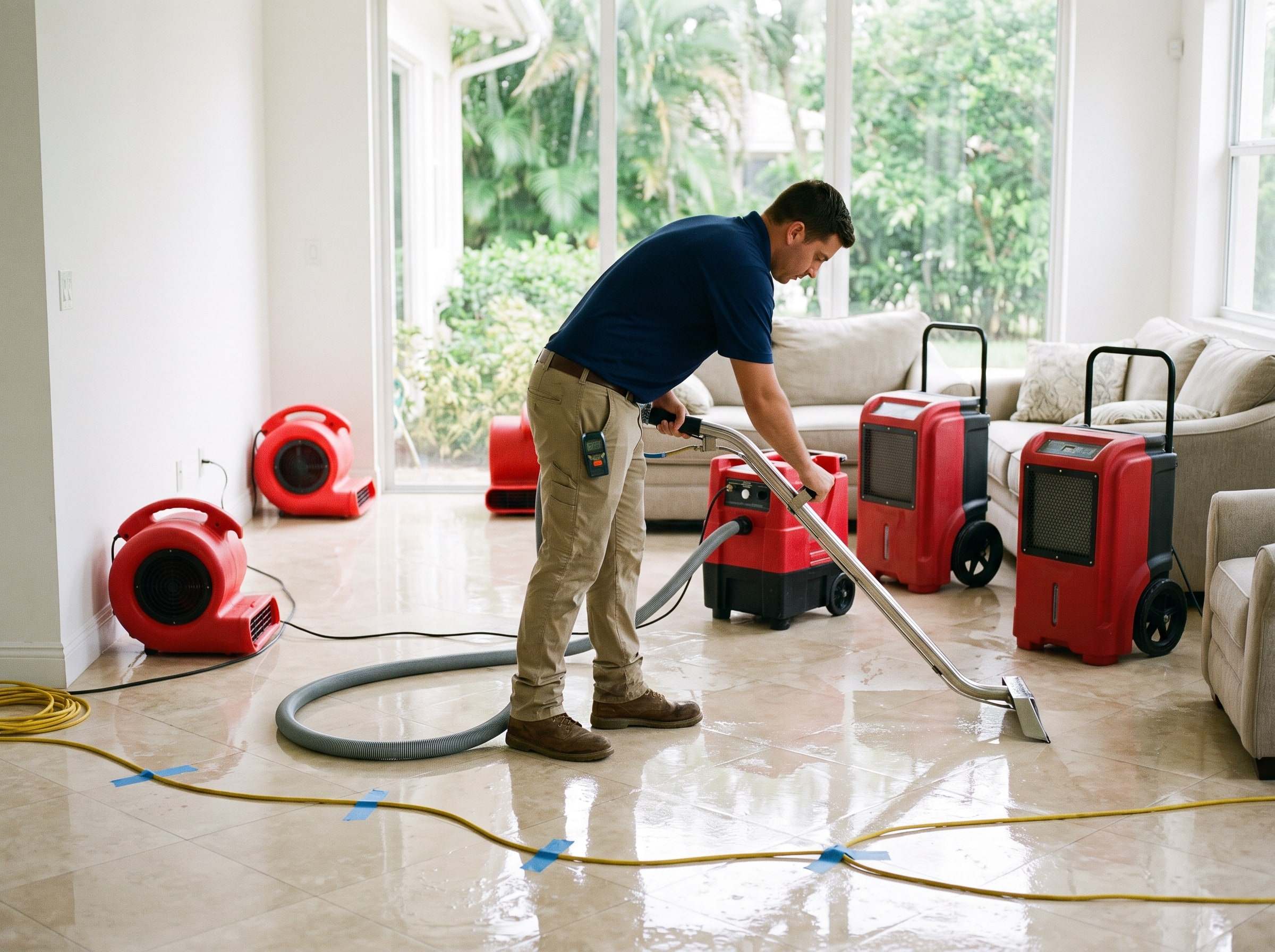
Flood Damage Cleanup & Restoration · Miami, FL
Flood damage restoration in Miami
When bay water, surge, or a summer downpour comes inside, we remove it, clean everything it touched as contaminated water, and dry the building until the readings are normal.
- 24/7 emergency line
- IICRC Certified Firm
- Insurance claim documentation
On call 24/7
Free inspection
Schedule a no-cost on-site inspection. A restoration specialist will contact you within a few minutes to confirm the details.
Request received
Thank you. A restoration specialist will contact you at the number provided to confirm the details. If water is still coming in, call now and we'll walk you through shutting it off.
(305) 330-1488Recognized by





Flood Damage Cleanup & Restoration in Miami
Flooding in Miami comes from more than one direction. Biscayne Bay rises through storm drains during fall king tides, hurricanes push surge into bayfront streets, and summer storms can drop more rain than the drainage system can move, especially when they hit at high tide.
Whatever the source, water that rises from outside is treated as Category 3, meaning it can carry sewage, fuel, and bacteria. Carpet, pad, drywall, and insulation it soaked usually come out, and the surfaces left behind are cleaned and treated before drying starts.
In towers, flooding often stops at the lobby, garage, and mechanical rooms, which makes it the association's problem first. In houses and ground-floor units, it goes straight into living space. We work for both and keep their documentation separate.
Local factors
What's different about flood damage in Miami
-
King tides and sunny-day flooding
From about September through November, the year's highest tides push bay water up through storm drains in low areas. In Shorecrest and parts of Brickell and Edgewater, streets can flood on dry days, and repeated exposure soaks door thresholds, garages, and the base of walls.
-
Biscayne Bay storm surge
A hurricane can raise the bay well above normal and drive it inland. In 2017, Hurricane Irma pushed surge into Brickell streets and building entrances, and that water carried salt, debris, and sewage into everything it reached.
-
Ground-floor and parking-level flooding in towers
Many bayfront and downtown buildings have lobbies, garages, electrical rooms, and elevator pits at or below street level. Water there threatens systems that serve every unit, so pumping, cleaning, and drying those spaces comes first.
-
Drainage during summer downpours
From June through October, slow-moving storms can stall over the city. Swales, storm drains, and pump stations fill quickly, water pools at low intersections, and wakes from passing cars push it toward doorways and garage entries.
Our process
How we clean up after a flood
- 01
Check safety before entry
We confirm power to flooded rooms is off at the breaker and look for structural damage and gas odors before anyone walks through. If water reached outlets or the panel, an electrician should check them before power is restored.
- 02
Record the damage
Every room is photographed at the water line, along with contents and materials before removal. If your flood adjuster wants samples of removed carpet or other materials, we set them aside.
- 03
Extract water and remove silt
Pumps and extractors pull out remaining water. Mud, sand, and debris are shoveled and squeegeed out before cleaning starts.
- 04
Flood cuts and tear-out
Wet drywall, insulation, carpet and pad, swollen baseboards, and cabinet bases are removed. Drywall is cut level, above the highest wet reading, to keep the rebuild simple.
- 05
Clean and sanitize
Exposed framing, block, the slab, and salvageable hard surfaces are cleaned and treated with antimicrobial products. Areas that took on salt water are rinsed first.
- 06
Dry the structure
Dehumidifiers and air movers run until the slab, block, and framing reach normal readings. Masonry that sat in water dries slowly, so we measure instead of estimating.
- 07
Close out and repairs
You receive photos, moisture logs, and a scope that separates building items from contents. Repairs start once the structure is confirmed dry.
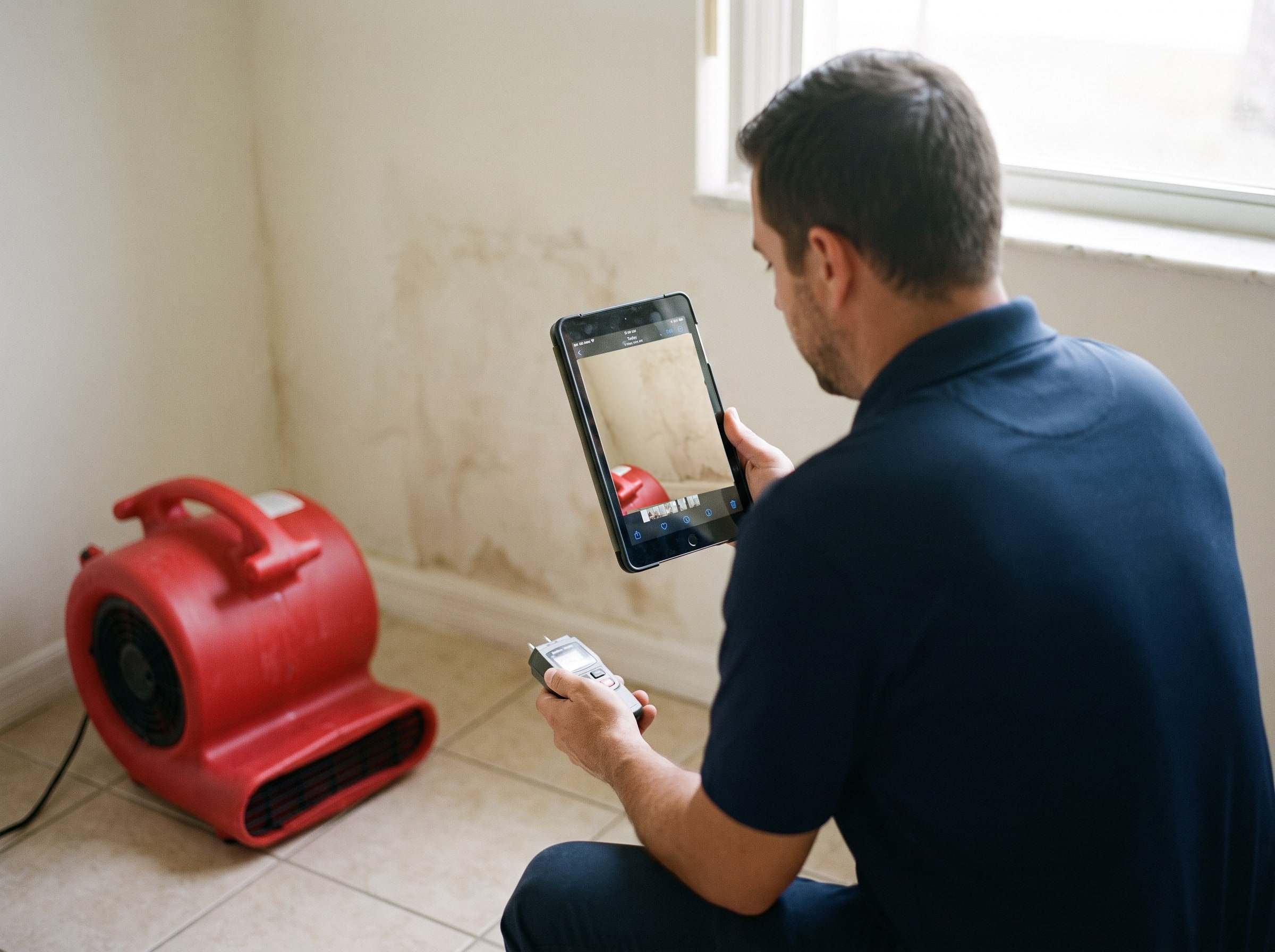
★ Every job is documented: photos, readings, and an itemized scope.
Insurance
Flood damage and your insurance
A standard homeowners policy usually excludes flooding from rising water, including storm surge, overflowing canals, and street flooding. That coverage comes from a separate flood policy, through the National Flood Insurance Program (NFIP) or a private flood insurer. Flood policies typically split building coverage from contents coverage, and NFIP policies do not pay for temporary housing.
Water that came in because wind tore the roof or broke a window is often handled under your homeowners or windstorm coverage instead, so how the water entered matters. We record the entry points, the water line in each room, and every item removed. You open the claim with your carrier; flood policies have their own deadlines, including a signed proof of loss, so report the damage promptly.
Usually covered
- Sudden pipe bursts and supply-line failures
- Water heater ruptures
- Toilet, sink, and tub overflows
- Appliance and AC overflows
- Burst or accidentally discharged fire sprinklers
- Water that enters through storm damage to the roof or windows
- Mold caused by a covered water loss, often up to a set limit
What we document
- Source of the loss and affected areas
- Daily moisture readings and equipment logs
- Thermal images of hidden moisture
- Every material removed, and why
- Each condo unit and common area, documented separately
- Dated photos and an itemized scope of work
Carriers we've worked with: Citizens Property Insurance, Universal Property & Casualty, Tower Hill Insurance, State Farm, Allstate, USAA, and many more. We are not affiliated with or endorsed by any insurance company.
Coverage decisions belong to your insurer and depend on your policy. Florida does not allow assignment of benefits on property policies issued on or after January 1, 2023, so you stay in control of your claim.
How water damage claims work in FloridaFAQ
Flood Damage Cleanup & Restoration in Miami: questions
Does homeowners or condo insurance cover flood damage in Miami?
Usually not. Standard homeowners (HO-3) and condo unit (HO-6) policies generally exclude rising water from outside, including tides, surge, and street flooding. That damage needs its own flood policy, written by the National Flood Insurance Program or a private company. Call your flood carrier to open the claim; we document the water line, the affected materials, and the cleanup for the adjuster.
Floodwater came into our building's garage and lobby. Who should call you?
Usually the association or property manager, since garages, lobbies, and mechanical rooms are common elements. If water also reached individual units, those owners or tenants may have their own claims. We document the common areas and each unit separately.
Can flooded drywall and flooring be dried instead of replaced?
Not usually when the water came from outside. Porous materials that floodwater soaked, such as drywall, insulation, carpet, and pad, are generally removed. Tile over a slab, concrete block, and other hard surfaces can be cleaned, sanitized, and dried in place, and we cut drywall above the water line and take readings to confirm the rest of the structure is dry.
Nearby
More flood damage coverage
Service areas near Miami
- Water damage restoration in Aventura Miami-Dade County
- Water damage restoration in Hallandale Beach Broward County
- Water damage restoration in Hollywood Broward County
- Water damage restoration in Miramar Broward County
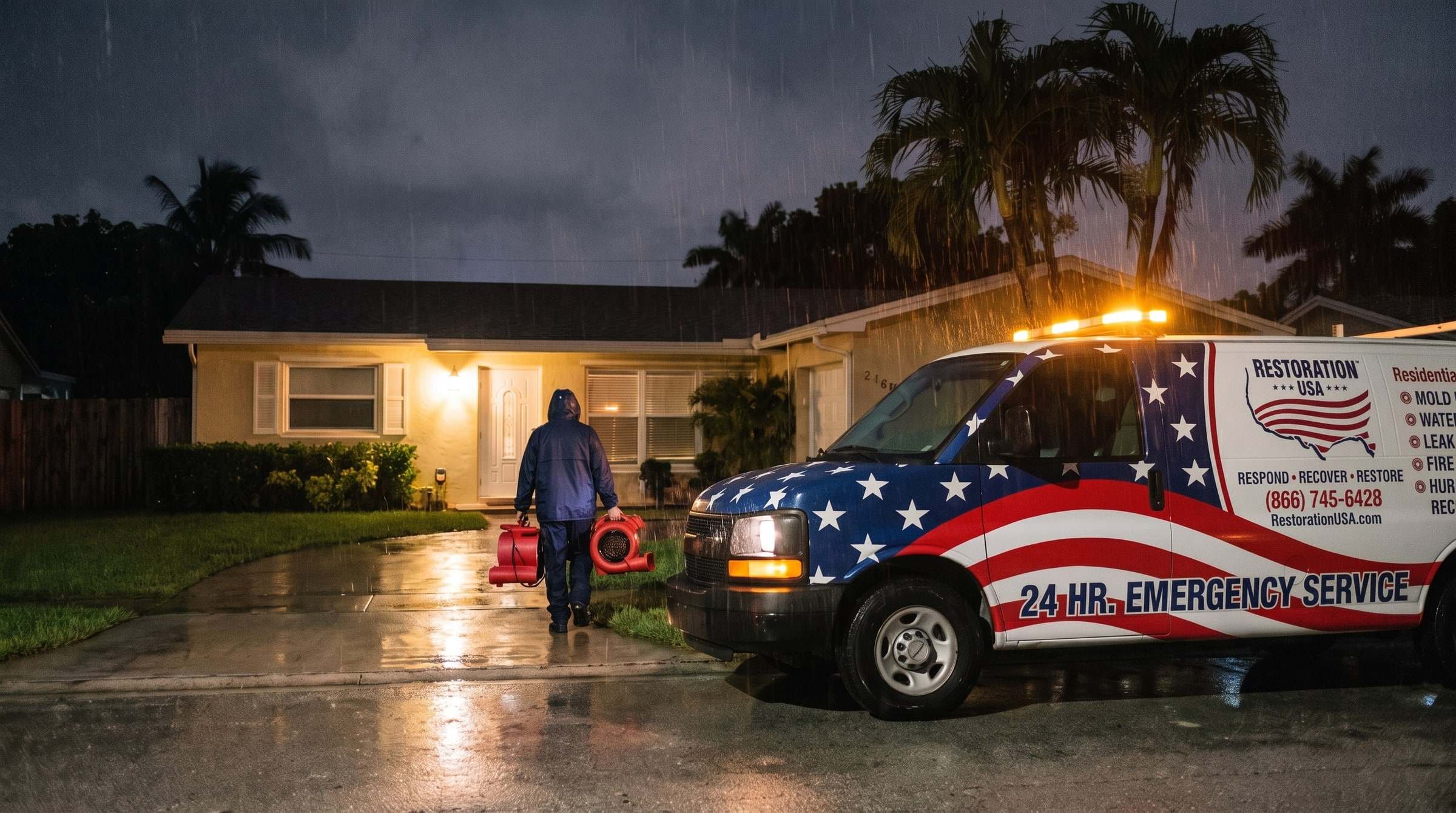
Don't wait. Go with the pros.
Need flood damage help in Miami?
Call the 24/7 line. We will help you stop the source, tell you what to move, and get a crew scheduled. Not urgent? Send a request and we will call you back.
Call 24/7 (305) 330-1488- 1 We answer 24/7, day or night
- 2 We help you stop the water and protect belongings
- 3 We schedule a crew and tell you when to expect them
On call 24/7
Free inspection
Schedule a no-cost on-site inspection. A restoration specialist will contact you within a few minutes to confirm the details.
Request received
Thank you. A restoration specialist will contact you at the number provided to confirm the details. If water is still coming in, call now and we'll walk you through shutting it off.
(305) 330-1488Recognized by